



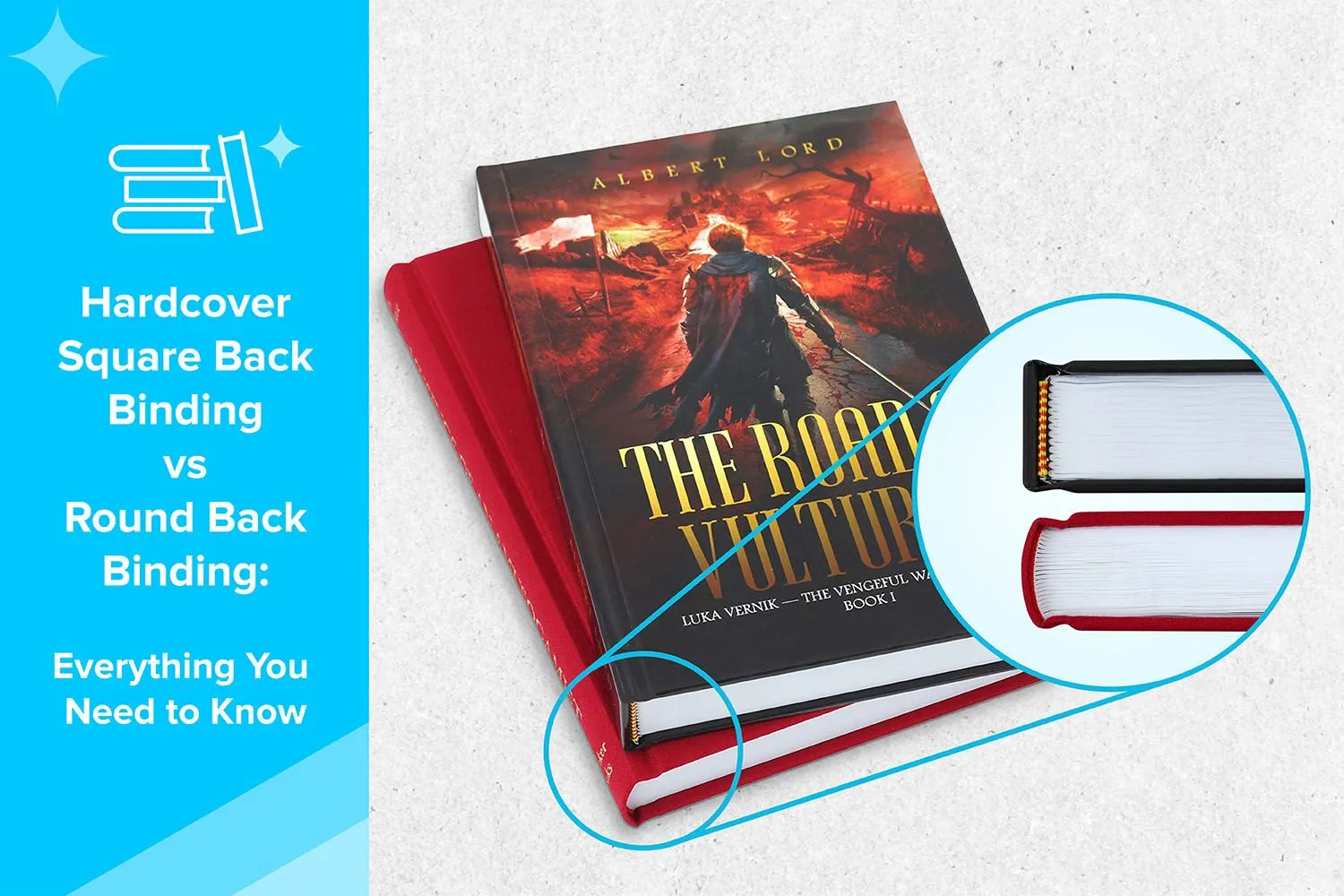
When planning a premium hardcover book, one of the most important structural decisions you’ll make is choosing between square back binding and round back binding. While both fall under hardcover case binding, their differences go far beyond spine shape. They affect appearance, durability, reader comfort, production cost, file setup, and even long-term performance.
If you are comparing square back binding vs round back binding for your next book project, whether it’s a novel, art book, photography collection, journal, children’s book, or collector’s edition, this comprehensive guide will walk you through every technical and aesthetic detail you need to know.
What’s a Square Back Hardcover Book
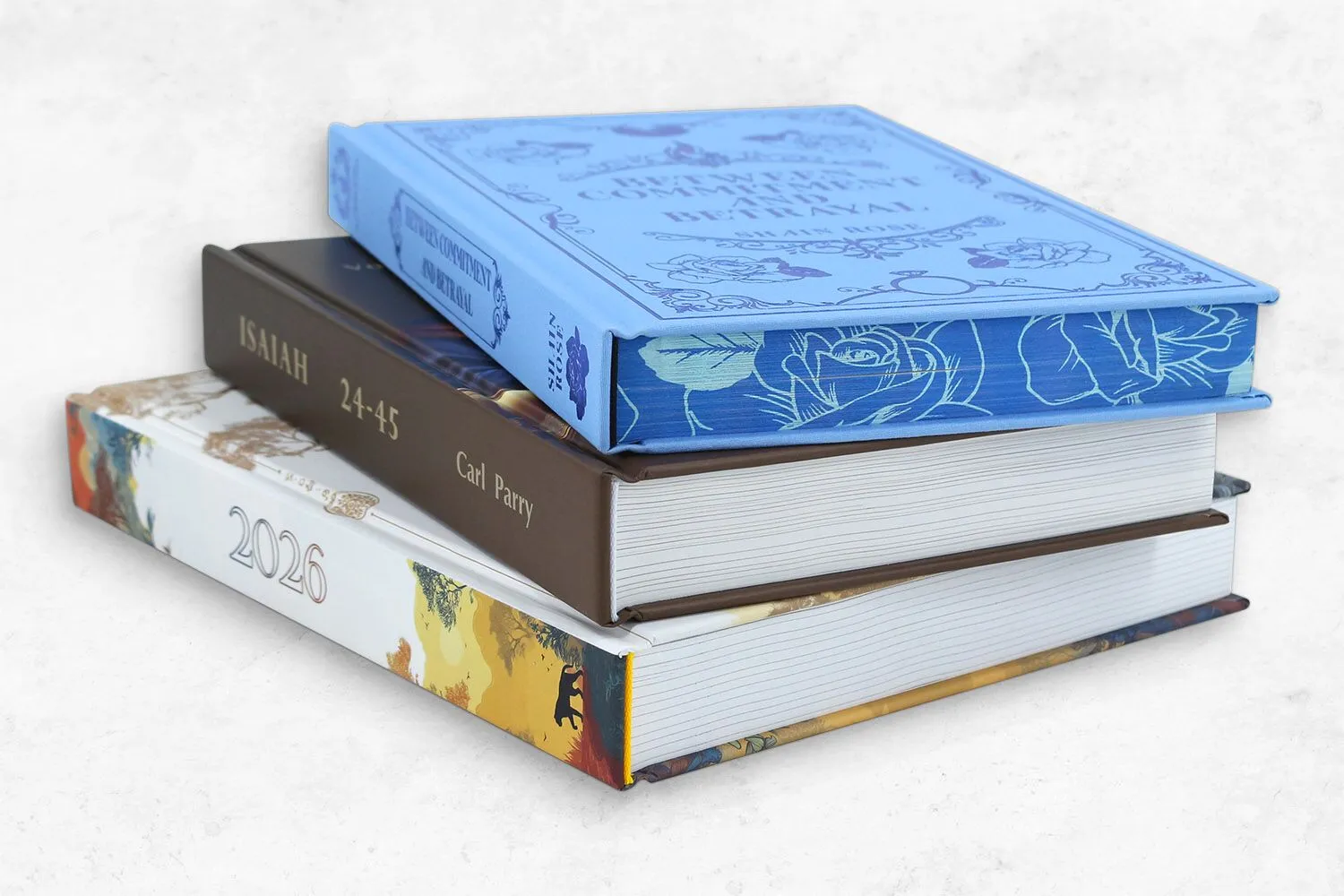
A square back hardcover book, also called a square spine or flat spine hardcover, is the most widely used case binding structure in modern printing.
In this binding style, the spine of the book block remains flat after sewing or gluing. The case (hard cover) is constructed with a straight spine board that aligns cleanly with the front and back cover boards.
Structural Features of Square Back Book Binding
Flat, straight spine
Sharp, defined shoulder edges
Uniform spine thickness
Spine board same thickness as front and back cover boards
Modern mechanical precision
The book block is typically sewn with thread and reinforced with glue and mull (gauze). Once assembled, it is glued directly into the rigid case without any rounding process.
Visual Characteristics
Square back hardcover books project:
Clean geometry
Structured symmetry
Contemporary minimalism
Strong shelf presence
This binding style works exceptionally well for:
Corporate publications
Educational textbooks
Novels
Company profiles
Brand lookbooks
Short-run hardcover editions and more
Because the spine is flat, typography and graphics align neatly, which is ideal for bold spine designs and clean branding.
Performance Considerations
Square back binding performs best for thin to medium-thickness books. When used within proper spine width limits, it provides excellent durability and cost efficiency.
However, when applied to very thick books, internal tension can increase, which may affect opening comfort and long-term durability.
What’s a Round Back Hardcover Book
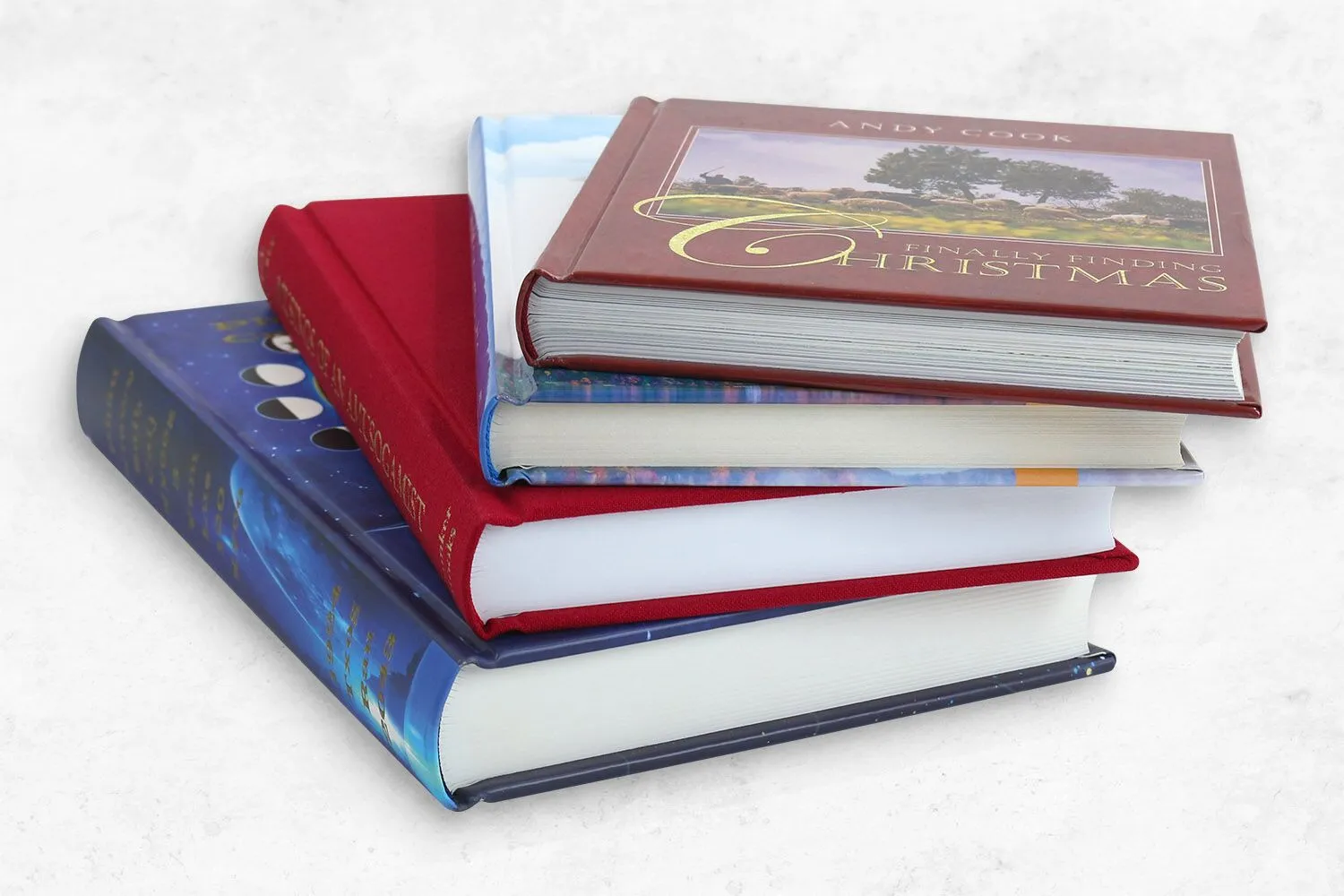
A round back hardcover book, also known as a round spine hardcover or round back case binding, is a more traditional and technically refined binding method.
Unlike square back binding, the spine of the book block is mechanically rounded during production. This process redistributes the natural swell of sewn signatures and creates a curved spine profile.
Structural Features of Round Back Book Binding
Curved, arched spine
Backed shoulders (in traditional construction)
Thinner, flexible spine insert
Enhanced tension balance
Improved opening behavior
The rounding process shapes the spine into a convex curve. In many traditional productions, the spine is also “backed,” forming slight shoulders that support the front and back boards.
Visual Characteristics
Round back hardcover books communicate:
Heritage craftsmanship
Traditional elegance
Classic publishing standards
Premium positioning
This structure is often used for:
Classic literature
Collector’s editions
High-end novels
Large coffee table books
Faux leather hardcover editions
High-end notebooks
The curved spine softens the book’s visual presence and adds a timeless quality.
Why Round Back Is Preferred for Thick Books
Thicker books naturally create spine swell due to folded signatures. Rounding allows that swell to be controlled and evenly distributed.
This improves:
Page turning comfort
Lay-flat performance
Structural longevity
Resistance to cracking
For books exceeding medium thickness, round back case binding is typically the superior engineering solution.
Square Back vs Round Back Hardcover Book: The Difference
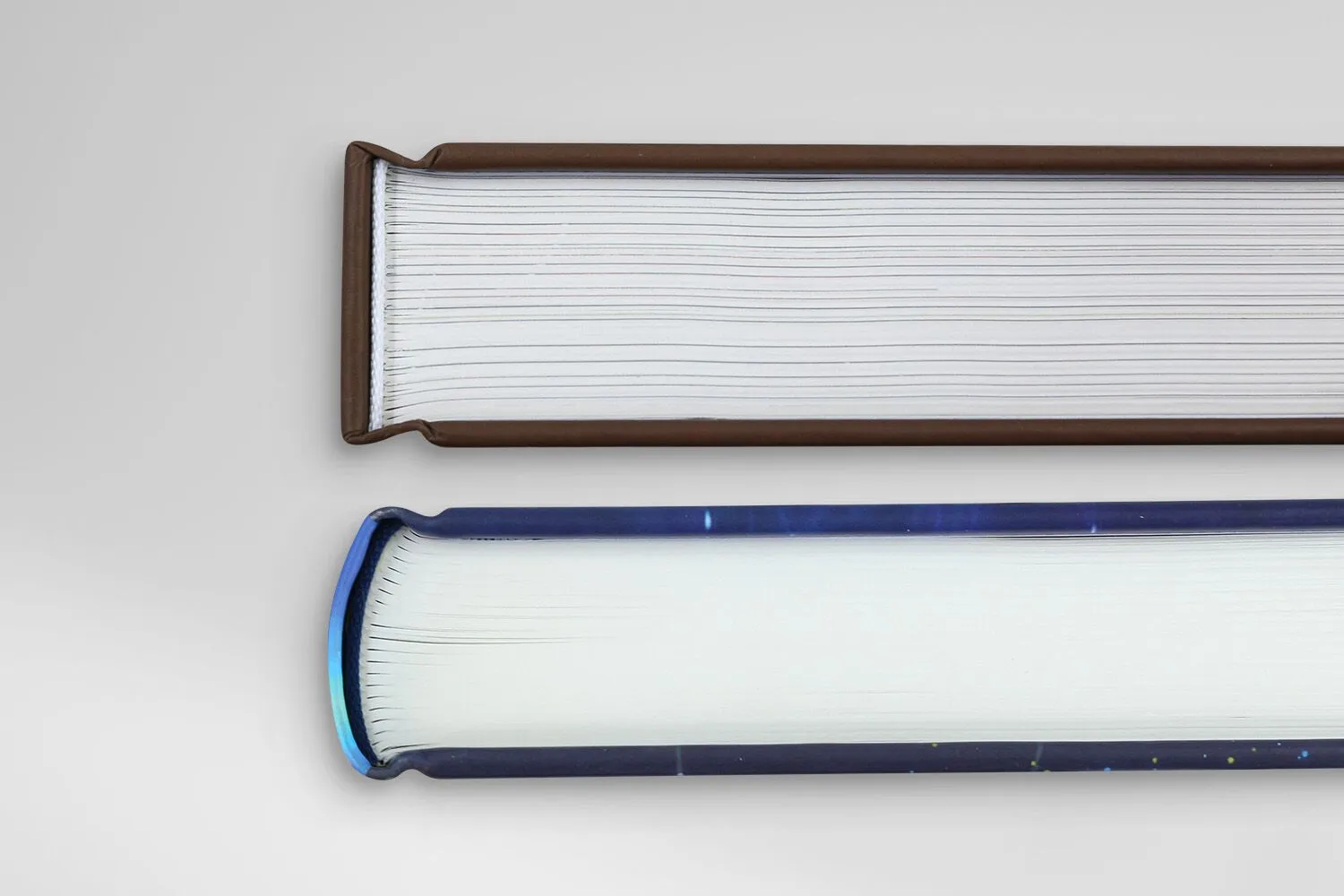
When choosing between square back and round back hardcover binding, the decision goes far beyond simple appearance. Each structure affects the book’s visual identity, thickness compatibility, durability, production complexity, and overall cost. Below, we examine the key differences in detail to help you determine which option best suits your project.
Appearance
The most noticeable difference between square back and round back hardcover books is the shape of the spine.
A square back hardcover book features a flat, straight spine with clearly defined edges. The spine aligns in a sharp, geometric way with the front and back cover boards, creating a clean and structured silhouette. This style feels modern, organized, and professional. It works particularly well for contemporary designs, corporate publications, educational books, and projects that emphasize simplicity and symmetry. The flat spine also provides a neat surface for spine text and logos, ensuring consistent alignment when displayed on a shelf.
In contrast, a round back hardcover book has a gently curved spine. Instead of sharp angles, the transition from spine to cover board is softer and more fluid. This curved profile creates a sense of craftsmanship and tradition. Round back books are often associated with classic literature, religious titles, heritage editions, and premium publications. The curvature adds visual depth and elegance, giving the book a more refined and timeless presence.
Book Thickness Requirement
Book thickness plays a critical role in determining the appropriate binding structure.
A square back hardcover book is best suited for thinner publications. The minimum recommended spine width is 8 mm. When the book remains within a moderate thickness range, square back binding performs well and maintains structural stability. However, if the book becomes too thick, problems may arise. A thick square spine creates increased internal tension because the folded signatures naturally want to swell outward. Over time, excessive stress can cause the cover boards to crack near the hinges or spine joints.
On the other hand, a round back hardcover book is designed specifically to accommodate thicker volumes. The minimum spine width is at least 10 mm, but in practice, a spine width of 20 mm or more is recommended to fully benefit from the rounded structure. During production, the spine is shaped into a curve, which helps balance the natural swell of the pages. This rounded form distributes pressure more evenly across the spine and hinges when the book is opened and pages are turned.
As a result, round back hardcover books typically open more smoothly, lay flatter on a table, and experience less structural stress. The even pressure distribution significantly reduces the likelihood of cracking and improves long-term usability. For books over 200 pages, especially those printed on thicker paper, round back binding is usually the safer and more durable choice.
Cost and Durability
Cost is another important factor when comparing these two binding methods.
A round back hardcover book is more expensive to produce than a square back hardcover book. The primary reason lies in the additional craftsmanship and machinery required to round and shape the spine. This extra step increases labor time, equipment use, and production complexity, which naturally raises the overall cost.
In contrast, square back hardcover binding is more cost-efficient. Since the spine remains flat and does not require mechanical rounding, the production process is simpler and faster. This makes square back binding a practical option for projects with tighter budgets or shorter timelines.
However, when considering durability, round back binding often has an advantage. Because the rounded spine redistributes internal tension more effectively, it tends to withstand repeated opening and closing better—especially for thicker books. The flexibility built into the rounded structure reduces long-term stress on the hinges and spine joints. Square back binding is durable for thin to medium books, but when used for overly thick volumes, it may experience greater wear over time.
Thus, while square back binding may save on upfront costs, round back binding can offer better longevity for larger, heavier books.
Production Process
The production differences between square back and round back hardcover books are significant.
For a square back hardcover book, the process generally includes printing, folding, collating, sewing the signatures, reinforcing the spine, and casing the book into a rigid cover with a flat spine board. The structure remains straight throughout, and no additional shaping is required. This streamlined workflow contributes to faster turnaround times and lower manufacturing costs.
A round back hardcover book, however, includes an additional rounding and ridge shaping stage after sewing. The spine is mechanically shaped into a curve using specialized equipment. In some traditional methods, the spine may also be “backed,” forming slight shoulders that help support the cover boards. This extra rounding and shaping step increases both production time and labor intensity. As a result, manufacturing costs rise, and the production schedule may be slightly longer compared to square back binding.
While more complex, this extra step is what gives round back binding its structural advantages.
Spine Material
Another structural difference lies in the materials used for the spine section of the hardcover case.
In a square back hardcover, the spine board is typically made from the same thickness greyboard as the front and back covers. This creates a firm and rigid spine structure. While this rigidity enhances strength, it can limit flexibility, especially in thicker books.
In a round back hardcover, the spine material is usually thinner than the front and back cover boards. This thinner insert allows the spine to remain more flexible and responsive when the book is opened. The flexibility works together with the rounded shape to improve comfort and reduce structural stress.
This material distinction is subtle but important. The softer, more flexible spine in round back binding contributes significantly to its durability and user-friendly performance.
Square Back and Round Back Hardcover Book Cover File Size
Designing a hardcover cover file requires precision. Unlike softcover books, hardcover cases wrap around rigid greyboard and include foldovers and hinge spaces that must be calculated accurately. Whether you are producing a square back or round back hardcover, understanding how to build the full cover layout ensures a perfect fit during production.
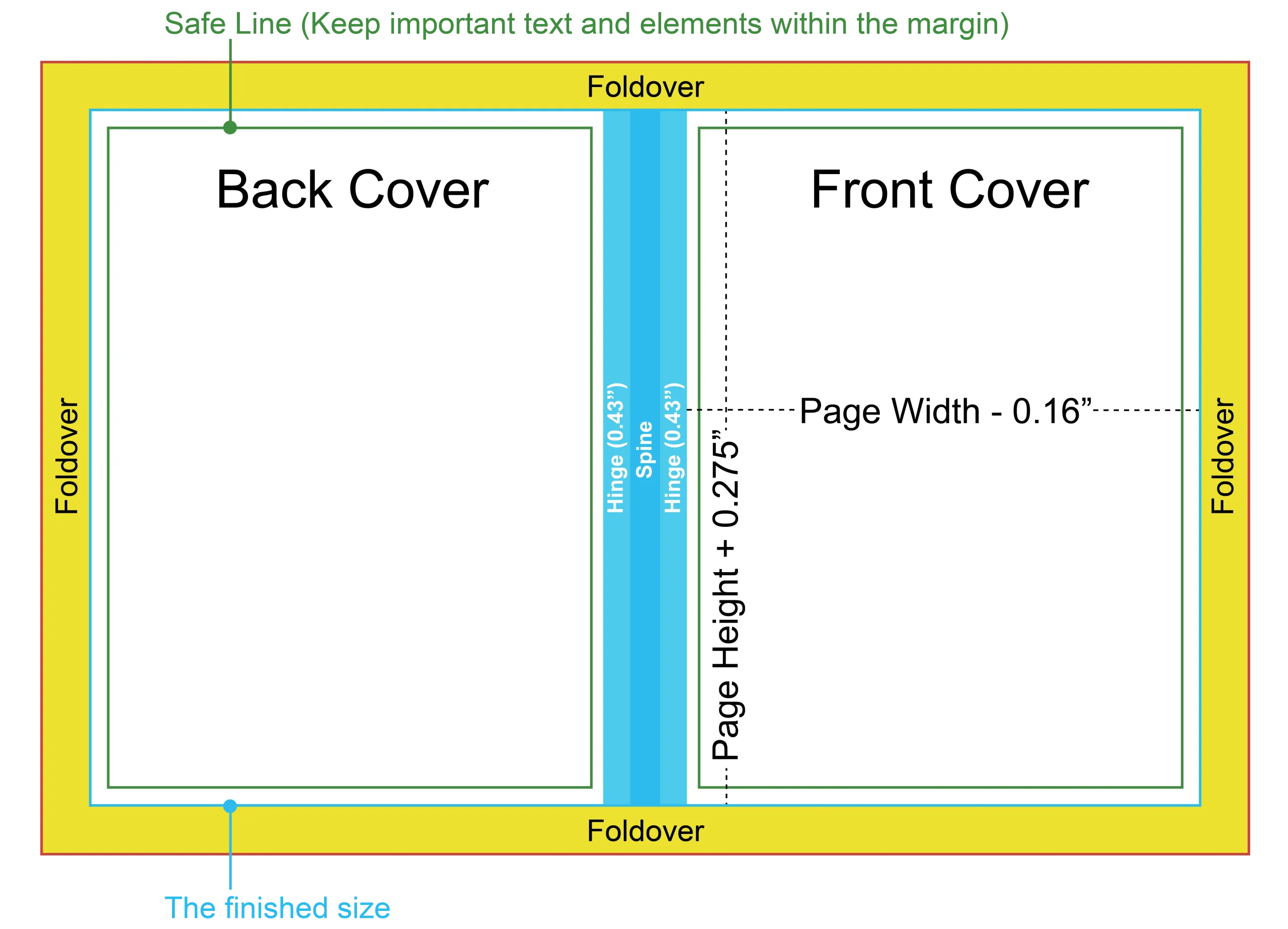
Below is a clear and structured way to calculate your total cover size, including height and width.
Step 1: Calculate the Total Cover Height
Start with the exact height of your interior pages. This is your trim size—the final size after cutting.
Next, add 0.275 inches (7 mm) to the page height. This small adjustment ensures proper alignment between the book block and the case.
After that, you must account for the foldover area. Foldovers are the extra material that wraps around the edges of the greyboard and is glued inside the cover. For hardcover books, this is essential for structural strength and clean finishing.
Add 0.79 inches (20 mm) to the top and 0.79 inches (20 mm) to the bottom. Together, that equals 1.58 inches (40 mm) of additional height.
Even though most of this foldover area will not be visible in the final book, your artwork must extend fully into it. Any background colors, patterns, or images should bleed across this space to prevent unwanted white edges after wrapping.
Once these additions are made, you will have your total cover height.
Step 2: Calculate the Total Cover Width
The width calculation is slightly more detailed because it includes front cover, back cover, spine, hinges, and foldovers.
Begin with the width of your interior pages.
From this width, subtract:
0.16 inches (4 mm) for a square spine hardcover
0.2 inches (5 mm) for a round spine hardcover
This adjustment ensures proper alignment between the case and the trimmed book block.
Next, add the foldover allowances. Just like with height, you must add 0.79 inches (20 mm) to both the left and right sides for wrapping around the greyboard.
After foldovers, you need to include the hinge (groove) area. The hinge is the flexible gap between the spine and the cover boards that allows the book to open smoothly without placing stress directly on the spine.
Add:
0.43 inches (11 mm) for a square spine hardcover
0.4 inches (10 mm) for a round spine hardcover
Although the difference is small, it is important to apply the correct measurement depending on the binding style.
Now, multiply your adjusted page width by two—one for the front cover and one for the back cover.
Finally, calculate the spine width using our spine width calculator. Add that spine width to the total.
For round back hardcover books, there is one additional adjustment: multiply the standard spine width by 1.08. This accounts for the extra curvature created during the rounding process.
Final Result
After adding:
Two adjusted page widths
Spine width
Two hinge areas
Two foldovers
You will have the total cover width, including spine, page widths, hinges, and foldovers.
Accurate measurements at this stage are critical. Even small calculation errors can cause misalignment, improper wrapping, or difficulty during casing-in. By carefully following these steps and applying the correct adjustments for square or round spines, you ensure your hardcover cover fits perfectly and delivers a professional, high-quality result.
Square Back vs Round Back Hardcover: How to Choose?
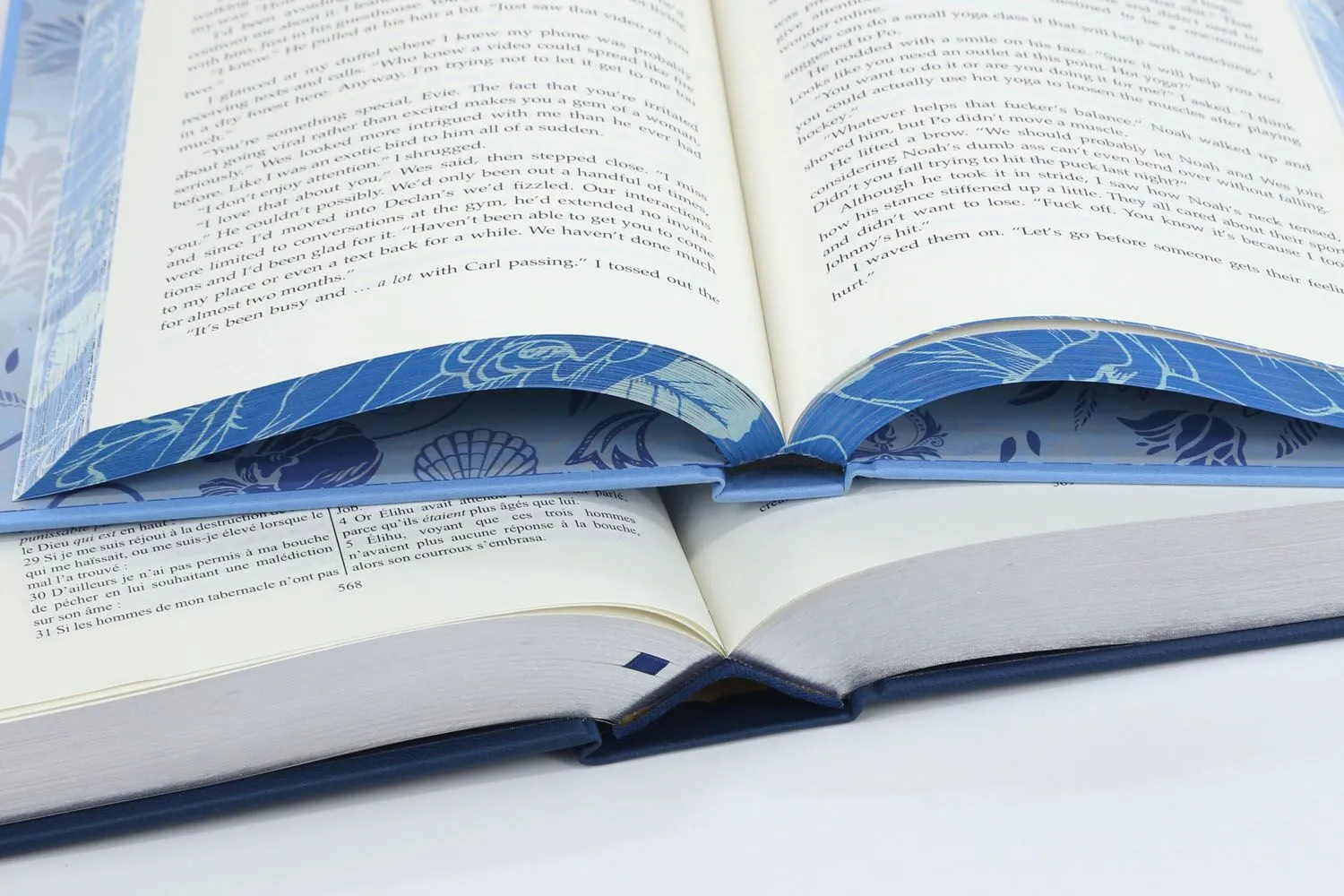
Choosing between a square back and a round back hardcover is not simply a matter of preference, it’s a strategic decision that affects your book’s durability, usability, production cost, and overall brand positioning. The right choice depends on your page count, design direction, budget, reading experience expectations, and long-term performance goals.
Below is a detailed guide to help you make the right decision for your project.
Start with Book Thickness
The first and most important factor is spine width, which is directly determined by page count and paper thickness.
If your book has a thinner spine, generally under 20 mm, a square back hardcover is typically the practical choice. Square back binding performs very well for thinner books because the internal tension from folded signatures remains manageable. It provides sufficient strength while keeping production efficient and cost-effective.
However, if your book is thicker, especially over 200 pages or with a spine width exceeding 20 mm, a round back hardcover is usually the better structural solution. Thick books naturally create spine swell, and a flat spine may resist opening smoothly. A rounded spine redistributes this pressure, making the book more comfortable to open and reducing stress at the hinges.
In simple terms:
Thin to medium books → Square back
Thick books → Round back
Always match the binding structure to the physical demands of the book block.
Consider the Desired Aesthetic
Your binding style communicates a message before a reader even opens the book.
A square back hardcover offers:
Clean lines
Sharp edges
Structured symmetry
Modern, minimalist appeal
It works well for corporate publications, educational materials, photography books, art catalogs, and contemporary design projects. If your branding focuses on precision, clarity, and modern aesthetics, square back binding reinforces that visual language.
A round back hardcover, by contrast, conveys:
Tradition
Craftsmanship
Classic elegance
Timeless refinement
This style is often chosen for novels, collector’s editions, religious books, memoir books, and heritage publications. The curved spine adds visual depth and softness, making the book feel more premium and sophisticated.
If your goal is to create a classic or luxury impression, round back binding enhances that perception.
Evaluate Reader Experience
How will your audience use the book?
For books that will be:
Frequently opened
Read for long periods
Used as reference materials
Heavy or large in format
A round back hardcover generally offers better performance. The rounded spine allows the book to open more naturally and lay flatter, improving reading comfort. The flexible spine construction reduces long-term stress and enhances durability.
For books that are:
Gift items
Display pieces
Short-term promotional materials
Thin editions
A square back hardcover is usually more than sufficient. It maintains structural integrity without the added cost of rounding.
Budget Considerations
Budget often plays a decisive role.
Square back binding is more economical because:
It involves fewer production steps
No mechanical rounding is required
Manufacturing time is shorter
Round back binding costs more due to:
Additional spine shaping process
More labor
Slightly longer production timeline
If your project has tight cost constraints and the book is not thick, square back binding offers excellent value. However, for premium projects where longevity and high-end perception matter, the additional investment in round back binding may be worthwhile.
Durability Expectations
Think about how long the book needs to last.
If you are producing:
Archival editions
Library-quality books
Collector’s volumes
Thick reference books
Round back hardcover binding is typically more durable over time because the rounded structure distributes mechanical stress more evenly.
For lighter-use publications or thinner books, square back binding provides reliable durability without unnecessary complexity.
Special Design Features
Certain decorative options influence your choice.
For example:
Raised band spines are only possible with round back binding.
Faux leather heritage designs often pair naturally with rounded spines.
If your project includes traditional decorative spine elements, round back construction is required.
Spine Finish Options
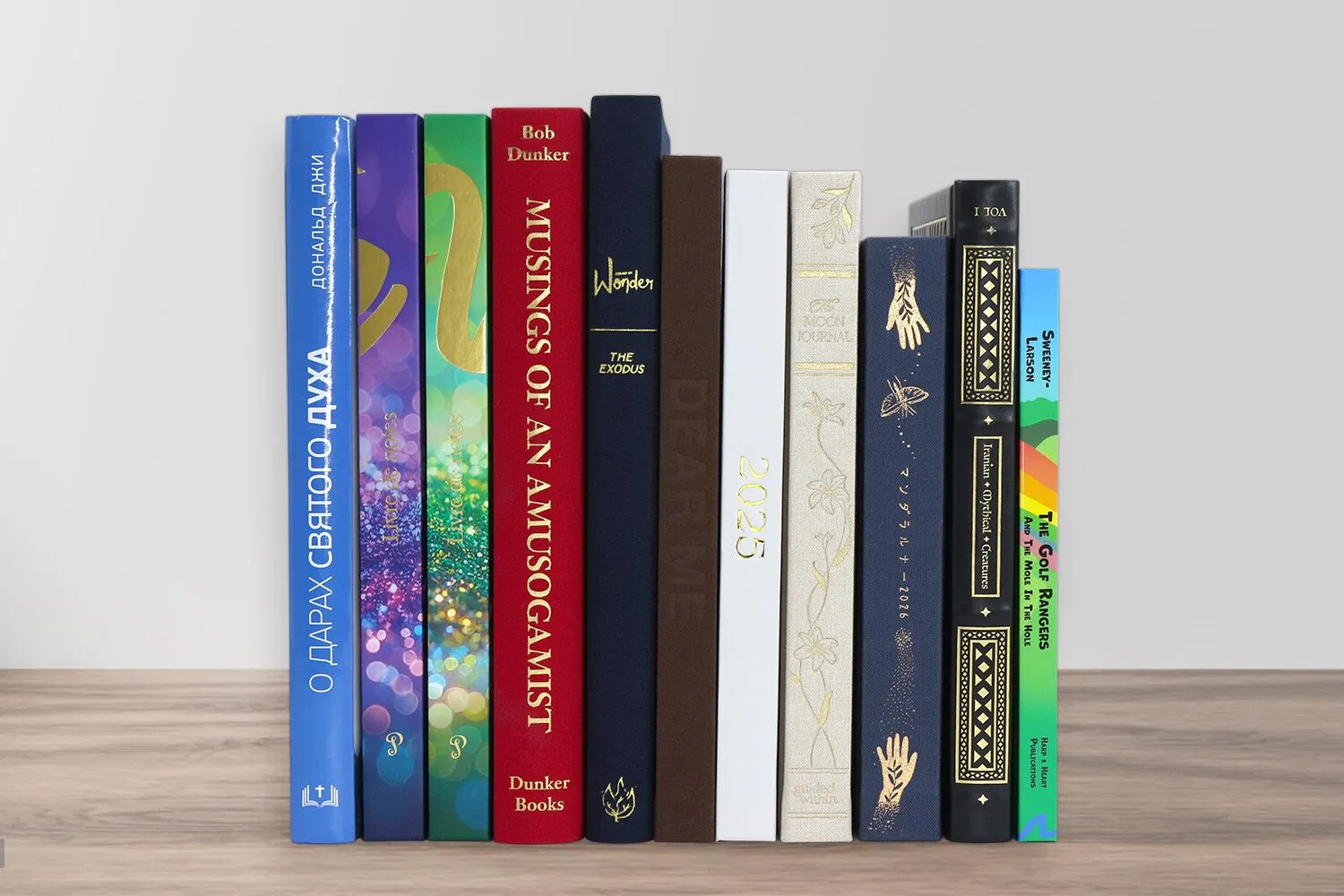
Both square back and round back hardcover books support a variety of premium spine finishing techniques that enhance appearance, texture, and durability. The spine is one of the most visible parts of a book, especially when displayed on a shelf, so selecting the right finish can significantly elevate your book’s overall presentation.
Lamination
Lamination is a protective film applied over the printed cover material. It not only improves appearance but also increases resistance to scratches, moisture, and daily wear.
Gloss lamination creates a bright, reflective surface that intensifies colors and sharpens image contrast. It adds a polished shine that works especially well for bold graphics, vibrant photography, and high-impact designs. If your cover relies on strong visual energy or saturated colors, gloss lamination helps them stand out.
Matte lamination offers a smooth, non-reflective finish with a refined and elegant appearance. It softens colors slightly and reduces glare, giving the cover a modern and sophisticated look. Matte lamination is widely used for corporate books, art publications, and minimalist designs where subtlety and class are important.
Soft-touch lamination elevates the experience even further. It provides a velvety, silky texture that feels luxurious in the hand. Beyond its tactile appeal, soft-touch lamination also enhances perceived value, making it a popular choice for premium editions, high-end branding projects, children’s books, and collector’s books.
All three lamination options protect the surface and significantly extend the lifespan of a hardcover book while contributing to its overall visual and tactile impact.
Foil Stamping
Foil stamping applies a thin layer of metallic foil to selected areas of the spine or cover using heat and pressure. Common foil options include: gold, silver, red, and custom colors.
This technique adds brilliance and contrast, making titles, logos and graphics stand out sharply. Foil stamping instantly elevates perceived value and is often used for premium editions and corporate publications.
Spot UV
Spot UV is a selective high-gloss coating applied to specific design elements. It creates visual contrast against matte surfaces and adds subtle tactile interest. This technique is ideal for highlighting titles, patterns, or logos.
Deboss
Debossing presses a design into the spine surface, creating a recessed impression. The result is a subtle yet sophisticated texture that enhances elegance without overpowering the design.
Raised Band Spine
Raised bands are decorative ridges placed across a curved spine, replicating traditional leather-bound books.
They offer:
Classic decorative detailing
Timeless luxury appeal
Enhanced heritage aesthetics
Because raised bands require a curved structure, they are only compatible with faux leather round back hardcover binding.
Print Hardcover Book with Us
At BookPrintingChina, we bring over 25+ years of professional book printing and binding experience, with hardcover book printing as one of our core specialties. Over the decades, we have refined our craftsmanship, production workflow, and quality control systems to ensure every hardcover book meets international publishing standards. From artwork guidelines and material selection to printing and shipping, each step is handled with technical expertise and careful attention to detail.
We understand that hardcover books are not just printed products, they represent your brand, your story, and your long-term value. That’s why we offer both square back and round back hardcover solutions, tailored to match your project’s thickness, design direction, and durability requirements. Our team provides professional guidance on artwork, board thickness, paper choice, and finishing options to ensure optimal performance and visual balance.
Whether you’re producing a modern corporate book with a clean, structured square spine or a premium collector’s edition featuring a rounded spine, we ensure structural excellence and refined presentation. From minimalist designs to luxury heritage editions, our experienced team combines advanced machinery with skilled craftsmanship to deliver hardcover books that look exceptional, feel premium, and stand the test of time. Contact us to get a custom quote today!