



The flyer vs leaflet debate confuses business owners who want to get the most from their marketing efforts.
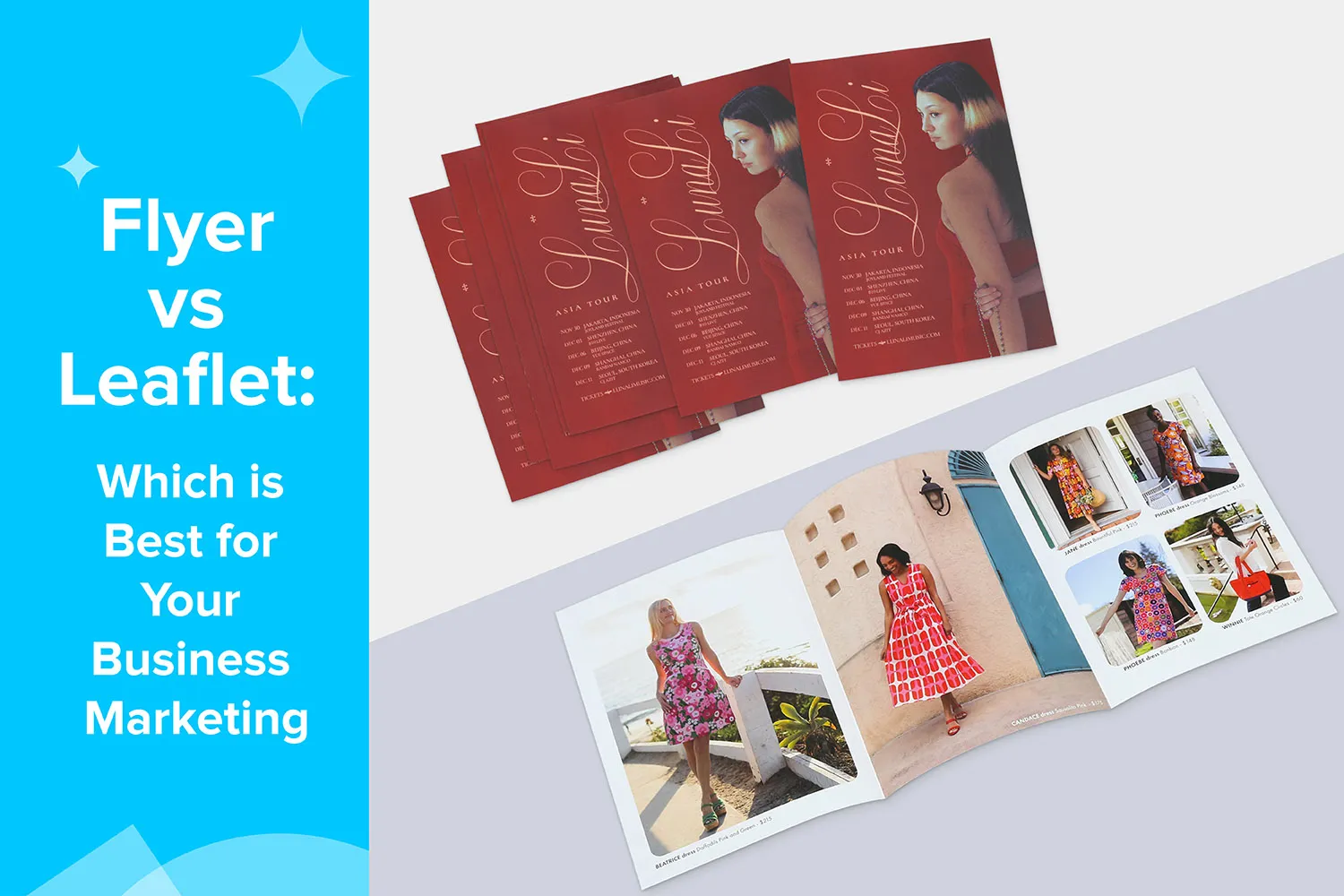
Flyers and leaflets both serve as powerful print marketing tools, but they differ substantially in format, purpose and cost. You can make smarter decisions for your campaigns when you know what flyers are and what leaflets are. The leaflet vs flyer difference comes down to content capacity and distribution goals. Flyers work best for quick announcements. Leaflets excel at detailed presentations.
We’ll walk you through everything about flyer and leaflet printing, include their definition, difference, when to use, so you can choose the right option for your business needs.
What Are Flyers?
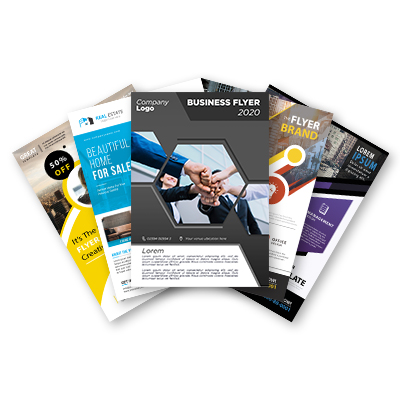
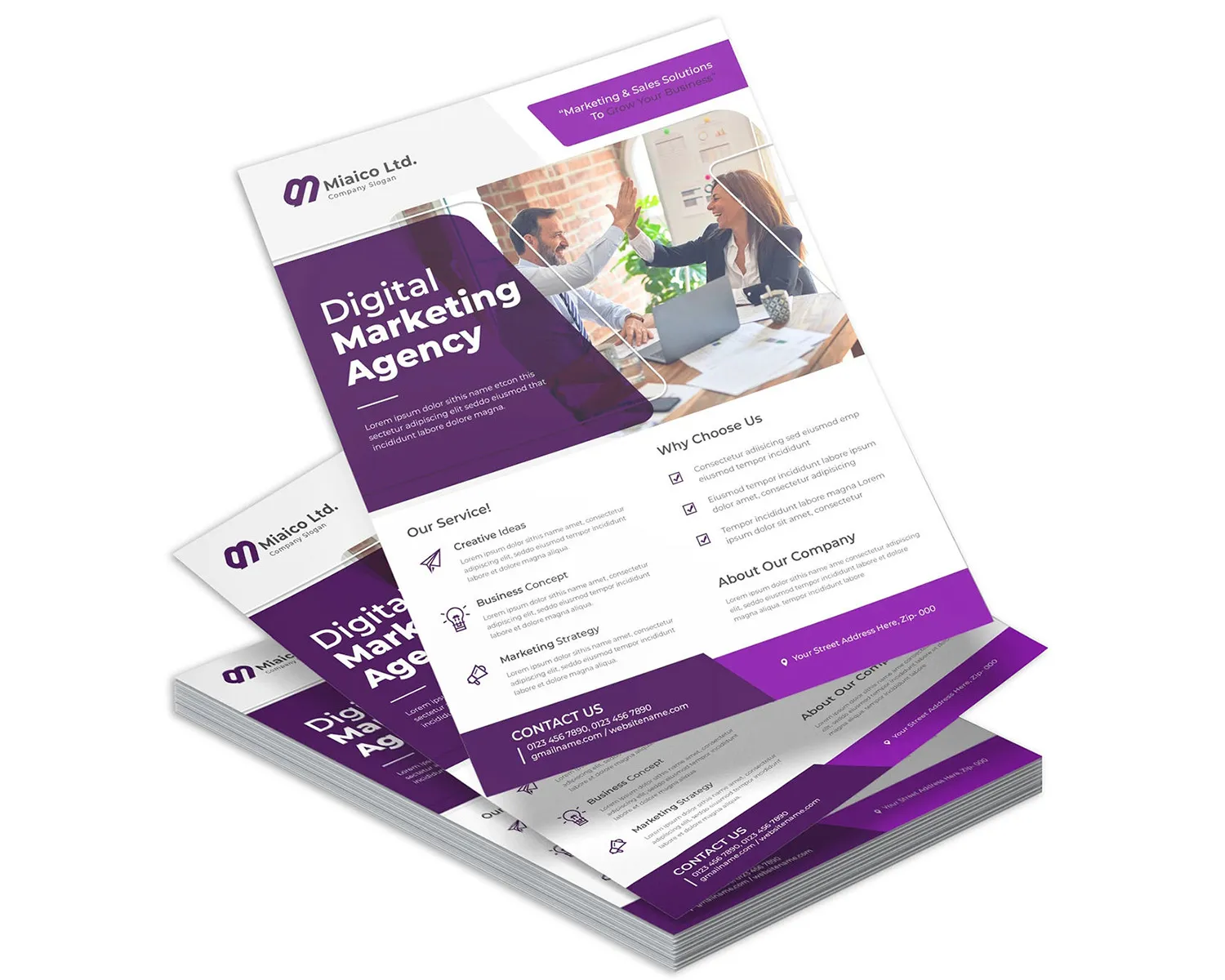
A flyer is a single-page, unbound piece of paper distributed to promote or advertise a specific event, product, service, or idea. These printed marketing materials function as pocket-sized billboards designed to grab attention and communicate information fast. Flyers remain one of the most affordable marketing tools to reach potential customers quickly.
Standard Flyer Sizes and Formats
Flyer sizes range from 4″×6″ to 8.5″×11″. The standard flyer matches computer paper dimensions at 8.5″ × 11″ in the US, or A4 (8.3″ × 11.7″) in many other countries. Several popular formats serve different distribution needs beyond this standard size.
Half sheet flyers measure 5.5 × 8.5 inches and are a popular choice for minimal printing costs.
The A5 format (8.3″ × 5.8″) and A6 size (5.8″ × 4.1″) offer compact options for hand distribution.
DL (dimension lengthwise) flyers at 8.3″ × 3.9″ represent one third of A4 and fit standard envelopes.
Large format flyers at 11 × 17 inches work well for documents that need folds, such as restaurant menus and oversized promotional pieces.
Your size selection depends on content volume and distribution method. To cite an instance, larger sizes like letter or A4 work best if you plan to tape flyers to walls or convey extensive information. Pick a size that fits standard envelopes, such as A6 or DL, if you’re mailing flyers.
Common Paper Weights for Flyers
Choosing the right paper weight is essential when printing flyers, as it directly affects the look, feel, and durability of the final product. Flyers with image-heavy designs and minimal text typically perform best on coated paper, which enhances color vibrancy and sharpness for a more professional appearance. In contrast, uncoated paper is better suited for text-heavy flyers, offering improved readability and a natural, writable surface.
Paper weight, measured in gsm (grams per square meter) or pounds (lb), determines the thickness and sturdiness of the paper:
Glossy Art Paper: 80–157 gsm (54–106 lb text) for lightweight flyers; 200–350 gsm (74–129 lb cover) for thicker, more durable prints with a high-shine finish that makes images pop.
Matte Art Paper: 80–157 gsm (54–106 lb text); 200–300 gsm (74–111 lb cover), offering a smooth, non-reflective surface for a more refined and elegant look.
Uncoated Paper: 80–180 gsm (54–122 lb text), ideal for flyers with a large amount of text or for applications where writing is needed.
Selecting the appropriate paper type and weight ensures your flyer not only looks great but also aligns with its intended use and audience.
Typical Business Uses for Flyers
Small businesses use flyers for multiple promotional purposes:
Announce special promotions, discounts, and limited-time offers
Distribute coupons that provide incentives for store visits
Advertise events, launch parties, and grand openings
Raise awareness about community initiatives and charity events
Showcase new products, services, and seasonal offerings
Promote loyalty programs and membership benefits
Update customers about business changes, new hours, or relocations
Recruit new employees or volunteers for open positions
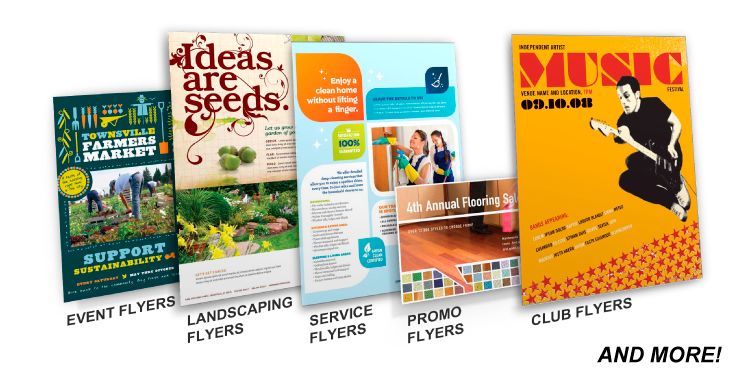
Flyers excel at promoting services, products, or events with concise messages. They’re versatile in a variety of industries and serve as effective tools for businesses that connect directly with local communities.
Distribution Methods and Reach
Physical flyers are distributed by hand, mail, or in public places, making them ideal for local advertising and direct mail campaigns. Distribution strategies include handing out flyers at events like trade shows and local markets, posting on bulletin boards in community spaces, and delivering door-to-door to targeted neighborhoods.
Digital flyers offer an eco-friendly, affordable alternative for online distribution via email, social media, or websites and reach global audiences instantly. Stack placement in high-traffic locations like coffee shops and community centers provides passive distribution.
Research shows 89% of people remember receiving flyers, and 45% keep them for future use. Effective distribution requires strategic planning around target audience location and obtaining proper permissions, as well as choosing appropriate distribution methods based on campaign goals.
What’s Leaflets?
Leaflets occupy a broader category in print marketing, referring to either flat single sheets or folded multi-panel documents. This flexibility makes them more versatile than their single-purpose counterparts. While the term sometimes gets used interchangeably with flyers, leaflets carry a different weight in both literal and figurative terms.
Popular Leaflet Fold Types
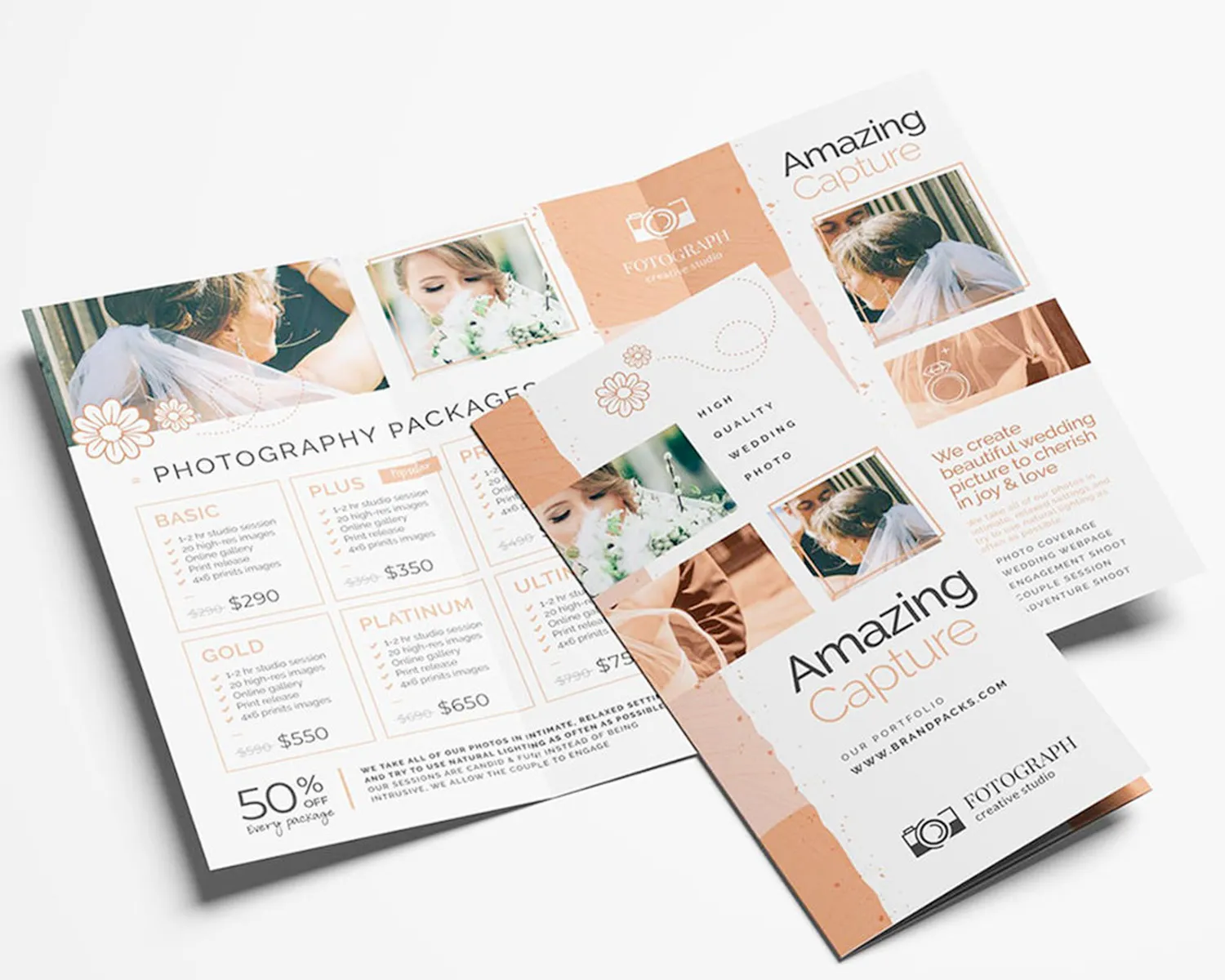
Bi-fold leaflets feature a single crease down the middle, creating four panels total. This classic two-panel design provides the perfect blend of visuals and content for concise product or service overviews. The format works well for product presentations and professional handouts at trade shows.
Tri-fold leaflets remain the most popular folded format, featuring two creases and three panels. With six content surfaces available, they offer compact size while maintaining substantial information capacity. Event promotion, conference materials, menus and service guides where a single sheet proves insufficient all benefit from this format.
Z-fold leaflets create a zigzag pattern when viewed from above, folding back and forth with panels of the same size. This clever fold works perfectly for timeline storytelling and guides readers through sequential information. Tourist attractions, takeaway menus and instructional content benefit from this format’s natural flow.
Paper Quality Standards for Leaflets
Selecting the right paper is key to producing high-quality leaflets that effectively communicate your message. For designs that feature rich visuals and bold graphics, coated papers such as glossy or matte art paper are ideal, as they enhance color vibrancy and image clarity. On the other hand, uncoated paper is better suited for text-heavy leaflets, offering a natural, non-reflective surface that improves readability and allows for easy writing if needed.
A commonly recommended option for professional leaflets is 157gsm (106 lb text weight) paper, which strikes an excellent balance between quality and cost. It has a substantial feel that creates a positive impression while remaining flexible enough for most standard formats. This weight also provides better durability and structure compared to lighter papers, making it especially suitable for folded leaflets.
Paper weight plays an important role in usability. Heavier stocks convey a premium look and feel, but may become too bulky when multiple folds are required. For example, 100 lb text works well for bi-fold and tri-fold leaflets, offering both flexibility and strength. However, for more demanding uses—such as distribution at trade shows where leaflets are placed into bags with other materials—a heavier cover stock may be a better choice for added durability.
When Leaflets Make More Impact
Folded leaflets shine when content has natural structure that needs organization. Menus, service guides, brochures and information documents all benefit from panel-based layouts. They work best for detailed product information, professional presentations and situations where the recipient expects complete details rather than quick promotional messages.
Businesses choose leaflets for promotions without immediate expiry dates. Their extended lifespan allows circulation for weeks or months and provides ongoing exposure that time-sensitive flyers cannot match. Service overviews, product catalogs and evergreen marketing content prove valuable for this longevity.
Leaflet vs Flyer: Key Differences
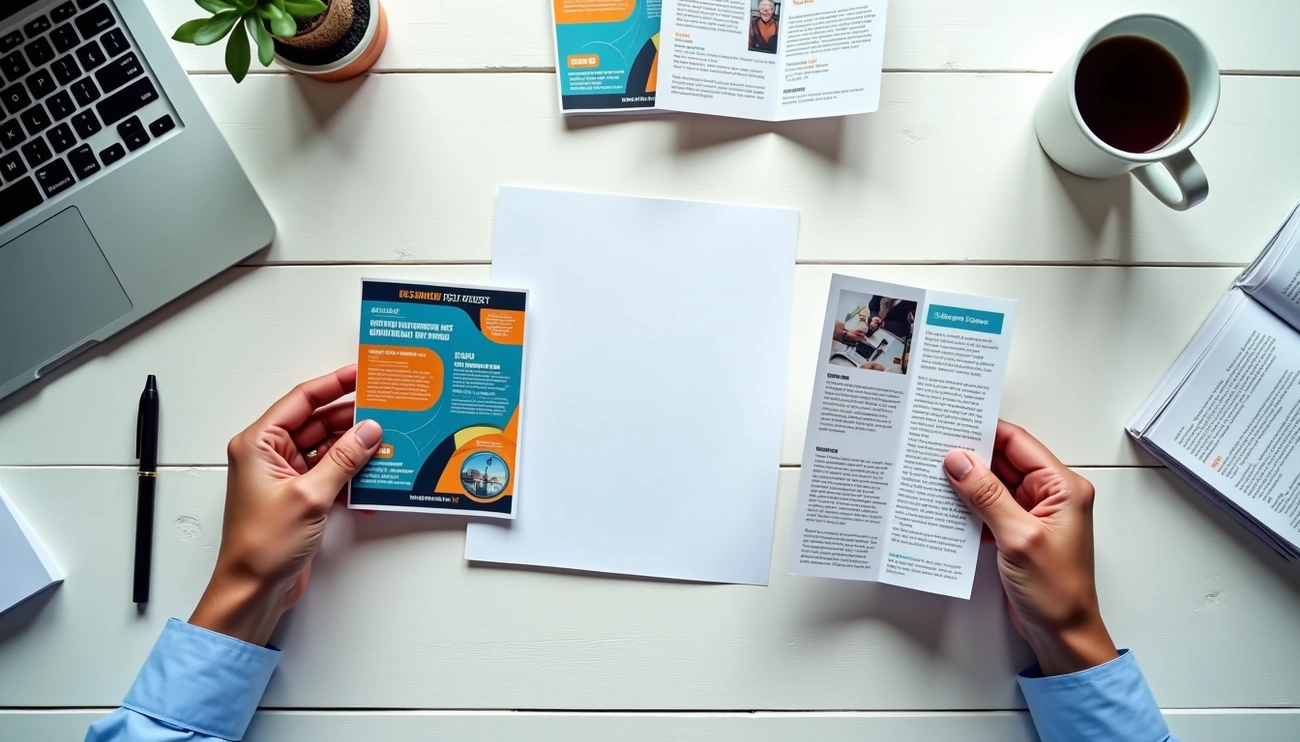
Format determines how much information each marketing piece can carry. Flyers operate within the constraints of a single sheet and limit content to what fits on one or both sides. Brochures and leaflets fold into multiple panels, which provides more space for complete storytelling. This fundamental structural difference shapes everything from content strategy to design execution.
Content Capacity: Single Page vs Multi-Panel
Single-sheet flyers force concise messaging. You get one page to deliver your whole message and need sharp focus on key details. Leaflets create multiple panels through their folded format that guide readers through sections. A tri-fold leaflet offers six distinct surfaces and allows brands to structure information across panels. This expanded canvas supports detailed product explanations, feature comparisons and complete service descriptions that single-page formats cannot accommodate.
The fold becomes the defining characteristic. Leaflets use various fold types including trifold, half-fold, gate fold and z-fold configurations. Each fold type serves specific content organization needs, whereas flyers lack this structural flexibility.
Design Complexity and Layout Options
Flyers use bold, eye-catching graphics with concise text designed to capture attention within seconds. Large fonts and bright colors dominate the design strategy and are optimized for high-traffic environments where quick visibility matters. Leaflets need more sophisticated design approaches. Their multi-page layout demands careful information organization through logical sections that guide readers through material.
Leaflets incorporate headings, subheadings, multiple images, charts and infographics to break up text while maintaining visual interest. This structured approach creates cohesive brand presentations using colors, fonts and logos that line up with overall messaging. Flyers present simpler layouts given their single-page constraints.
Message Length and Information Density
Flyers deliver immediate impact through straightforward, engaging language and catchy headlines. You’ll find capitalized words highlighting key details like sale percentages, dates and urgent calls to action. The content stays minimal by necessity. Leaflets provide complete overviews with ample detail about products, services or events. They enlighten audiences through in-depth analyses including background information, features, benefits and testimonials. This format accommodates statistics, program details and extensive contact information that flyers cannot support.
Purpose and Target Distribution Channels
Flyers focus on quick awareness and time-sensitive promotions such as sales, events, product launches or limited-time offers that need immediate attention. They target broad, local audiences through mass distribution in public spaces. Distribution happens through hand-outs, mail drops or countertop displays with ease. Their purpose centers on generating quick interest and driving immediate action.
Leaflets serve educational, persuasive and brand storytelling functions. They inform specific audiences and help potential customers understand products, services or value propositions in greater detail. Distribution occurs more selectively at events, through direct mail campaigns or in-store displays where engaged audiences seek complete information. Their extended lifespan supports long-term promotion rather than fleeting announcements.
When to Choose Flyers for Your Marketing Campaign
Choosing between flyers and leaflets depends on campaign objectives and distribution scope. Flyers excel in specific scenarios where speed, volume, and immediacy matter most.
Event Announcements and Time-Sensitive Promotions
Events just need immediate commitment from your audience. Flyers work best for time-sensitive promotions because they create urgency through direct, focused messaging. Event flyers succeed when paired with urgent CTAs that generate FOMO. Phrases like “Book your ticket now,” “Save your seat today,” and “Register for our free workshop” drive faster action. The combination of benefit-driven language with urgency produces better response rates than generic invitations.
Time-limited offers require similar treatment. Promotions that highlight specific value, such as “Get 25% off with the code on this flyer” or “Buy one, get one free,” convert well when distributed through single-sheet formats. Recipients can grasp the offer instantly without navigating through multiple panels because of the simplicity.
High-Volume Distribution on Limited Budget
Cost efficiency separates flyers from more elaborate print materials. Distribution specialists report that door-drop flyer costs range from USD 0.50 to USD 1.80 per piece, including printing and distribution. This pricing makes flyers available to businesses operating on tight marketing budgets.
Bulk printing delivers substantial savings. Orders exceeding 2,500 units achieve USD 0.06 to USD 0.10 per flyer, representing 60% cost reduction compared to small-batch pricing. Budget-conscious consultants who allocate USD 200 to USD 800 monthly can distribute 500 to 2,000 flyers depending on paper quality.
The ROI justifies the investment. Well-executed flyer campaigns achieve conversion rates up to 5% on average, meaning five recipients per 100 distributed take intended action. Also, 54% of consumers report higher purchase likelihood after receiving flyers. Effective campaigns generate 3 to 5 times return on investment when targeted properly.
Simple Messages with Clear Call-to-Action
Flyers force concise communication. You get limited space, which eliminates unnecessary details and sharpens focus on essential information. This constraint benefits campaigns centered on single objectives: visit a store, attend an event, claim a discount, or call a number.
Clear CTAs transform interest into action. Successful flyers feature prominent, action-oriented phrases that tell recipients exactly what to do next. The directness eliminates confusion and improves response rates.
Door-to-Door and Mass Distribution Scenarios
Physical distribution remains effective for local targeting. USPS Every Door Direct Mail services help small businesses, restaurants, and realtors reach customers by mailing to specific neighborhoods without addressed envelopes. You can target demographics by age, household size, and income within selected postal routes.
Door-drop distribution delivers promotional materials directly to residential mailboxes and creates tangible touchpoints with potential customers. Response rates range from 0.5% to 2%, often outperforming digital ads in physical visibility and recall. Just as important, 89% of people remember receiving flyers, and 45% keep them for future reference.
When to Choose Leaflets for Business Communication
Leaflets serve distinct purposes where information depth outweighs distribution volume. Multi-panel formats solve specific communication challenges that single-sheet flyers cannot address.
Detailed Product or Service Information
Product information leaflets provide space for complete details that regulatory requirements or customer education just need. Multi-folded leaflets formed from single sheets accommodate product specifications, usage instructions and safety information across multiple panels. Technical products, healthcare items and services requiring detailed explanations before purchase decisions just need this format.
The multi-page structure supports legislative requirements without altering existing packaging. Companies can include multiple languages and enable use in different countries while maintaining compact dimensions. Pharmaceutical products use patient information leaflets to convey dosage instructions, side effects and storage requirements that wouldn’t fit on single-page formats.
Professional Presentations at Trade Shows
Trade show environments just need materials that communicate brand value while competing for visitor attention. Brochures and leaflets at industry events showcase products, services and brand positioning through designs that are crafted with care. Visual appeal becomes critical in bustling exhibition spaces. Attracting and retaining visitor attention determines success.
Attendees learn about offerings and make informed decisions about fit for their needs through informative handouts. Leaflets, brochures or booklets with detailed product information, case studies and success stories demonstrate how solutions have helped other businesses. Professional-quality materials reflect brand standards and create lasting impressions beyond brief booth interactions.
Menu Cards and Informational Guides
Restaurant menus show the organizational strength leaflets possess. Menu templates come in multiple sizes, including 8.5″ x 11″ and 4″ x 9″. They work as standalone pieces or paired together. Many restaurants use larger formats for main courses and smaller sizes for drink lists or seasonal specials.
Service-based businesses employ menu-style leaflets for spa treatments, salon services and hospitality offerings. The folded format allows categorical organization and makes navigation easier for customers seeking specific information.
Direct Mail Campaigns with Multiple Messages
Direct mail leaflets deliver stronger returns than digital alternatives. Mailings to house lists achieve 9% response rates, while prospect lists yield 4.9%. Email marketing generates only 1% response. Direct mail returns an average of USD 12.57 for every dollar spent.
Multiple panels support varied messaging within single mailpieces. Flyer self-mailers combine postcard benefits with letter advantages and use up to 8 pages for detailed communication. This capacity allows personalization for each recipient and boosts response rates through targeted content across different panels.
Flyer and Leaflet Printing: Design and Cost Factors
Production decisions affect both budget and campaign effectiveness by a lot. Paper specifications, finishes and printing economics help you optimize your investment in flyers and leaflets.
Paper Stock Selection: Text vs Card Weight
Paper weight systems confuse buyers often. An 80lb cover stock feels heavier and thicker than 80lb text paper because each grade uses different base ream dimensions for measurement. Cover stock uses 20 inches x 26 inches base reams. Text uses 25 inches x 38 inches. The same pound rating means different actual thicknesses as a result.
GSM (grams per square meter) gives universal measurement for paper types of all kinds. This makes it more reliable than LBS ratings alone. Heavier paper stocks like 80lb or 100lb cover add premium feel to your materials. Lighter stocks prove more economical but may lack impact. Text weight paper serves letterhead and program inserts commonly. Cover stock suits business cards and premium materials.
Coating Options: Gloss vs Matte Finish
Glossy finishes give vibrant colors and reflective shine. Images pop. Colors appear more saturated and eye-catching. But glossy surfaces produce glare under bright lights and show fingerprints easily. Matte finishes provide sophisticated looks with reduced glare. They work great for bright spaces or framed displays. The non-reflective surface minimizes fingerprints and masks smudges better than gloss. Colors appear softer and less intense with matte coating.
Print Quantity Impact on Unit Price
Commercial printing follows economies of scale principles. Larger quantities reduce per-unit costs always. Make-ready time stays constant whatever the run length. Setting up presses, folders equipment takes similar time whether you print 1,000 or 100,000 pieces. Make-ready represents disproportionate cost percentages for small runs. Setup costs add by a lot more per unit at 1,000 pieces than at 100,000 pieces.
Design Tips for Maximum Marketing Impact
Strong headlines using 6-10 words grab attention well. Action words like “discover” and “save” create urgency. High-quality images relevant to your message outperform stock photos. Whitespace prevents cluttered layouts and puts focus on important information. Single clear calls to action outperform multiple offers that cause indecision. Quality paper stock and finish reflect your brand’s professionalism and build customer trust.
Flyer vs Leaflet Comparison Table
| Attribute | Flyers | Leaflets |
| Format/Structure | Single-page, unbound piece of paper | Flat single sheets or folded multi-panel documents |
| Content Capacity | Limited to one or both sides of single sheet | Multiple panels provide more space (e.g., tri-fold offers 6 surfaces) |
| Standard Sizes | 4″×6″ to 8.5″×11″ (US standard: 8.5″×11″; A4: 8.3″×11.7″; Half sheet: 5.5″×8.5″; A5: 8.3″×5.8″; A6: 5.8″×4.1″; DL: 8.3″×3.9″) | Base sizes match but fold into multiple panels |
| Paper Quality | Lower-quality, inexpensive paper for short-term use; durable stock for longevity needs | Thicker paper stock for improved durability and extended use |
| Fold Types | None (single sheet) | Bi-fold (4 panels), Tri-fold (6 panels), Z-fold (zigzag pattern) |
| Design Complexity | Bold, eye-catching graphics with concise text; large fonts and bright colors; simpler layouts | Sophisticated multi-page layout with headings, subheadings, and multiple images, charts, infographics |
| Message Length | Straightforward language that engages; minimal content; catchy headlines; capitalized key details | Complete overviews with detailed information, background, features, benefits, testimonials, and statistics |
| Target Audience | Broad, local audiences | Specific audiences that seek complete information |
| Distribution Methods | Mass distribution: hand-outs at events, mail drops, door-to-door, bulletin boards, countertop displays, high-traffic locations | Selective distribution: given to interested customers, included in orders, targeted locations, direct mail, trade shows |
| Distribution Scope | High-volume, mass distribution | Lower-volume, strategic placement |
| Lifespan/Duration | Short-term use; time-sensitive | Extended lifespan; weeks or months of circulation; evergreen content |
| Response Rate | 0.5%-2% (door-drop); up to 5% conversion rate (well-executed campaigns) | Direct mail leaflets: 9% (house lists), 4.9% (prospect lists) |
| Retention/Recall | 89% remember receiving; 45% keep for future use | Not mentioned |
| Best Use Cases | Event announcements, time-sensitive promotions, simple messages with clear CTA, door-to-door campaigns, limited budgets | Detailed product/service information, trade show presentations, menu cards, informational guides, direct mail with multiple messages |
| Information Organization | Single-focus, no structural sections | Logical sections across panels; categorical organization |
Conclusion
The choice between flyers and leaflets ultimately depends on your specific marketing goals. Flyers are ideal for time-sensitive promotions, large-scale distribution, and budget-friendly campaigns where a clear, simple message needs to capture attention quickly. Their cost-effectiveness and wide reach make them perfect for event promotions, special offers, and short-term campaigns.
Leaflets, on the other hand, are better suited for delivering more detailed information and creating a polished, professional impression. With multi-panel formats such as bi-fold or tri-fold, leaflets provide ample space for storytelling, product descriptions, and structured content that a single-page flyer cannot accommodate.
Neither format is universally better—it’s about choosing what aligns with your objectives. Opt for flyers when you need fast impact and mass exposure. Choose leaflets when your message requires depth, organization, and a more refined presentation.
At BookPrintingChina, we specialize in high-quality printing for flyers, leaflets, brochures, booklets, and a full range of marketing materials tailored to your brand. With advanced printing technology, a wide selection of paper options, and custom finishes, we ensure every project delivers a professional look and lasting impact—at a competitive price.
Contact us today to get a free quote and let our team help bring your ideas to life with reliable service, fast turnaround, and exceptional results.