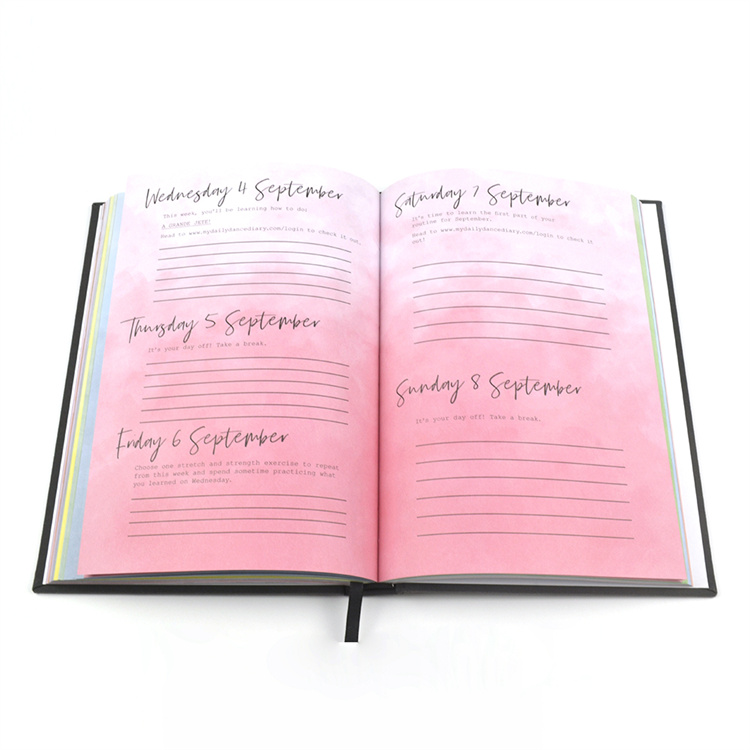





Creating a custom prayer journal can be an enriching endeavor, both personally and financially. Not only does it provide a means to express one’s faith and reflections, but it also offers an opportunity to connect with others who seek similar tools for their spiritual journeys. In this guide, we will explore the essential steps to design, create, and market your custom prayer journals effectively.
What is the Purpose of a Prayer Journal
A prayer journal serves as a spiritual companion, a dedicated space where individuals can articulate their thoughts, reflections, and prayers. It’s a tool that helps deepen one’s relationship with their faith, offering a structured way to articulate thoughts and feelings. For many, a prayer journal is more than a notebook; it is a sacred record of their spiritual experiences.
The purpose of a prayer journal is multi-faceted:
-
Reflection: It allows users to reflect on their spiritual journey, documenting their growth and challenges.
-
Guidance: It serves as a guide during prayer, helping maintain focus and intention.
-
Record Keeping: Users can record answered prayers, maintaining a log of spiritual victories and testimonies.
For those looking to create custom prayer journals, understanding their purpose is crucial. It ensures that the journals you design are not only beautiful but also functional and meaningful.
What Does a Prayer Journal Consist of
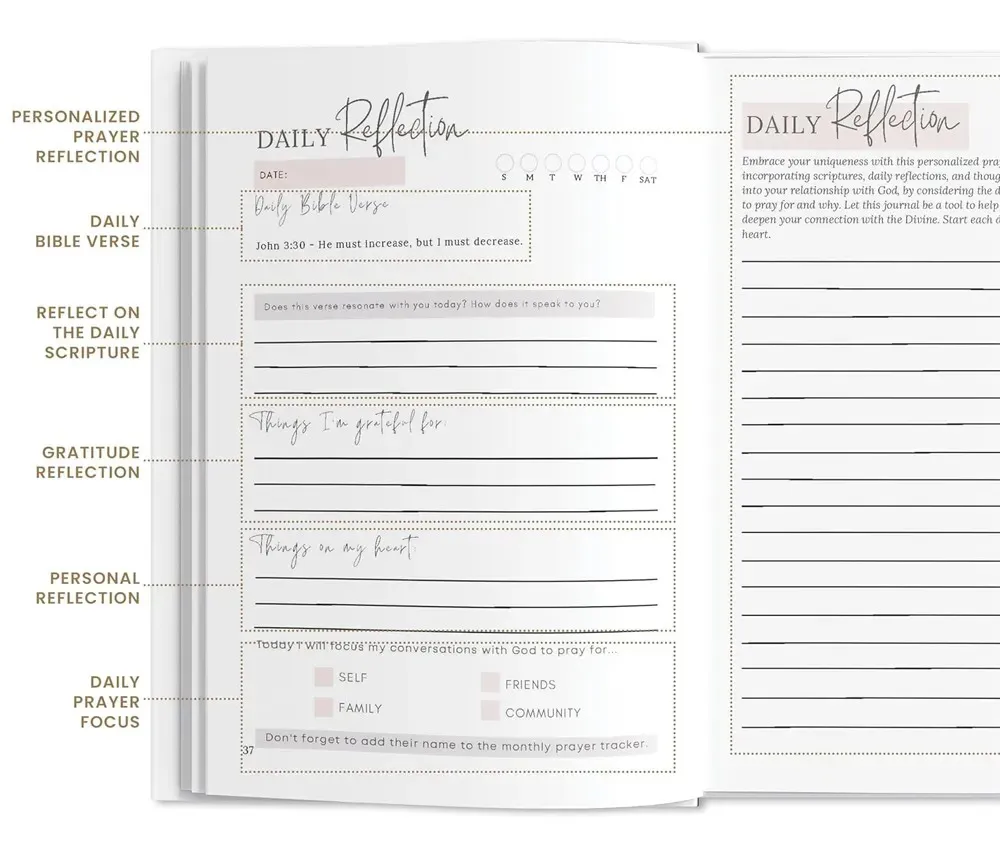
A prayer journal serves as a personal space for individuals to document their prayers, thoughts, and reflections. It is a versatile tool that can include various elements tailored to the user’s preferences. Here are some common components found in a prayer journal:
-
Introduction or Dedication Page: This section sets the tone for the journal, offering a space to write a dedication or introduce the journal’s purpose. It’s a personal touch that can make the journal more meaningful to the user.
-
Daily or Weekly Prayer Entries: These pages are reserved for writing down prayers, reflections, and insights. They may include prompts or questions to guide the user’s thoughts and encourage deeper reflection.
-
Scripture or Inspirational Quotes: Including scriptures or motivational quotes can provide encouragement and inspiration. These elements can serve as starting points for reflection or prayer, offering guidance and support.
-
Gratitude Lists: Encouraging users to note down things they are thankful for can foster a positive mindset and help them recognize God’s blessings in their lives.
-
Daily Affirmations: Positive affirmations can help reinforce faith and encourage a hopeful outlook on life.
-
Answered Prayers: A section to reflect on prayers that have been answered can serve as a powerful reminder of God’s faithfulness.
-
Personal Reflections: Users can write about their spiritual journeys, struggles, and triumphs, creating a narrative that can be revisited over time.
By incorporating these elements, you can create a comprehensive custom prayer journal that resonates with users on a personal level.
Do a Research
Before diving into the design and production of your custom prayer journal, conducting thorough research is crucial. Understanding your target audience and the current market trends will help you create a product that meets the needs of potential customers.
-
Identify Your Audience: Determine who your ideal customers are. Are they new believers, seasoned followers, or perhaps individuals seeking a deeper connection with their faith? Knowing your audience will guide your design choices and marketing strategies.
-
Analyze Competitors: Look at existing prayer journals on the market. What features do they offer? What are their price points? Analyzing competitors can help you identify gaps in the market that your product can fill.
-
Gather Feedback: If possible, conduct surveys or focus groups with individuals who regularly use prayer journals. Their insights can inform your design and content choices, ensuring that your journal meets their needs.
-
Explore Trends: Stay updated on current trends in the journaling and faith communities. This can include popular themes, colors, or formats that resonate with users.
This research phase is foundational. It arms you with the knowledge needed to create a product that not only stands out but also meets the needs and desires of your target audience.
Pick Your Niche
Choosing a specific niche for your custom prayer journal can set it apart from competitors. Consider the following niches:
-
Guided Prayer Journals: These journals provide prompts and structure for users who may need help organizing their thoughts.
-
Youth-focused Journals: Designed for teens and young adults.
-
Devotional Journals: Including devotional content alongside journaling space.
-
Themed Journals: Focus on specific themes, such as gratitude, healing, or spiritual growth, to attract a targeted audience.
-
Artistic Journals: Combine prayer journaling with creative expression by including space for drawings, doodles, or calligraphy.
Selecting a niche helps streamline decisions throughout the creation process, from design to marketing. It also allows for a more targeted approach in reaching your audience, making your product more appealing and relevant.
Design an Eye-Catching Prayer Journal Cover
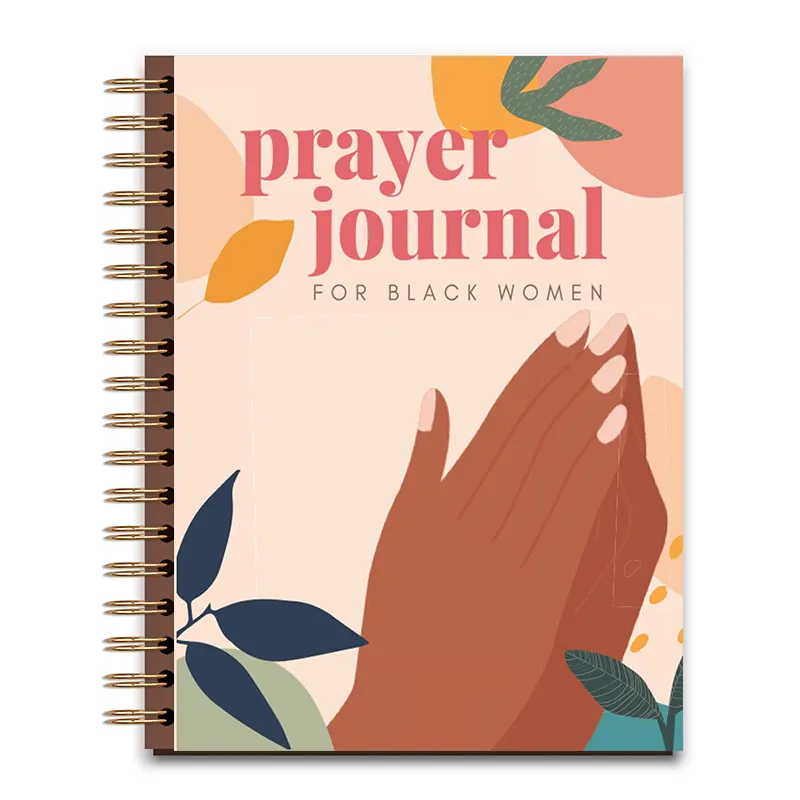
The cover of your custom prayer journal is the first impression potential buyers will have. A visually appealing design can attract more customers and convey the essence of the journal’s purpose. Here are some tips for designing an eye-catching cover:
-
Choose a Theme: Select a theme that resonates with your target audience. Whether it’s floral, minimalist, or inspirational, the theme should reflect the journal’s purpose and appeal to those who will use it.
-
Use Quality Imagery: High-resolution images or graphics can enhance the overall look of the cover. Consider using illustrations that evoke feelings of peace and spirituality.
-
Incorporate Meaningful Text: Including a thoughtful quote or scripture verse on the cover can immediately communicate the journal’s purpose. Ensure that the text is legible and complements the overall design.
-
Select a Color Palette: Choose colors that evoke emotion and align with the theme. Soft pastels may evoke calmness, while vibrant colors can inspire energy and enthusiasm.
-
Consider Texture: Adding texture to the cover, such as embossing or foil stamping, can create a tactile experience that enhances the journal’s appeal.
In addition to visual appeal, the cover should also be durable and functional. Consider using materials that can withstand frequent handling, such as laminated paper or fabric. This combination of aesthetics and practicality ensures that the journal is not only beautiful but also long-lasting, making it a valuable keepsake.
Prayer Journal Layout Tips
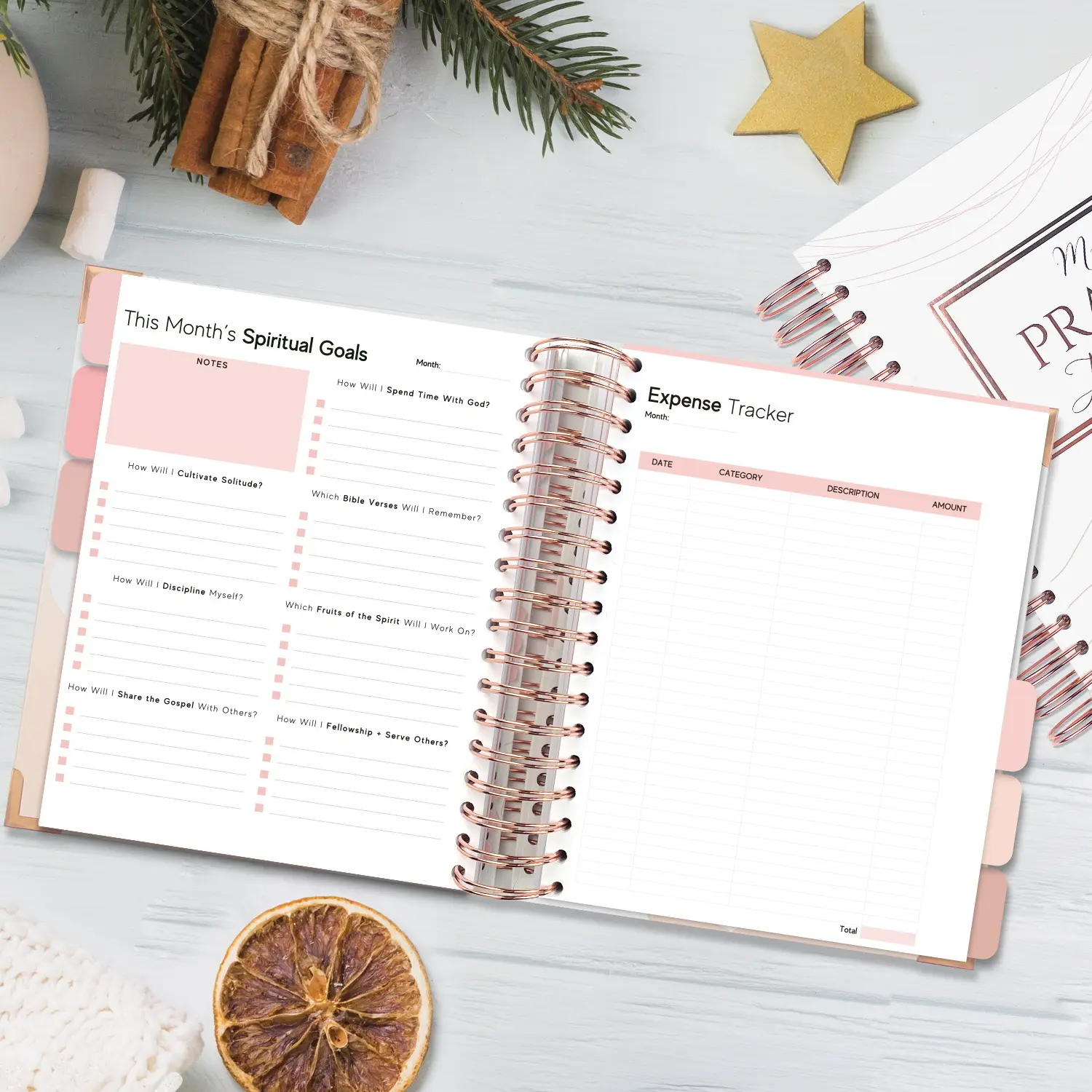
The layout of your custom prayer journal is crucial for its usability and appeal. A well-organized journal encourages regular use and makes the journaling process more enjoyable. Here are some layout tips to consider:
-
Create Clear Sections: Divide the journal into distinct sections for different purposes, such as prayer requests, reflections, and gratitude lists. Use dividers or tabs to make navigation easy.
-
Consistent Structure: Establish a consistent layout throughout the journal to provide a sense of order and predictability. This can include uniform margins, consistent fonts, and a standard format for each entry.
-
Incorporate Prompts and Guides: Providing prompts or guided sections can help users who may struggle with knowing what to write. These can include questions about gratitude, intentions, or reflections on scripture.
-
Space for Customization: Allow room for personalization by including blank pages or sections for doodles, notes, and additional reflections. This flexibility caters to diverse journaling styles and preferences.
-
Add Inspirational Quotes: Sprinkle inspirational quotes throughout the journal to motivate users and provide encouragement during their journaling experience.
-
Consider Page Layout: Experiment with different page layouts, such as two-page spreads or single-page formats, to see what works best for your audience.
By implementing these layout tips, you can create a custom prayer journal that is both functional and inviting.
Common Prayer Journal Sizes
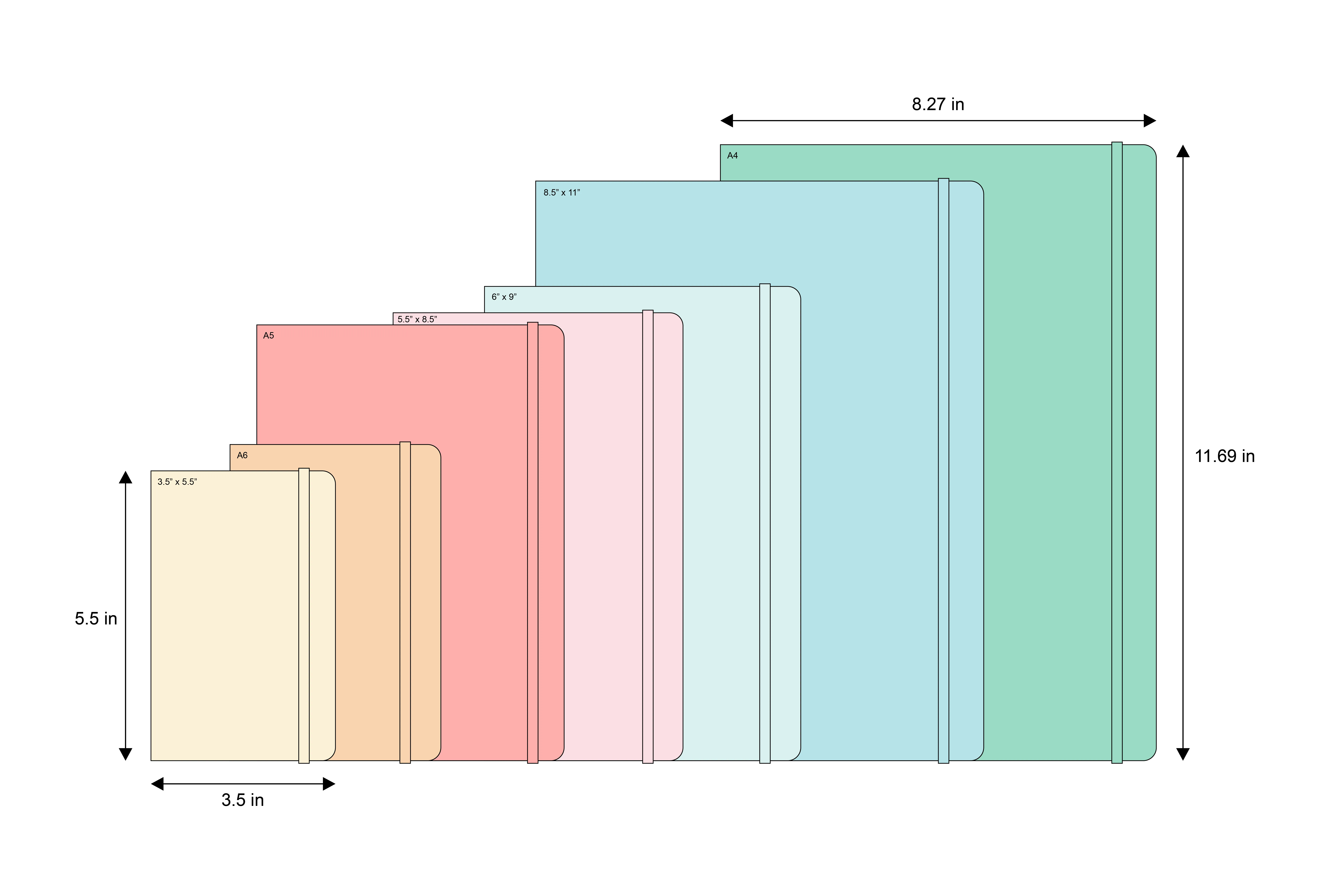
When creating your custom prayer journals, choosing the right size is essential. Different sizes cater to various preferences and uses. Here are some common prayer journal sizes to consider:
-
3.5″ x 5.5″ (Pocket Size): This compact size is ideal for users who want a journal they can carry with them easily. Perfect for on-the-go journaling.
-
5.5″ x 8.5″: A popular size that offers enough writing space while still being portable. It’s great for daily use and fits well in most bags.
-
6″ x 9″: This size provides a balance between portability and ample writing space, making it suitable for detailed entries.
-
A4: A larger option that allows for extensive writing and creative expression. Ideal for those who prefer more space to elaborate on their thoughts.
-
A5: A versatile size that is slightly smaller than A4, making it a great choice for those who want a balance of space and portability.
-
A6: A compact size that is easy to carry, perfect for quick notes and prayers.
-
8.5″ x 11″: The US letter size, suitable for users who want to include extensive reflections, drawings, or other creative elements.
Choosing the right size will depend on your target audience and their preferences for journaling.
Select a Binding Method for your Prayer Journal
Just as important as the content you fill it with is the binding method you choose. The binding not only impacts the look and feel of your journal but also its functionality and longevity. Let’s explore some popular binding options to help you select the perfect one for your needs:
 Softcover
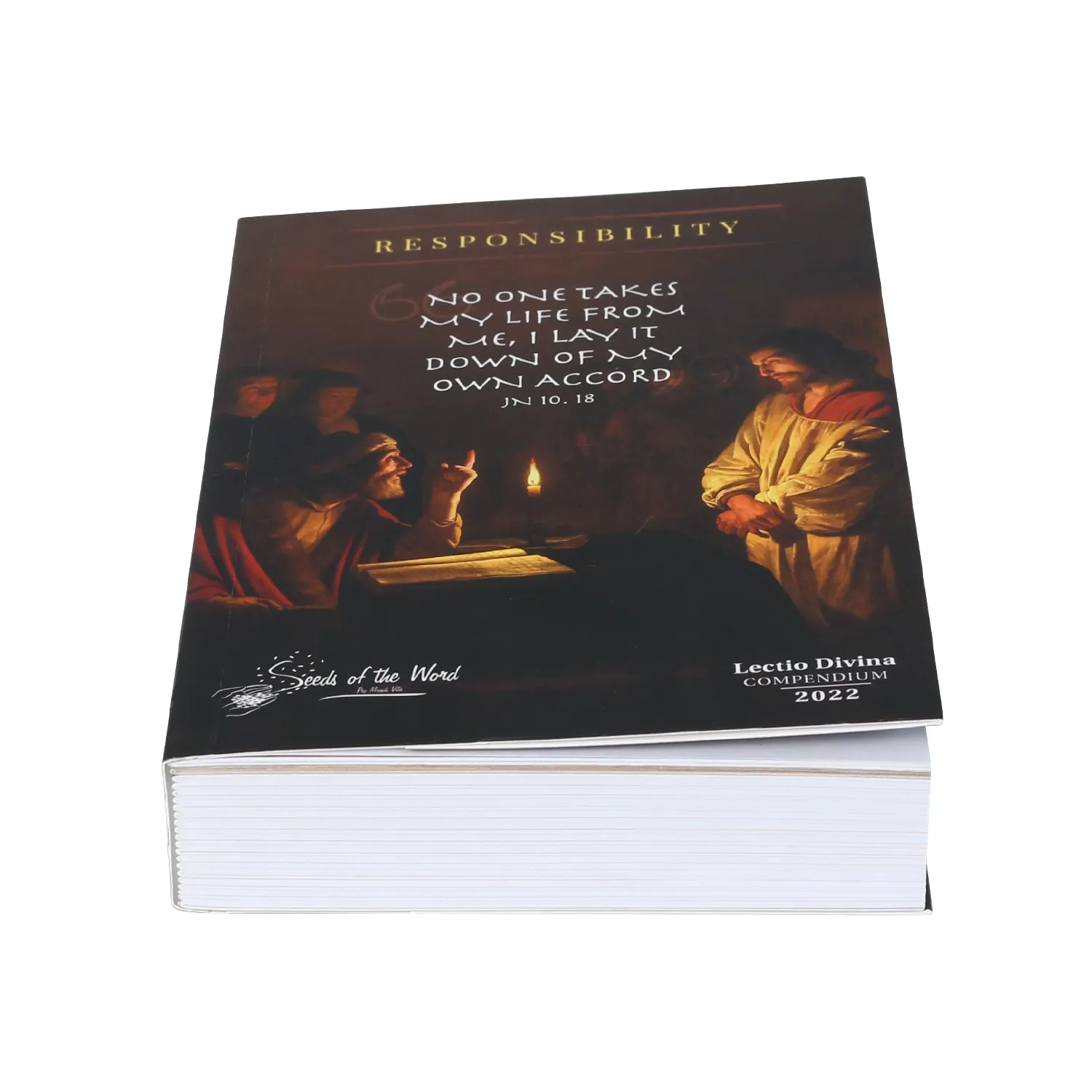
Softcover binding, also known as paperback binding, is a popular and economical choice. It involves gluing the pages to the cover along the spine.
Pros:
-
Affordable: Softcover is generally the most budget-friendly binding option.
-
Lightweight: It’s easy to carry around, making it ideal for those who like to journal on the go.
-
Flexible: The soft cover allows for some flexibility and bending.
Cons:
-
Less Durable: Softcover books are more prone to wear and tear compared to hardcover options.
-
Spine Durability: With excessive use, the glue on the spine may become undone.
-
Not Ideal for Heavy Use: If you plan to use your prayer journal daily for an extended period, a more robust binding might be preferable.
Ideal For:
-
Those on a budget.
-
Individuals who want a lightweight and portable journal.
-
Journals intended for shorter-term use.
 Hardcover Binding
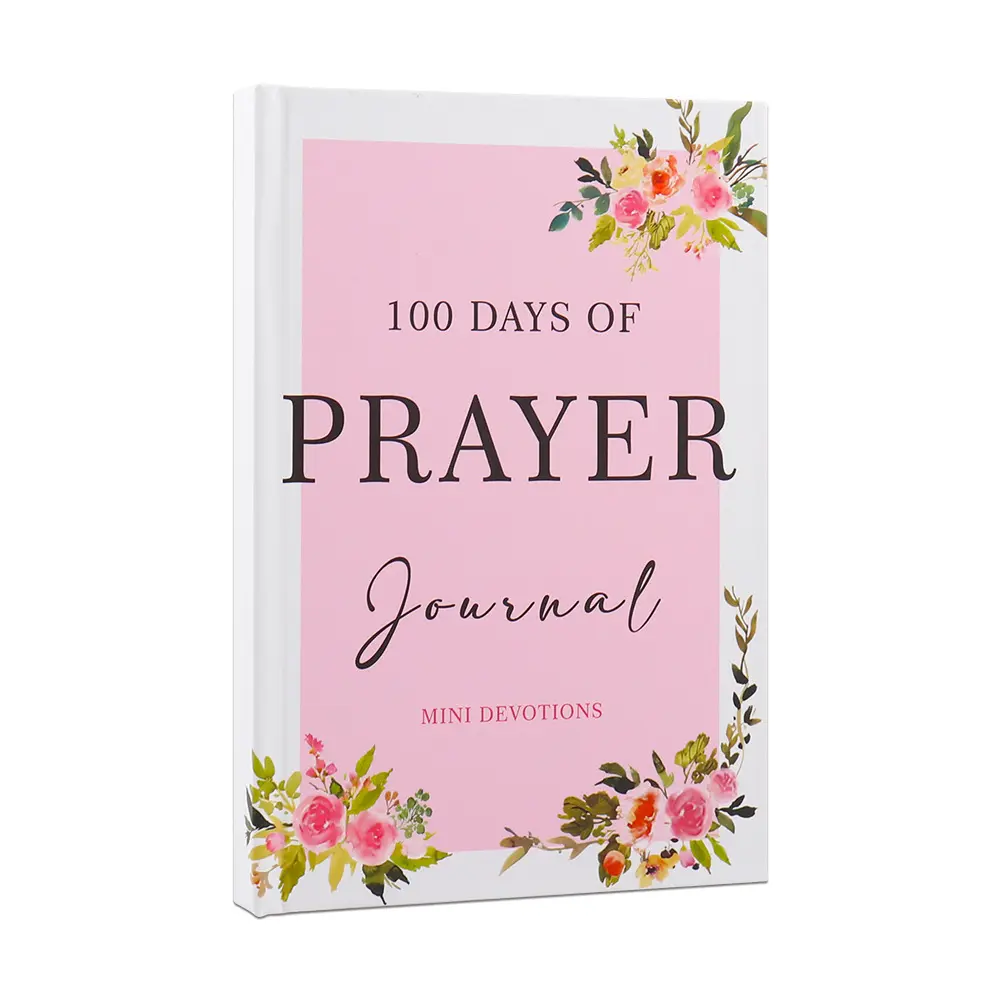
Hardcover binding offers a more premium and durable option. The pages are sewn together in sections, then glued to the sturdy hardboard cover.
Pros:
-
Durable: Hardcover bindings are built to last, making them perfect for long-term use.
-
Professional Look: They offer a polished and professional aesthetic.
-
Lay-Flat Option: Some hardcover books can be made to lay flat, making them easier to write in.
Cons:
-
More Expensive: Hardcover binding is typically more costly than softcover.
-
Heavier: Due to the hardboard cover, hardcover journals are heavier and less portable.
-
Long production time: Hardcover journals take longer to produce than paperback journals due to their more complex construction.
Ideal For:
-
Those seeking a long-lasting and durable prayer journal.
-
Individuals who prefer a more formal and substantial feel.
-
Journals that will be treasured and kept for years to come.
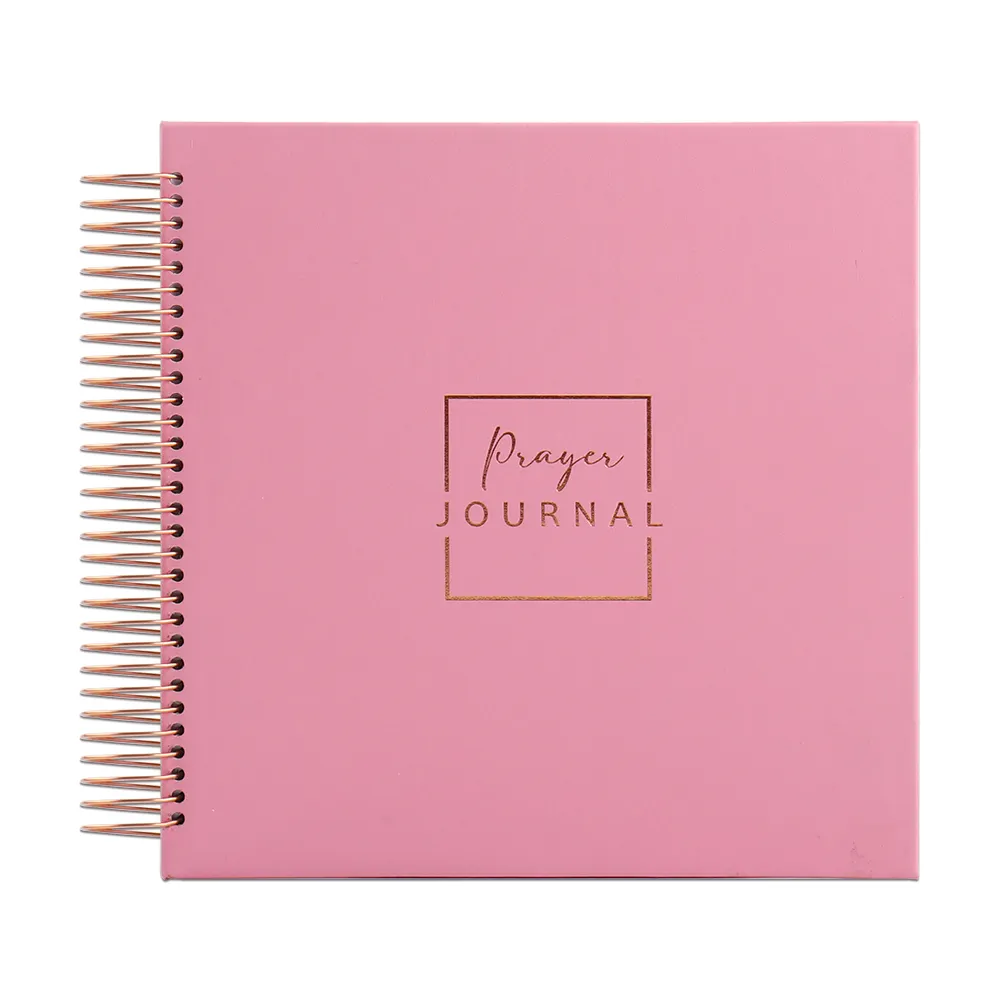 Spiral Binding
Spiral binding, also known as coil binding, uses a plastic or metal coil to hold the pages together through punched holes.
Pros:
-
Lays Flat: Spiral-bound journals lay completely flat, making writing easy and comfortable.
-
Pages Turn Easily: Pages turn smoothly and can be flipped 360 degrees.
-
Customizable: Available in various colors and materials for the coil.
Cons:
-
Less Professional Look: Spiral binding can appear less formal compared to hardcover options.
-
Coil Can Snag: The coil can sometimes snag on clothing or other items.
-
Not as Durable: Though it offers great functionality, it is not as durable as other means of binding.
Ideal For:
-
Those who prioritize ease of writing and page turning.
-
Individuals who prefer a practical and functional journal.
-
Journals used for note-taking and frequent reference.
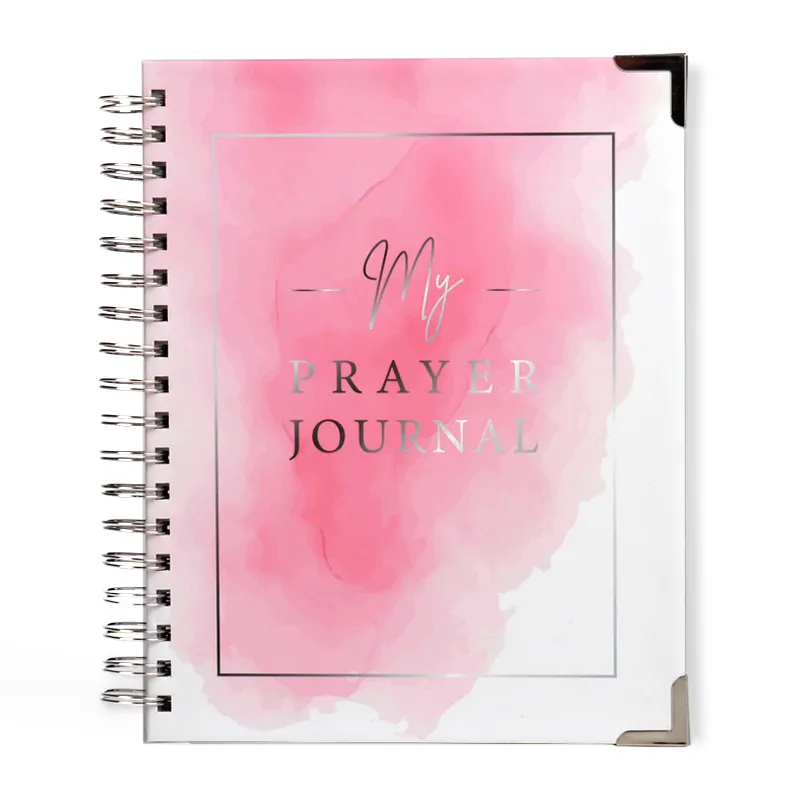 Wire-O Binding
Wire-O binding is similar to spiral binding but uses double-loop wire to hold the pages together.
Pros:
-
Lays Flat: Wire-O bound journals lay flat for easy writing.
-
More Professional Look than Spiral: The wire-O binding has a more refined and professional aesthetic than spiral binding.
-
Durable: The wire is typically more durable than plastic coils.
Cons:
-
More Expensive than Spiral: Wire-O binding is usually slightly more expensive than spiral binding.
-
Limited Customization: The color options are very limited.
Ideal For:
-
Those seeking a balance between functionality and a professional look.
-
Individuals who want a durable journal that lays flat.
-
Journals used for presentations and professional settings.
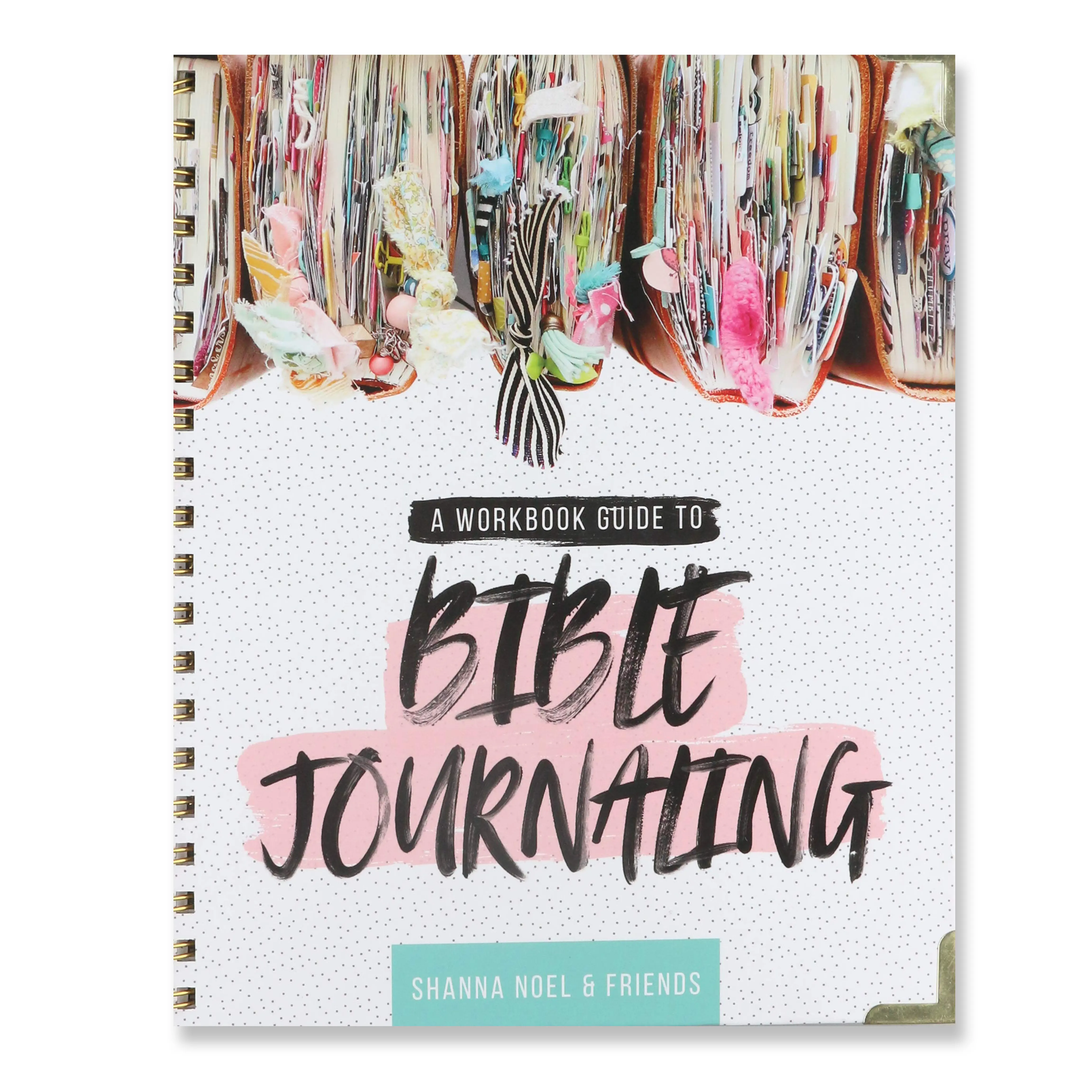 Concealed Wire-O
Concealed wire-o binding offers the best of both worlds: the lay-flat convenience of wire-o binding with a more refined and elegant appearance. In this method, the wire-o is hidden within the journal’s spine, giving it a cleaner, more book-like look.
Pros:
-
Lay-flat: Lays completely flat for easy writing, just like standard wire-o.
-
Aesthetics: Offers a cleaner, more sophisticated look by concealing the wire.
-
Durability: The wire binding itself is durable, holding pages securely.
Cons:
-
Cost: Generally more expensive than standard wire-o binding, due to the added construction complexity.
-
Production time: The production time will be longer than standard wire-o binding.
Ideal For:
-
Those who seek a balance between durability and style.
-
As a brand or personal gift for customers, relatives or friends.
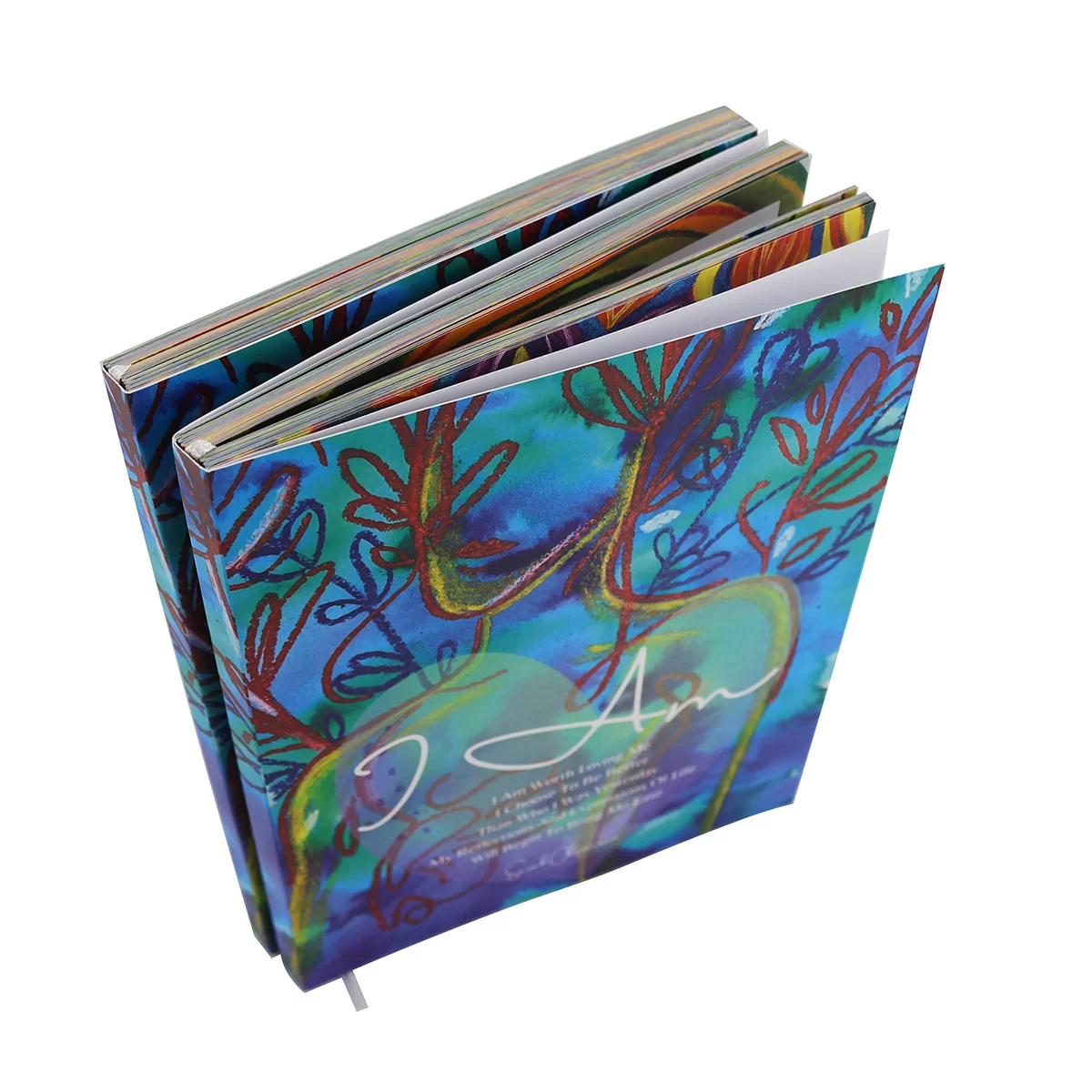
Flexibound
Flexibound binding combines the best aspects of hardcover and softcover. It features a flexible, soft-to-the-touch cover that’s glued to the pages.
Pros:
-
Flexible and Comfortable: The flexible cover allows for comfortable handling and easy portability.
-
Lays Flat: Flexibound journals can lay flat for easy writing.
-
Durable: More durable than softcover binding.
-
Premium Feel: Offers a luxurious and high-quality feel.
Cons:
-
More Expensive: More expensive than softcover binding.
-
Not as Durable as Hardcover: While more durable than softcover, it’s not as robust as hardcover.
-
Less Common: Flexibound is not as widely available as other binding options.
Ideal For:
-
Those seeking a balance between durability, flexibility, and a premium feel.
-
Individuals who want a comfortable and portable journal that still feels special.
-
Journals that are meant to be cherished and used frequently.
The best binding method for your prayer journal depends on your personal preferences, budget, and how you intend to use it. Consider these factors carefully, and choose the binding that will best support your spiritual journey.
Opt for Journal Cover Material
The material used for the journal cover significantly impacts its appearance, feel, and durability. Selecting the right cover material is crucial for both aesthetic and functional purposes.
 |
 |
 |
-
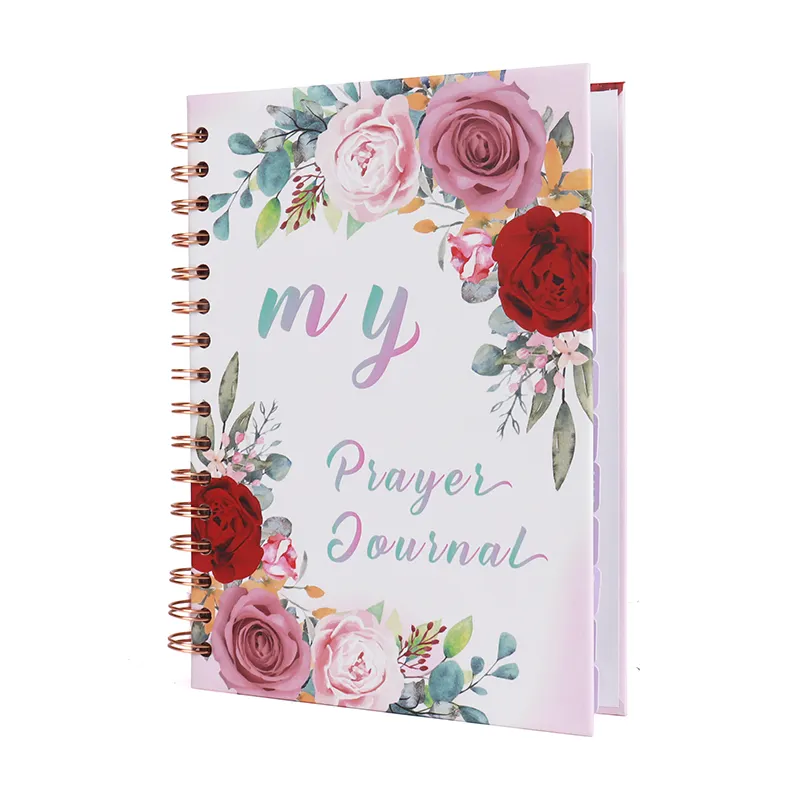
Paper Cover: A paper cover is an economical option that can be easily customized with various designs and finishes. It’s lightweight and suitable for those who prefer a simple and affordable journal.
-
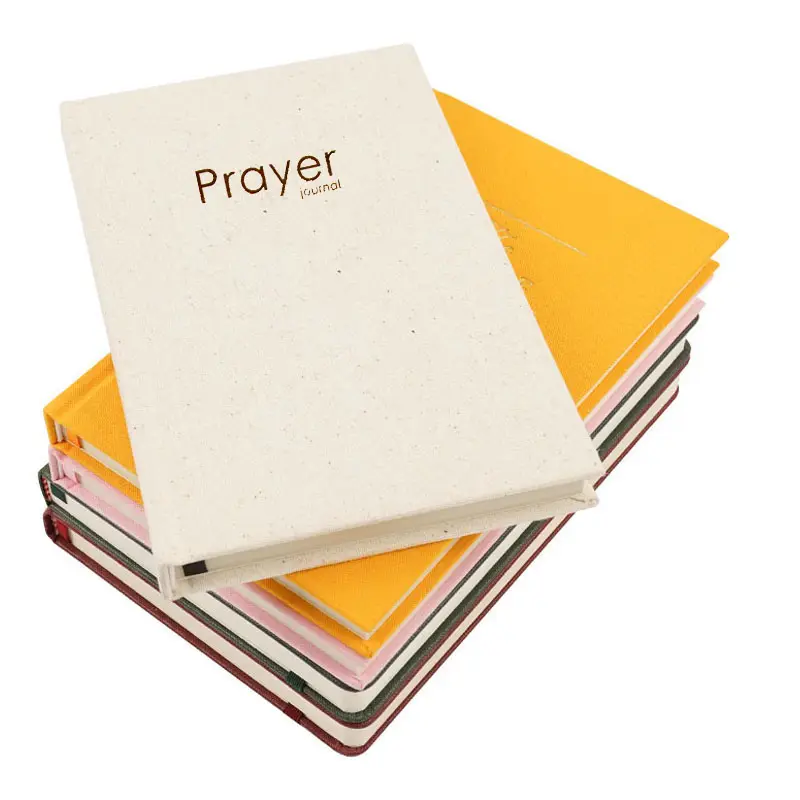
Cloth Cover: Cloth covers offer a tactile and elegant finish, often used for more premium journals. They provide a classic look and can be embroidered or foil stamped with logo, title and graphics.
-
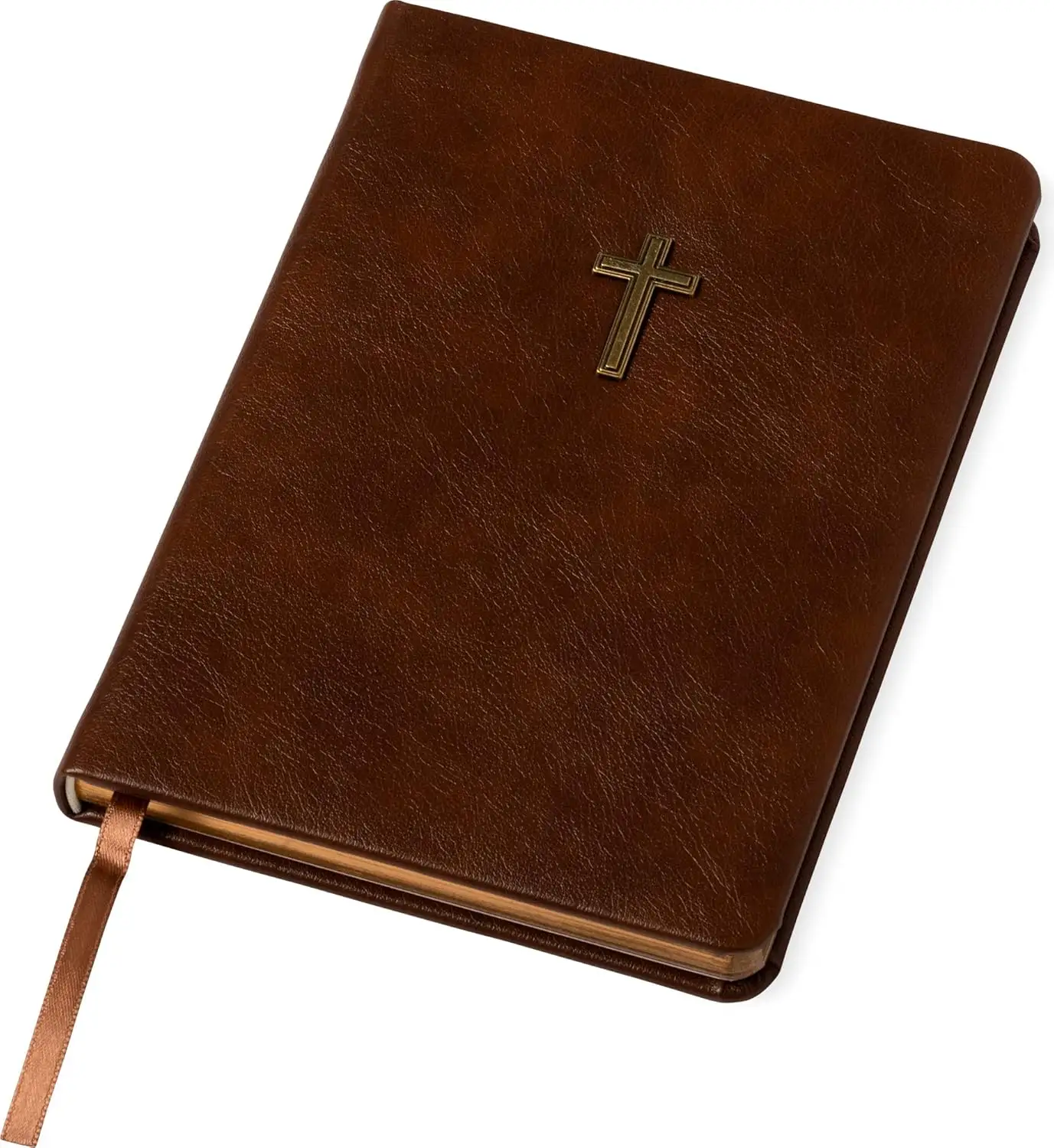
Leather Cover: Leather covers provide a luxurious and sophisticated touch, known for their durability and timeless appeal. They are ideal for those seeking a high-end journal that will age beautifully over time.
-
Plastic Cover: Plastic covers are practical and durable, offering protection against spills and wear. They are suitable for journals that require robustness and are often used for travel-friendly options.
Paper Stock for Custom Prayer Journal
Selecting the appropriate paper stock is essential for the writing experience and overall quality of the journal. The paper’s weight, texture, and color can all influence the journal’s functionality and aesthetic.
Uncoated Paper: Uncoated paper provides a natural and smooth writing surface, ideal for pen and pencil use. It absorbs ink well and is available in various weights, offering versatility and a pleasant writing experience.
Cream Paper: Cream paper offers a warm and inviting tone, reducing glare and providing a comfortable reading experience. It adds a touch of elegance and is often preferred for journals intended for reflection and introspection.
Selecting high-quality paper stock will ensure that users enjoy writing in your custom prayer journal and that their entries remain legible over time.
Consider Special Add-ons
Adding special features can enhance the functionality and appeal of your custom prayer journal. These add-ons provide additional value and can make the journal more attractive to potential buyers.
 |
 |
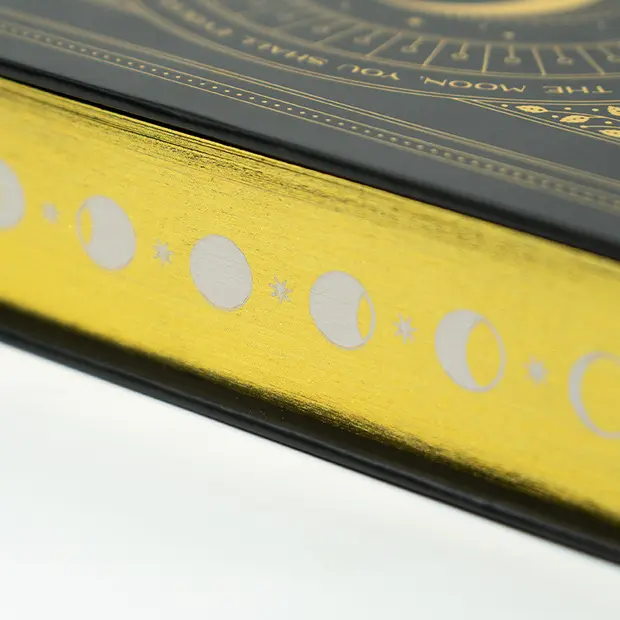 |
Foil Stamping: Foil stamping adds a luxurious and eye-catching element, perfect for titles or logos. It provides a metallic sheen that can elevate the journal’s design.
Emboss: Embossing creates a raised effect, adding texture and depth to the cover design. It’s a subtle but effective way to enhance the journal’s appearance.
Deboss: Debossing is the opposite of embossing, creating an indented effect. It can add sophistication and a tactile quality to the journal cover.
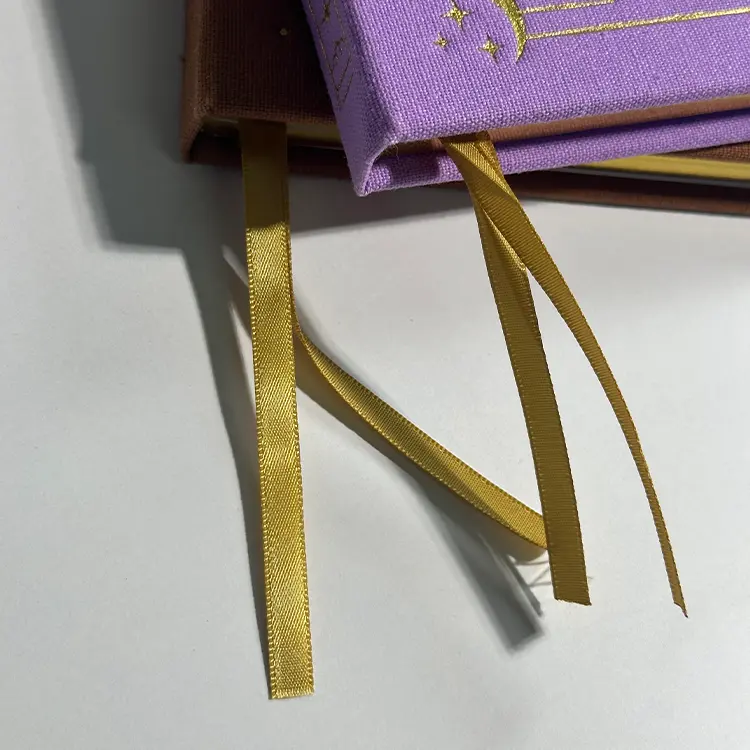
Ribbon Bookmark: Including a ribbon bookmark offers convenience and functionality, allowing users to easily mark their place in the journal.
Insert Tabs: Insert tabs can help organize the journal, making it easier to navigate through different sections. They are particularly useful for journals with multiple themes or prompts.
In addition to the above add-ons, you can also consider other options, such as pen holders, elastic bands, glitter edges, spot UV, and more.
Print Your Prayer Journal
Once you have finalized the design and content of your custom prayer journal, the next step is to print it. Here’s how to ensure a successful printing process:
-
Choose a Reliable Printer: Research printing companies that specialize in custom journals. Look for reviews and examples of their work to ensure quality.
-
Request Samples: Before committing to a large print run, request samples to evaluate the paper quality, binding, and overall appearance.
-
Finalize the Design: Ensure that all design elements are correctly formatted and that you have included bleed areas if necessary. Double-check for any typos or errors.
-
Determine Print Quantity: Decide on the number of copies you want to print. Consider starting with a smaller batch to test the market before committing to larger quantities.
-
Set Pricing: Determine the pricing for your custom prayer journal based on production costs, market research, and your target audience.
By following these steps, you can ensure a smooth printing process and produce high-quality custom prayer journals.
Marketing Your Prayer Journal
Once your custom prayer journal is printed and ready for sale, the next step is to effectively market it to your target audience. Here are some strategies to consider:
-
Build a Website: Create a dedicated website or landing page where customers can learn about your journal, view samples, and make purchases.
-
Leverage Social Media: Utilize platforms like Instagram, Pinterest, and Facebook to showcase your journal’s features and connect with potential buyers. Share testimonials and user-generated content to build trust.
-
Engage with Influencers: Collaborate with influencers in the faith and journaling communities to reach a broader audience. They can help promote your journal through reviews and recommendations.
-
Participate in Craft Fairs: Attend local craft fairs or markets to showcase your custom prayer journal in person. This allows potential customers to see and feel the product before purchasing.
-
Offer Promotions: Consider running promotions or discounts during special occasions, such as the start of the new year or holidays, to encourage sales.
By implementing these marketing strategies, you can effectively promote your custom prayer journal and reach a wider audience.
Where to Print a Journal
Choosing the right printing partner is vital for ensuring quality. BookPrintingChina offers comprehensive services for custom prayer journals, with options for various printing needs. We provide:
-
High-Quality Printing: Ensuring vibrant colors and sharp text.
-
Customization Options: A wide range of sizes, bindings, materials and finishes to choose from.
-
Cost-Effective Solutions: Competitive pricing for bulk orders, making it feasible to produce personalized prayer journals.
Collaborating with a reliable printer like BookPrintingChina ensures your final product meets both your expectations and those of your customers.
Creating custom prayer journals is a rewarding venture that combines creativity with spirituality. By following this guide, you can design journals that are not only beautiful but also meaningful and functional. So, whether you’re crafting these journals for personal use or to sell, remember that the heart of a prayer journal is its ability to inspire and guide its user on their spiritual journey.
If you’re ready to embark on this journey, start designing today and bring your vision to life. Consider reaching out to BookPrintingChina for your journal printing needs, and watch your custom prayer journals become a cherished companion for many.