




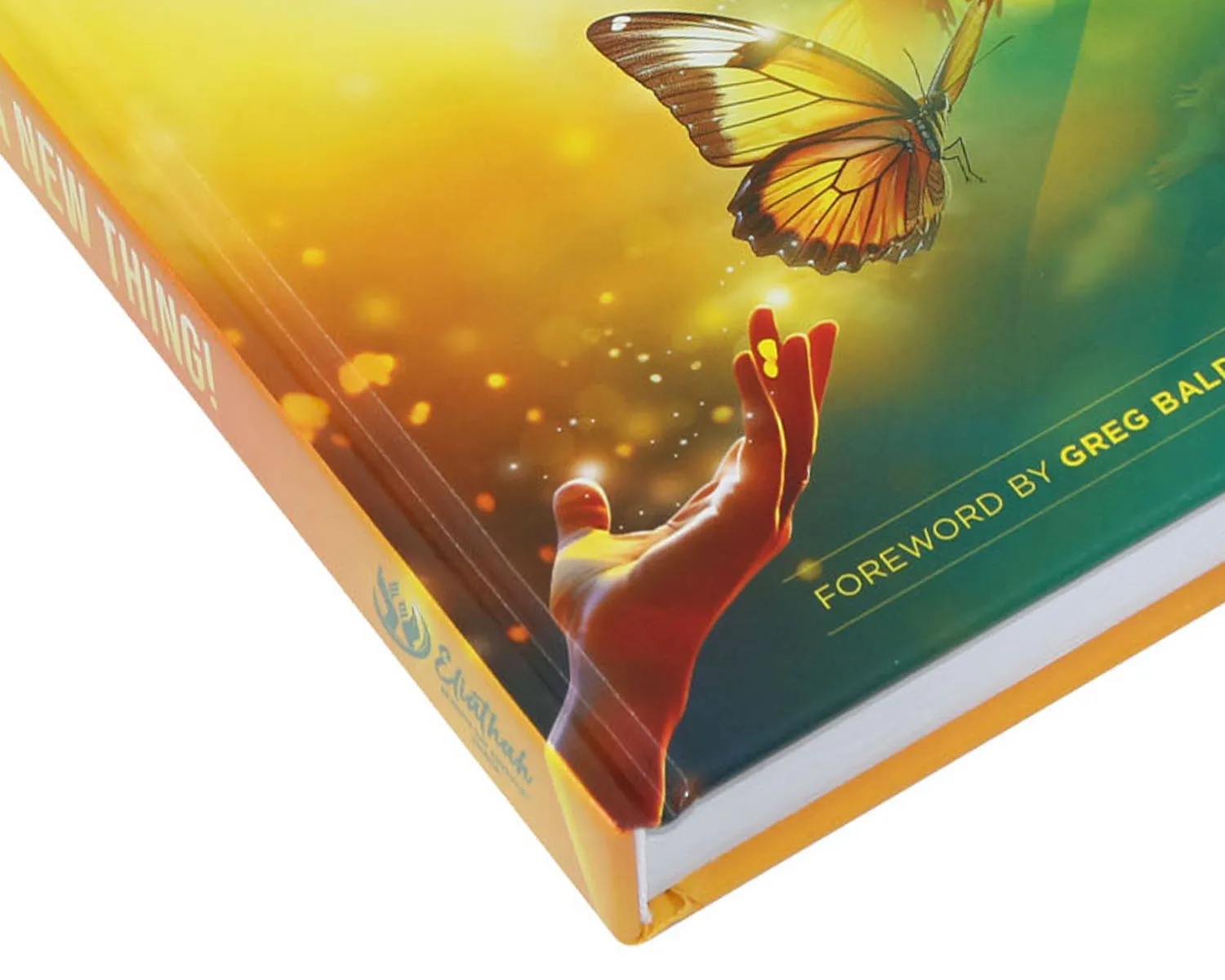

C1S Paper
C1S (Coated One Side) paper offers the best of both worlds: a coated side for vibrant, high-quality printing and an uncoated side for writing or easy gluing. Perfect for children’s board books, greeting cards, folding cartons, packaging sleeves, and more, C1S paper delivers a professional, polished look while keeping your projects functional and durable.
On this page, we’ll cover everything you need to know about C1S paper, its features, uses, and how to choose the right weight, so you can take your printing projects from ordinary to exceptional.
What's C1S Paper?
C1S stands for Coated One Side. As the name suggests, only one side of the paper is coated, while the other side remains uncoated.
Coated Side: Provides a smooth surface for sharp, vibrant color printing, making it ideal for images, illustrations, and polished designs.
Uncoated Side: Offers a natural, textured surface suitable for writing, note-taking, or easy glue binding in bookbinding and packaging applications.
C1S paper is commonly used for board books, book covers, greeting cards, and packaging, where one side needs to showcase high-quality printing while the other side remains functional or easy to work with.
C1S Paper – What You Need to Know
C1S paper combines a coated side for vibrant, high-quality printing with an uncoated side for practical use, making it a go-to choice for many printing projects.
Why Choose C1S Paper?
Vivid Printing: The coated side ensures colors pop and details stay sharp, perfect for photos, illustrations, and premium designs.
Strong & Durable: Its stiff base resists tears and adds rigidity, keeping books, packaging, and covers sturdy.
Two-in-One Functionality: Glossy on the front for striking visuals, writable or glue-friendly on the back for practicality.
Budget-Friendly: Get the look and feel of coated paper without the cost of double-sided coating.
Bright Surface: The coated side’s brilliant white backdrop makes text and graphics stand out.
Versatile Applications: Ideal for board books, packaging, cards, and more, where one side needs polish and the other side usability.
Things to Keep in Mind:
Single-Sided Color Only: The uncoated side won’t deliver the same vibrant printing.
Folding Care Needed: Stiffer sheets require scoring or die-cutting to fold cleanly without cracking.
Limited Finishing on Back: The uncoated side can handle only simple finishing techniques like basic foil stamping or embossing.
C1S paper strikes a great balance between visual appeal and practicality, making it a reliable choice for projects that need one side to impress and the other side to work.
The Common Uses of C1S Paper
C1S paper is an excellent choice for projects that require a high-quality printed surface on one side and a functional, writable, or glue-friendly back. The combination of coated and uncoated surfaces makes it highly versatile for both print and packaging applications.
Children’s Board Books: Pages are often created by mounting two sheets of C1S paper together. The coated side delivers vivid, vibrant printing and supports lamination, while the uncoated side allows for easy gluing.
Book Covers: Ideal for perfect-bound or spiral-bound books. The outside cover can be printed in bright, eye-catching colors, while the inside cover is often left unprinted, so coating is unnecessary.
Greeting Cards & Postcards: Perfect for invitation cards, thank-you cards, and other single-sided printed cards. The coated side ensures vibrant images, while the uncoated side allows for easy handwriting.
Card Decks: Flashcards, affirmation cards, and other decks need to add durability by mounting two sheets of C1S paper while maintaining a high-quality printed surface.
Cardboard Boxes: The coated front provides a premium appearance, while the uncoated back makes folding, gluing, and assembly easier.
Flyers & Promotional Materials: Suitable for projects that need high-quality printing on one side, while the reverse side remains functional for writing, black-and-white printing, or practical use.
C1S paper effectively balances visual appeal and functionality, making it an ideal choice for projects where one side needs to impress, and the other side must remain practical.
C1S Paper Weight and Thickness
We offer a wide range of C1S paper weights and thicknesses to suit various printing projects. Lighter weights are thinner and more flexible, while heavier weights are thicker, providing greater rigidity and durability for more demanding applications.
| GSM | LB (Cover Paper) | PT | Thickness(mm) |
| 250 gsm | 92 lb | 12 PT | 0.34 mm |
| 300 gsm | 111 lb | 14 PT | 0.42 mm |
| 350 gsm | 129 lb | 16 PT | 0.49 mm |
| 400 gsm | 148 lb | 18 PT | 0.55 mm |
Lighter C1S paper, such as 200gsm or 250gsm, is commonly used for greeting cards, postcards, book covers, or box inserts. 250gsm, 300gsm, and 350gsm are often used for folding cartons, packaging sleeves, card decks, and board books. For board books, the industry standard is to mount two sheets of 350gsm C1S paper together, ensuring each page is strong enough to withstand frequent handling. If you’re unsure which paper weight is best for your project, our team can offer guidance, or you can request paper samples to compare and select the most suitable option.
What's the Difference Between C1S and C2S paper
C1S (Coated One Side) and C2S (Coated Two Sides) papers differ in coating, color performance, writability, and cost:
Coating: C1S has only one side coated for high-quality printing, while the reverse side is uncoated. C2S has both sides coated, allowing double-sided high-quality printing.
Color Performance: C1S produces sharp, vibrant colors on the coated side, but the uncoated side is not suitable for color printing. C2S delivers bright, vivid colors on both sides, ideal for double-sided image-heavy projects.
Writability: The uncoated side of C1S is easy to write on or glue. C2S is coated on both sides, making writing difficult.
Cost: C1S is more economical since only one side is coated, while C2S is generally more expensive due to double coating.
C1S is perfect for projects that need a vibrant printed side and a functional, writable back, such as board books, card decks, book covers, or folding carton and box inserts. C2S works best for double-sided image-heavy printing, like books, magazines, catalogs, and high-end brochures.