




As brands move toward sustainable and premium packaging, paper bags have become a popular alternative to plastic packaging across many industries. Choosing the right paper bag material is more than a design decision—it directly impacts durability, cost, brand image, and customer experience. With so many paper bag material types available, understanding the options will help you select the best material for paper bag production that aligns with your business goals.
In this guide, we’ll explore the most common materials used for printing paper bags, their applications, and how to choose the right option for your brand.
Why Paper Bags Are Replacing Plastic Packaging
Paper bags are increasingly replacing plastic packaging as businesses adapt to changing regulations, consumer expectations, and sustainability goals. This shift is driven by environmental responsibility as well as branding and functional advantages.
Environmental Regulations and Consumer Preference
Governments worldwide are introducing stricter regulations on single-use plastic bags, including bans, taxes, and mandatory reductions. These policies encourage businesses to seek alternative packaging solutions that comply with environmental standards. At the same time, consumers are becoming more environmentally conscious and actively prefer brands that use sustainable packaging. Paper bags, made from renewable resources and designed for recycling, align well with these regulatory and consumer-driven demands.
Brand Perception and Sustainability Marketing
Packaging plays a significant role in how a brand is perceived. Using paper bags sends a clear message that a business values sustainability and responsible practices. This positive association helps strengthen brand trust and loyalty, especially among eco-conscious customers. Paper bags also support sustainability marketing efforts, allowing brands to highlight recyclable materials, FSC-certified paper, or recycled content directly on the packaging, reinforcing their environmental commitment.
Reusability and Recyclability Advantages
Unlike thin plastic bags that are often discarded after a single use, paper bags are typically more durable and reusable. Many customers reuse paper bags for storage, gifting, or shopping, extending their lifecycle and increasing brand exposure. Additionally, paper bags are widely accepted in recycling systems and naturally biodegradable, reducing long-term environmental impact and making them a more responsible packaging choice.
The Benefits of Using Custom Printed Paper Bags for Business
Custom printed paper bags are more than just packaging; they are an effective branding and marketing tool that supports both functionality and sustainability. For businesses across retail, food, events, and luxury markets, paper bags offer a smart balance between practicality and brand visibility.
Brand Promotion: One of the biggest advantages is brand promotion. A custom paper bag printed with your logo, colors, and messaging turns every customer into a walking advertisement. Whether carried through shopping centers, streets, or public transport, your brand gains repeated exposure at no additional marketing cost.
Sustainability: Sustainability is another key benefit. Paper bags are recyclable, biodegradable, and often made from renewable or recycled materials. As consumers increasingly prefer eco-friendly packaging, using paper bags helps businesses meet environmental expectations while enhancing brand trust and credibility.
Improve Perceived Product Value: Custom printed paper bags also improve perceived product value. High-quality materials, premium printing, and thoughtful design elevate the overall customer experience, making products feel more valuable, especially important for retail and luxury brands.
Customizable: From a practical standpoint, paper bags are durable, versatile, and customizable. They can be designed in various sizes, materials, handle styles and finishes to suit different products and weight requirements. This flexibility allows businesses to create packaging that is both functional and visually aligned with their brand identity.
Understanding the Paper Bag Structure
The overall performance of a paper bag is determined by its structure as much as by the materials used. A well-designed paper bag not only looks good but also ensures strength, durability, and ease of use throughout its lifecycle.
Body
The body of the paper bag forms its main structure and plays a key role in strength, print quality, and visual appeal. Factors such as paper thickness (measured in GSM), coating or surface treatment, and fiber composition directly affect the bag’s load-bearing capacity and resistance to tearing. Thicker paper and reinforced construction provide better support for heavier products, while smooth or coated surfaces allow for high-quality, vibrant printing.
Handles
Handles are essential for both comfort and functionality, as they carry the bag’s weight and influence the user experience. The handle material and attachment method must be strong enough to support the intended load while remaining comfortable to hold. At the same time, handle style—such as rope, ribbon, or die-cut—should complement the overall design and enhance the bag’s visual appeal.
What Materials Are Used to Make Paper Bags?
Understanding different paper bag material types is essential for choosing the right option for your specific application. Each paper material offers unique benefits in terms of appearance, durability, cost, and sustainability, making it suitable for different industries and brand positioning.
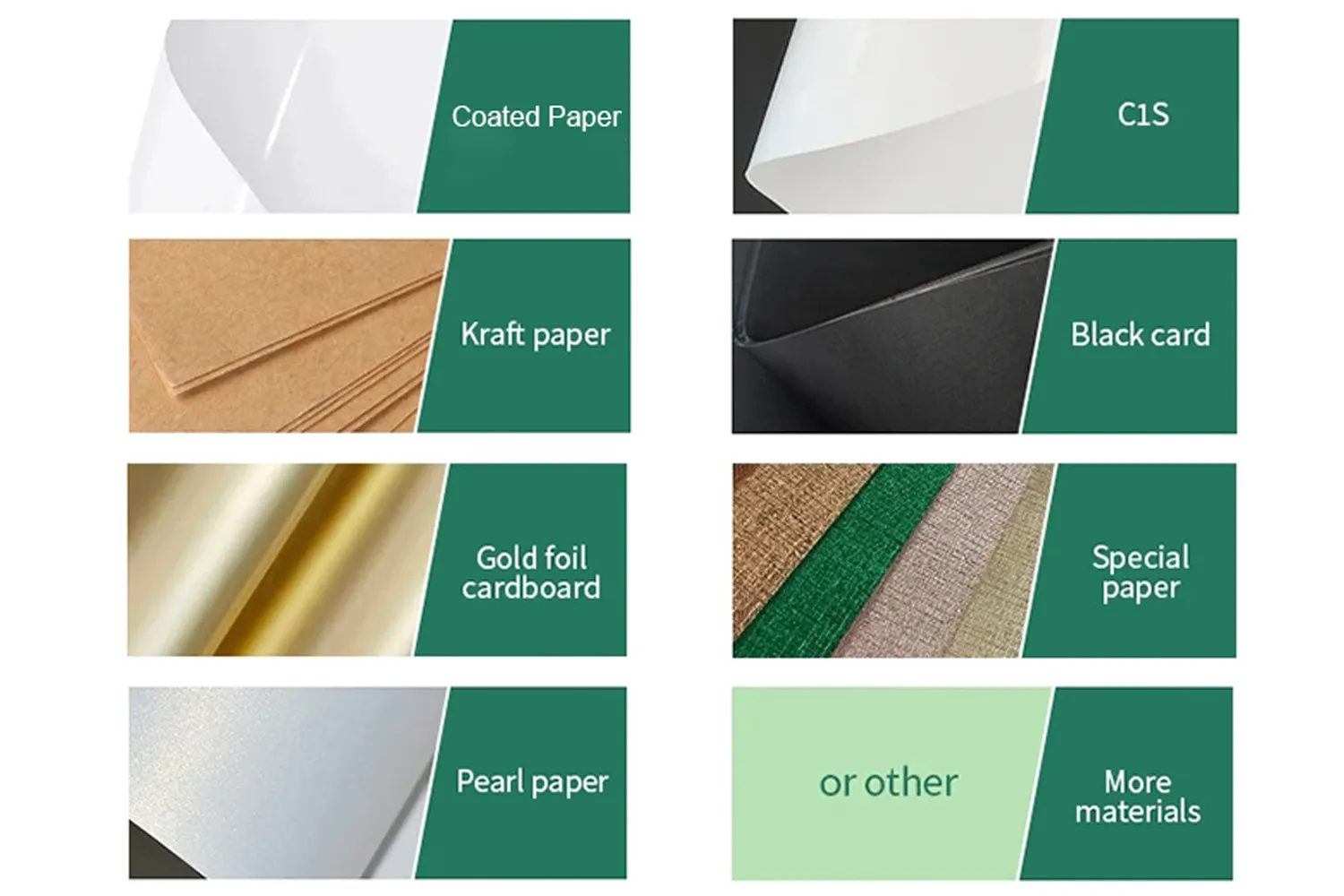
Coated Paper
Coated paper features a smooth, treated surface that delivers excellent print quality. It allows for sharp graphics, vibrant colors, and precise details, making it ideal for brands that prioritize visual impact.
Glossy coated paper: enhances color brightness and contrast, creating a bold, eye-catching finish that works well for promotional, fashion, and cosmetic paper bags.
Matte coated paper: offers a refined, soft-touch appearance with reduced glare, making it a popular choice for premium retail and modern brand aesthetics.
Key benefits: superior print clarity, professional appearance, wide design flexibility.
C1S (Coated One Side Paper)
C1S paper is coated on one side and uncoated on the other, offering a practical balance between quality and cost. The coated side provides a smooth surface for high-quality printing, while the uncoated side improves foldability and adhesion during bag production. This material is commonly used for retail and event paper bags where branding is important but cost control is also a consideration.
Key benefits: cost-effective, good print quality on the exterior, easy folding and gluing.
Black or White Cardstock
Cardstock is thicker and more rigid than standard paper, providing enhanced strength and durability.
White cardstock is ideal for clean, colorful designs and supports a wide range of printing and finishing techniques.
Black cardstock creates a bold, sophisticated look and is frequently paired with foil stamping, embossing, or spot UV for luxury packaging.
This material is suitable for heavier products and brands aiming for a premium presentation.
Key benefits: strong structure, high load-bearing capacity, premium look and feel.
Kraft Paper
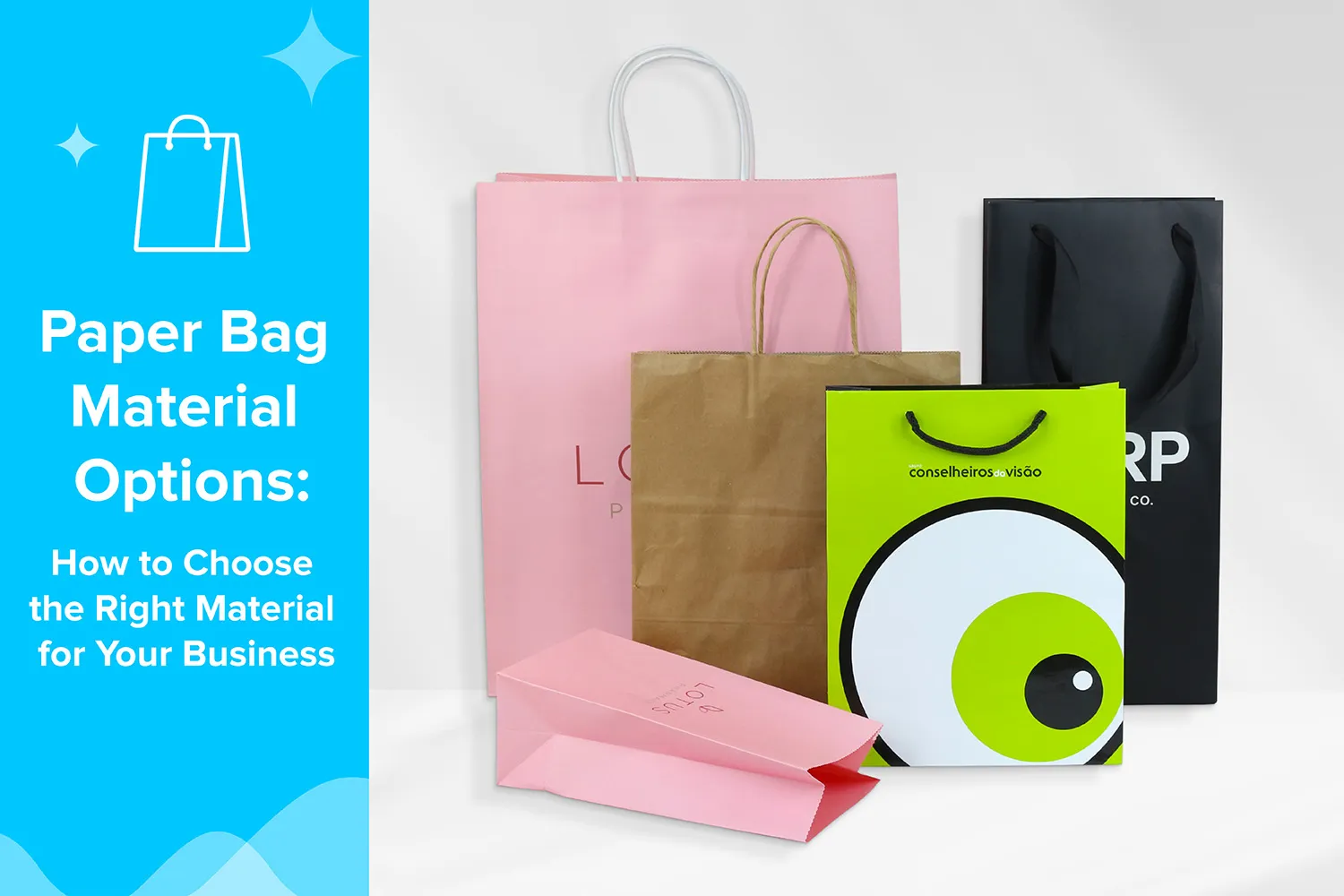
Kraft paper is one of the most commonly used materials for paper bags due to its strength and natural appearance. It is tear-resistant, durable, and made from long wood fibers, giving it excellent load-bearing performance. Available in brown or white, kraft paper is widely used for shopping, food packaging, and eco-conscious brands.
Key benefits: eco-friendly, durable, cost-effective, natural and sustainable appearance.
Specialty Paper
Specialty paper includes a wide range of decorative options such as textured finishes, metallic coatings, pearlescent surfaces, and holographic effects. These papers are designed to create a distinctive and luxurious visual impact. They are often used for gift bags, promotional packaging, and high-end retail applications where differentiation is key.
Key benefits: unique textures and finishes, strong visual appeal, ideal for premium and gift packaging.
Recycled Paper
Recycled paper is produced from post-consumer or post-industrial waste, helping reduce the demand for virgin paper and minimize environmental impact. While the surface texture and color may vary, recycled paper is increasingly popular among brands focused on sustainability and responsible sourcing.
Key benefits: environmentally friendly, supports sustainability goals, appeals to eco-conscious consumers.
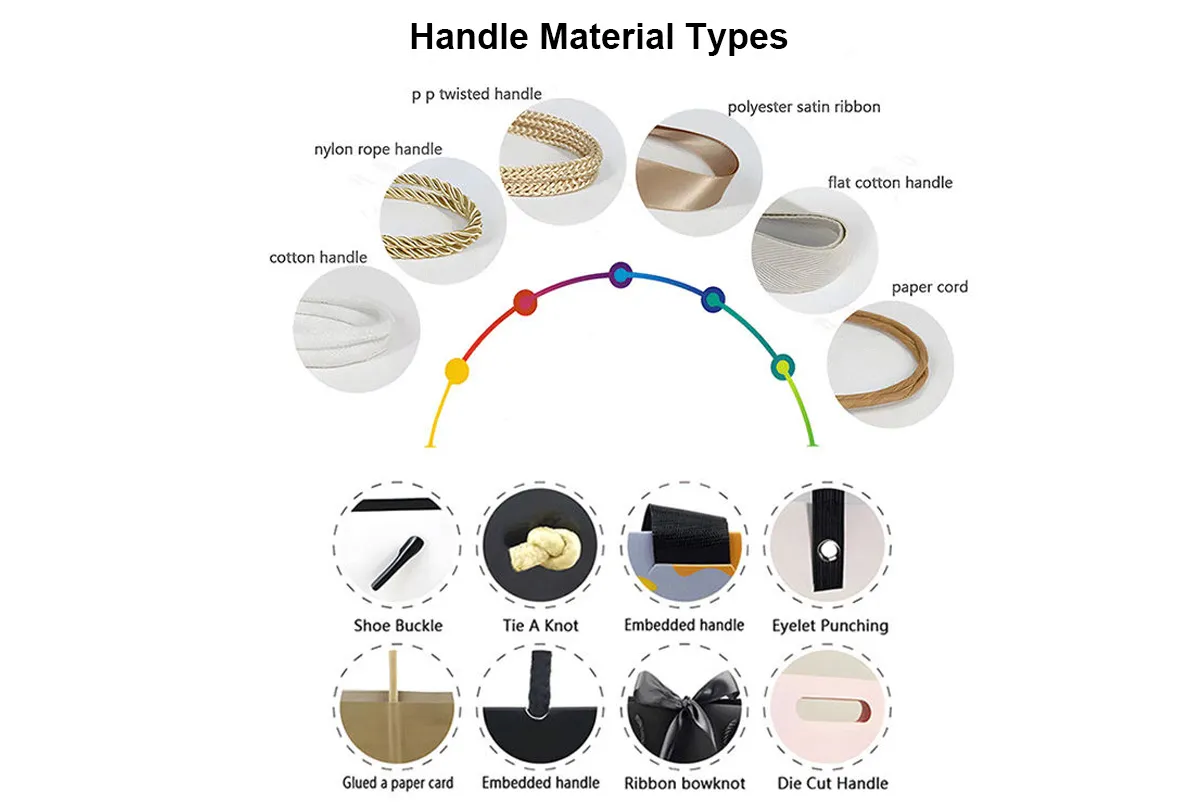
Paper Bag Handle Material Types
Paper bag handles play a crucial role in both functionality and visual appeal. The right handle material not only ensures durability and carrying comfort but also complements the overall design and brand positioning of the bag. Choosing an appropriate handle type helps create a better user experience while reinforcing your brand image.
Textured Ribbon Handles
Textured ribbon handles offer a soft, fabric-like feel that adds a sense of elegance and refinement. They are comfortable to hold and visually appealing, making them especially suitable for gift bags, boutique packaging, and specialty retail. Textured ribbons enhance the perceived value of the bag and pair well with premium paper materials and subtle finishes.
Shiny Ribbon Handles
Shiny ribbon handles are designed to stand out with their smooth, glossy surface and decorative appearance. They add a touch of luxury and sophistication, making them ideal for promotional campaigns, seasonal packaging, and high-end products. Shiny ribbons are often used to create a festive or upscale look and work particularly well with coated paper or specialty paper bags.
Cord or Rope Handles
Cord or rope handles are among the most durable and practical options available. Common materials include cotton rope, twisted paper cord, and synthetic rope, all of which provide strong load-bearing performance and comfortable grip. These handles are widely used for retail and shopping bags that need to carry heavier items while maintaining a clean, professional appearance.
Die-Cut Handles
Die-cut handles are created by punching openings directly into the paper bag body, eliminating the need for separate handle materials. This option offers a minimalist, modern look and helps reduce production costs. Die-cut handles are best suited for lightweight products and short-term use, such as event giveaways, promotional bags, or small retail items.
How to Choose the Right Paper for Your Paper Bag Printing
Selecting the right material for paper bag printing is a strategic decision that affects functionality, appearance, cost, and sustainability. By carefully evaluating the following factors, businesses can ensure their paper bags meet both practical requirements and branding goals.
Product Type
The type and weight of the product being carried are the most important considerations. Heavier or bulkier items require thicker paper with higher GSM, reinforced bottoms, and strong handle attachments to ensure safety and durability. Lightweight products, such as accessories or promotional items, allow for thinner paper and simpler structures without compromising performance.
Brand Image
Paper bag materials should reflect your brand’s identity and market positioning. Luxury brands often choose thick cardstock or specialty paper to convey a premium, sophisticated feel, especially when combined with refined printing and finishing techniques. In contrast, natural or eco-conscious brands typically prefer kraft paper or recycled paper, which communicate sustainability, authenticity, and environmental responsibility.
Durability and Functionality
Consider how the paper bag will be used after purchase. If the bag is designed for single use, standard materials may be sufficient. However, if the bag is intended to be reused for shopping, storage, or gifting, durability becomes critical. Strong paper materials and reinforced construction not only improve usability but also extend brand exposure through repeated use.
Budget
Material choice has a direct impact on production costs. C2S or C1S paper are cost-effective options suitable for high-volume orders and everyday use. Specialty paper, thick cardstock, and rigid paper bags involve higher material and manufacturing costs but offer greater visual impact and perceived value. Balancing cost with performance ensures an efficient packaging investment.
Sustainable Development Goals
Sustainability is increasingly influencing purchasing decisions. Choosing recyclable, biodegradable, or recycled materials helps businesses align with sustainable development goals and meet consumer expectations for responsible packaging. Clearly communicating these choices through packaging design can further enhance brand credibility and customer trust.
Common Paper Bag Sizes and Weight Capacity
Choosing the right paper bag size and structure is essential for ensuring functionality, durability, and a positive customer experience.
Small, Medium, and Large Paper Bags
Small paper bags are commonly used for lightweight items such as cosmetics, accessories, jewelry, or takeaway snacks. Medium paper bags are suitable for apparel, books, and boxed products, offering a balance between portability and strength. Large paper bags are designed for bulkier or heavier items, including clothing sets, gift boxes, or multiple products, and require stronger materials and reinforced construction.
GSM Recommendations for Different Products
Paper thickness, measured in GSM (grams per square meter), directly affects strength and durability. Lightweight products typically use thin paper, while heavy or luxury items benefit from higher GSM. Selecting the correct GSM helps prevent tearing while maintaining a professional appearance.
Reinforced Bottoms and Side Gussets
For added strength and stability, many paper bags include reinforced bottoms and side gussets. A reinforced bottom helps distribute weight evenly, preventing sagging or tearing when carrying heavier items. Side gussets allow the bag to expand, increasing capacity and improving load distribution. These structural features are especially important for retail, food, and luxury packaging where durability and presentation are critical.
Paper Bags in Various Industries
Different industries require different paper bag materials based on usage, weight, and branding needs.
Shopping: Shopping paper bags must be strong enough to carry apparel or accessories while maintaining an attractive appearance. Kraft paper and coated paper are commonly used for their balance of strength and print quality.
Gift Giving: Gift paper bags emphasize presentation. Specialty paper, textured finishes, or coated paper with matte or glossy lamination helps create a refined, festive look suitable for special occasions.
Retail: Retail paper bags serve both functional and promotional purposes. C2S or C1S paper allow high-quality printing and durability, making them ideal for daily retail use.
Event: Event paper bags are often used for giveaways and promotional materials. Coated paper is cost-effective while still supporting custom branding.
Restaurant: For food packaging and takeout, kraft paper bags are the preferred choice. They are breathable, sturdy, and suitable for carrying hot or cold food items safely.
Packaging for Luxury Products: Luxury products such as jewelry, watches, and premium accessories require thick cardstock or rigid paper bags. These materials convey exclusivity, provide excellent protection, and support advanced finishing options like foil stamping or embossing.
Common Mistakes to Avoid When Choosing Paper Bag Materials
Selecting the right paper bag material is essential for balancing appearance, durability, and cost. However, many businesses make avoidable mistakes that can affect functionality, customer experience, and brand image.
Using Paper That’s Too Thin
One of the most common mistakes is choosing paper with insufficient thickness. While thinner paper may reduce upfront costs, it often leads to poor load-bearing performance, tearing, or deformation during use. Bags made with paper that is too thin may fail to support the product’s weight, resulting in customer dissatisfaction and potential product damage. Selecting the appropriate GSM based on product weight and bag size ensures durability while maintaining a professional appearance.
Ignoring Handle Strength
Handles play a critical role in a paper bag’s overall performance, yet they are sometimes overlooked during material selection. Weak or poorly attached handles can break easily, even if the bag body is made from thick paper. This not only causes inconvenience for customers but can also negatively impact brand perception. Handle materials and attachment methods should always be matched to the bag’s intended weight capacity to ensure comfort, reliability, and safety.
Overdesigning Without Considering Cost
While premium finishes, specialty papers, and complex structures can enhance visual appeal, overdesigning without considering budget constraints can significantly increase production costs. In some cases, expensive materials or finishes may not add meaningful value for the intended use. A balanced approach—combining suitable materials, practical structure, and selective design elements—helps achieve an attractive, functional paper bag without unnecessary expense.
Conclusion
Choosing the right paper bag material is essential for creating packaging that is functional, attractive, and aligned with your brand values. From kraft paper bags for restaurants to premium rigid paper bags for luxury products, the right material elevates both product presentation and customer experience.
BookPrintingChina specializes in custom paper bag printing, offering a wide range of paper materials, handle options, and finishing techniques to suit every industry and budget. With professional guidance, reliable quality control, and competitive pricing, we help brands turn packaging into a powerful marketing tool.
Contact us today to discuss your custom paper bag project and find the perfect material solution for your business.