





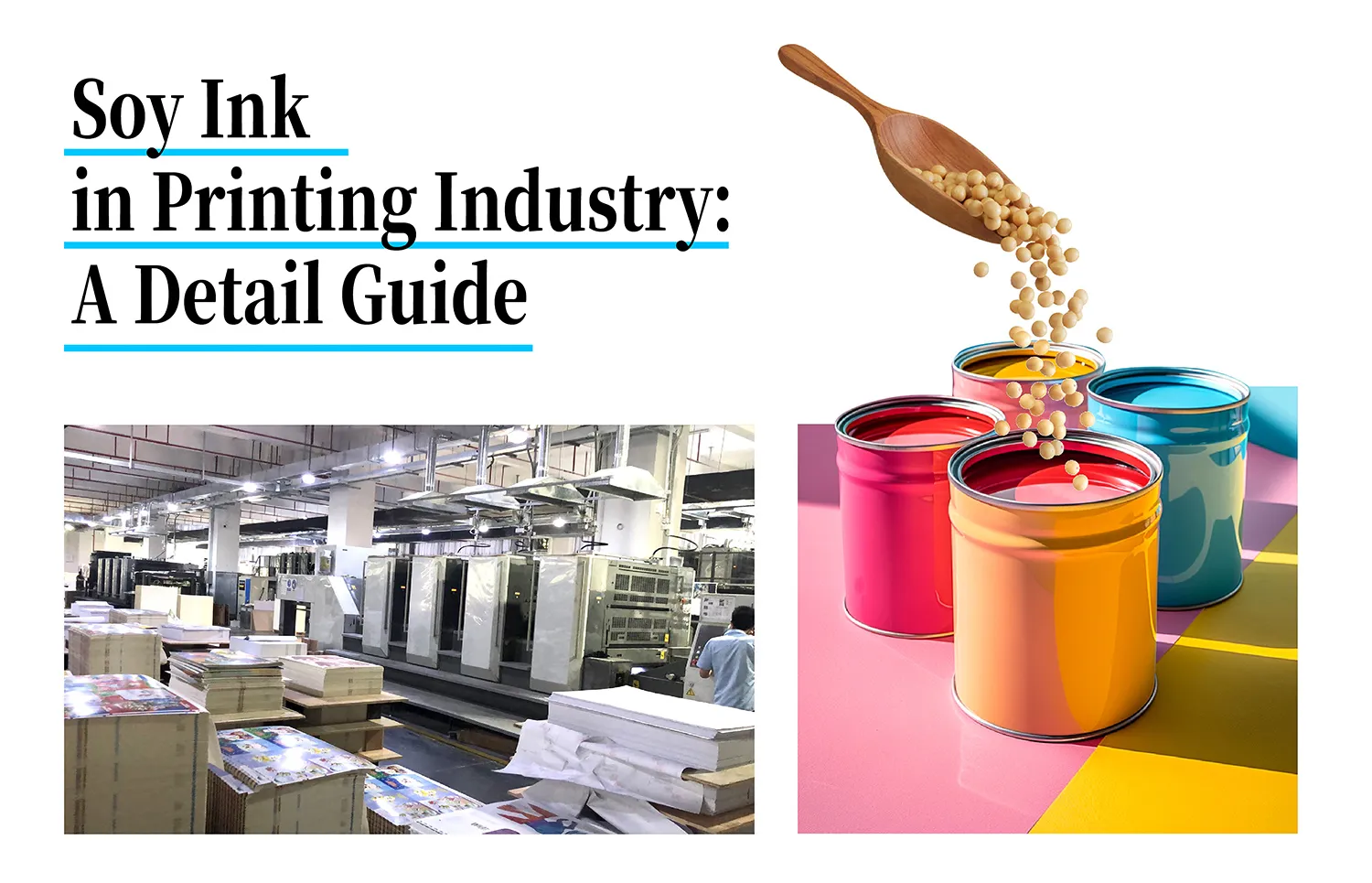
In an era where sustainability is paramount, the printing industry has begun to pivot towards more environmentally friendly practices. One such innovation is the use of soy ink, a plant-based alternative to traditional petroleum-based inks.
In this guide, we delve into the intricacies of soy ink, exploring its production process, benefits, limitations, and its growing popularity in various sectors. By understanding soy ink’s role in modern printing, businesses can make informed decisions that align with eco-friendly principles while still achieving high-quality print results.
What is Soy Ink?
Soy ink, often referred to as soy-based ink, is a type of printing ink that utilizes soy oil as its primary base. This innovative ink emerged in response to the environmental and economic challenges posed by petroleum-based inks. The use of soybeans, a renewable resource, marks a significant shift towards sustainable printing practices. Unlike traditional inks, which rely heavily on petroleum, soy ink offers a more eco-friendly alternative that aligns with modern environmental standards.
The inception of soy ink can be traced back to the 1970s, during a period of oil shortages that prompted researchers to explore alternative sources for ink production. By the late 1980s, soy-based inks began to gain traction in the printing industry.
These inks are characterized by their composition, which must contain at least 20% soy oil by volume to be classified as soy ink. This incorporation of soy oil not only reduces reliance on fossil fuels but also enhances the ink’s performance in various printing applications.
Soy ink is increasingly popular among businesses and consumers who prioritize environmental sustainability. Its production process is less harmful to the environment, and it contributes to reducing the carbon footprint associated with traditional ink manufacturing. As more companies seek to adopt sustainable practices, soy ink has become a viable option for eco-conscious printing solutions.
Definition and Composition
Soy ink consists of:
-
Soybean Oil: The primary ingredient, providing a natural base.
-
Pigments: These deliver color and vibrancy to the ink.
-
Vegetable Oils or Resins: Enhancing adhesion and durability.
-
Waxes: Adjusting the ink’s viscosity and drying properties.
This unique composition allows soy-based printing ink to offer lower levels of volatile organic compounds (VOCs), which are harmful to both health and the environment.
How is Soy Ink Made?
The production of soy ink involves several critical steps that ensure its quality and performance. Understanding this process can help appreciate the benefits of using soy-based inks.
Step 1: Cleaning and Flaking
The process begins with cleaning the soybeans to remove impurities such as dirt and stones. Once cleaned, the soybeans are flaked into smaller pieces, which increases the surface area for oil extraction. This step is crucial for ensuring that the final product is of high quality.
Step 2: Oil Extraction
After flaking, the soybeans undergo oil extraction. This can be achieved through mechanical pressing or solvent extraction. Mechanical pressing involves applying physical force to separate the oil, while solvent extraction uses chemicals for more efficient oil recovery. The extracted oil is then refined to remove any remaining impurities.
Step 3: Refinement and Cooking
The refined soybean oil is subjected to further purification processes, including degumming, neutralization, and bleaching, to enhance its quality. Following this, the oil is heated to achieve the desired viscosity and flow properties, making it suitable for ink production.
Step 4: Mixing with Pigments and Resins
In this step, the refined soybean oil is blended with pigments, resins, and waxes. Pigments give the ink its color, while resins enhance adhesion and gloss. This combination results in a vibrant, high-quality soy-based ink that performs exceptionally well in various printing applications.
The quality of soy ink is determined by several factors, including color brilliance, flow, and coverage. High-quality soy ink is known for its vibrant colors and excellent print quality, making it suitable for a wide range of applications.
Benefits of Soy Ink
Soy ink offers a multitude of advantages that make it an appealing choice for various printing applications. Its benefits extend beyond environmental considerations, enhancing print quality and versatility.

Environmental Benefits
One of the most significant advantages of soy ink is its reduced environmental impact. Traditional petroleum-based inks release volatile organic compounds (VOCs) into the atmosphere, contributing to air pollution. In contrast, soy ink contains a lower level of VOCs, making it a healthier choice for both the environment and human health.
-
Sustainability: Soybeans are a renewable resource that can be grown annually, unlike fossil fuels which are finite. This renewable aspect is crucial in the fight against climate change.
-
Biodegradability: Soy ink is more biodegradable than traditional inks, which means that products printed with soy ink are less likely to contribute to landfill waste.
-
Lower Carbon Footprint: The production and use of soy ink contribute to a reduced carbon footprint. Because it requires less energy to produce and is derived from a sustainable source.
Color Vibrancy
Soy ink is known for its exceptional color vibrancy and clarity. The unique properties of soy oil allow pigments to be more effectively suspended, resulting in sharper and more vivid prints.
-
Brighter Images: The lucidity of soy oil enhances the brightness of colors, making printed materials more eye-catching.
-
High Resolution: Soy ink produces high-resolution images, which is particularly important for marketing materials and packaging that require a professional appearance.
Versatility
Soy-based printing ink is highly versatile, making it suitable for various printing techniques and substrates.
-
Printing Techniques: Soy ink can be used in offset printing, digital printing, and flexographic printing, offering flexibility for different production needs.
-
Substrates: It adheres well to a range of materials including coated paper, uncoated paper, cardboard, and even some fabrics, making it ideal for diverse applications.
-
Industries: Soy inks are used in a variety of industries, from publishing to marketing and packaging.
Non-Toxic
Another key advantage of soy ink is its non-toxic nature. Unlike some traditional inks that contain harmful chemicals, soy ink is safer for both printers and consumers.
-
Healthier Work Environment: The reduced presence of harmful solvents and chemicals contributes to a healthier workplace for printing professionals.
-
Consumer Safety: Products printed with soy ink pose less risk to consumers, particularly in applications such as food packaging.
Cost-effective
Soy ink is purer than petroleum extracts. To achieve the same dyeing effect, the former requires less pigment, which also reduces the cost of ink. The Hazardous Waste Research and Information Center of the Illinois Department of Energy and Resources conducted a survey on soy ink in the 1990s. Many printers reported: “Soy ink can be 15% more ductile than ordinary ink, further reducing the amount of ink used and printing costs.”
“Although the average price of soy ink is higher 5% to 10% than that of gasoline ink, the former spends less on various expenses such as pigment use, volatile organic compound use and printer cleaning costs. What’s more, using less soy ink can produce brighter and more eye-catching prints than petroleum ink. Overall, soy ink is much more cost-effective!” Linda Cooke made such a calculation in an article published in the journal Agricultural Research.
Limitations of Soy Ink
Despite its numerous benefits, soy ink does have some limitations that users should consider.
Cost
One of the primary concerns with soy ink is its cost.
-
Higher Production Costs: The production of soy-based inks can be more expensive than traditional inks, which may deter some businesses from making the switch.
-
Market Variability: Prices can fluctuate based on the availability of soybeans and market demand, leading to potential budgeting challenges for printing companies.
Printing Quality
While soy ink provides vibrant colors, there can be variations in printing quality depending on the application.
-
Drying Time: Soy ink may have a longer drying time compared to petroleum-based inks, which can impact production timelines.
-
Compatibility Issues: Not all printing presses are optimized for soy ink, which may lead to challenges in achieving the desired print quality.
-
Color Consistency: There may be variations in color reproduction across different print runs, particularly under varying environmental conditions.
Soy Ink vs Traditional Ink
When comparing soy-based ink to traditional petroleum-based ink, several factors come into play.
Sustainability
-
Soy Ink: Derived from renewable soybeans, soy ink represents a sustainable choice that reduces reliance on fossil fuels.
-
Traditional Ink: Made from non-renewable petroleum, traditional inks contribute to environmental degradation and resource depletion.
Durability
-
Soy Ink: While soy ink offers vibrant colors, its durability can vary based on the substrate and printing method used.
-
Traditional Ink: Generally known for its durability, petroleum-based inks may perform better in certain high-wear applications.
Color and Finish
-
Soy Ink: Known for its bright and vivid colors, soy ink often produces a high-quality finish that is visually appealing.
-
Traditional Ink: While capable of producing good color quality, petroleum-based inks may not achieve the same level of vibrancy as soy inks.
Versatility
-
Soy Ink: Compatible with various printing techniques and substrates, soy ink is a versatile choice for many applications.
-
Traditional Ink: While also versatile, traditional inks may not perform as well on eco-friendly substrates.
Non-Toxic Nature
-
Soy Ink: Free from many harmful chemicals, soy ink is a safer option for both printers and consumers.
-
Traditional Ink: Often contains toxic solvents and chemicals that can pose health risks.
Soy Based Ink vs Water Based Ink
Both soy-based and water-based inks are considered eco-friendly options, but they have distinct differences.
Composition
-
Soy Ink: Primarily made from soybean oil, providing a rich, vibrant color.
-
Water-Based Ink: Composed mainly of water as the solvent, making it less viscous and easier to clean.
Application
-
Soy-Based Ink: Commonly used in commercial printing, packaging, and other high-quality applications where color vibrancy is crucial.
-
Water-Based Ink: Typically used in applications like flexography and digital printing, especially for porous substrates.
Sustainability
-
Soy-Based Ink: As a renewable resource, soy ink is considered more sustainable than water-based inks, which may still contain synthetic additives.
-
Water-Based Ink: While generally more eco-friendly than petroleum-based inks, water-based inks can still have environmental impacts depending on their formulation.
Printing Capability
-
Soy-Based Ink: Offers excellent performance in various printing techniques with a focus on high-quality outputs.
-
Water-Based Ink: Best suited for specific applications, particularly those requiring fast drying times and minimal odor.
Printing Substrates
-
Soy-Based Ink: Works well on coated and uncoated papers, cardboard, and some fabrics.
-
Water-Based Ink: Primarily effective on porous surfaces, which may limit its application in some commercial printing scenarios.
Drying Time
Water-based inks generally dry faster than soy inks, making them more suitable for high-speed printing processes.
Why Use Soy Ink for Printing?
The decision to use soy ink in printing is driven by various factors, including environmental responsibility, cost-effectiveness, and print quality.

Aligning with Sustainability Goals
Using soy ink demonstrates a commitment to reducing the environmental impact of printing operations. As consumers increasingly seek eco-friendly products, businesses that adopt soy ink can enhance their brand image and appeal to a broader audience.
Enhanced Print Quality
The vibrant colors and high resolution of soy ink make it an excellent choice for projects that require a professional appearance. Its ability to produce sharp images can enhance branding efforts and marketing materials.
Enhancing Brand Value
Incorporating soy ink into marketing materials and packaging can convey a message of sustainability, attracting environmentally conscious consumers and fostering brand loyalty.
Health and Safety Benefits
With its non-toxic properties, soy ink promotes a safer working environment for printing professionals and reduces health risks for consumers. This focus on safety is increasingly important in today’s market.
Cost-Effectiveness
While initial costs may be higher, the long-term benefits of using soy ink can outweigh the expenses. Its durability and quality can lead to fewer reprints and waste, ultimately saving money over time.
Soy Ink’s Compatibility with Printing Substrates
Soy ink’s versatility extends to its compatibility with a wide range of printing substrates, making it suitable for various applications.
Coated Paper
Soy ink performs exceptionally well on coated papers, providing vivid colors and sharp images. This substrate is commonly used in children’s books, photo books, magazines and high-quality publications.
Uncoated Paper
Soy ink is effective on uncoated paper, allowing for good ink absorption and color retention. Commonly used in novels, journals, letterheads, stationery, and eco-friendly printing projects.
Cardboard
Soy ink adheres well to cardboard, making it an excellent choice for board book or packaging materials that require bright, eye-catching graphics. Using soy ink for cardboard packaging aligns with sustainable packaging initiatives.
Fabric
Soy ink can be used on certain fabrics, making it a versatile choice for textile printing. Suitable for custom apparel and promotional items where vibrant colors are desired.
Popular Industries Using Soy Ink
Soy ink has gained traction across various industries due to its environmental benefits and high-quality output.
 |
 |
 |
| Book | Card deck | Package |
Book Printing
The book publishing industry has embraced soy ink for its vibrant colors and lower environmental impact, making it a preferred choice for both hardcover and paperback editions.
Marketing Material Printing
From brochures to flyers, marketing materials printed with soy ink stand out for their color quality and eco-friendly message, appealing to consumers who prioritize sustainability.
Card Deck Printing
Soy ink is increasingly used in the production of card decks, providing vibrant designs that enhance the visual appeal of games and promotional materials.
Packaging Printing
Soy ink enhances the visual appeal of packaging, making products more attractive to consumers. Many brands are adopting soy ink for packaging to align with eco-friendly initiatives.
Enhance Your Brand with BookPrintingChina
For businesses looking to make a sustainable choice in their printing needs, partnering with a reputable provider like BookPrintingChina can be a game-changer. Offering high-quality soy-based printing solutions, we combine eco-friendliness with exceptional print quality, ensuring your materials not only look great but also align with your brand’s values.
Why Choose BookPrintingChina?
-
Eco-Friendly Practices: Committed to using sustainable materials, including soy ink, recycled paper, to reduce environmental impact.
-
Quality Assurance: Rigorous quality control processes ensure that every print job meets the highest standards.
-
Customization Options: A wide range of customization options allows businesses to create unique printed materials that reflect their brand identity.
-
Global Shipping: With efficient shipping solutions, BookPrintingChina makes it easy to reach customers worldwide.
In conclusion, soy ink represents a significant advancement in the printing industry, offering a sustainable alternative to traditional inks. With its numerous benefits, including environmental friendliness, vibrant color quality, and versatility across substrates, soy ink is becoming an increasingly popular choice for businesses committed to reducing their ecological footprint. As the demand for sustainable practices continues to grow, adopting soy-based printing ink is not just a trend but a necessary step towards a greener future.