



Paper selection plays a critical role in the production and performance of a coloring book. Whether you are developing a children’s learning book, an adult mindfulness series, a watercolor-focused collection, or an artist-grade publication, the characteristics of the paper directly influence print clarity, durability, user experience, and production cost.
One of the most frequent questions we receive from publishers and creators is: “What is the best paper for coloring books?”
The answer varies. Choosing the right paper depends on the coloring tools your readers will use, your visual design style, your target audience, and budget considerations.
With more than 25 years of printing experience and millions of coloring books produced, we’ve gathered deep industry knowledge to guide you through this decision. In this article, we break down everything you need to know: paper types, weights, textures, tool compatibility, age-based recommendations, and professional tips to help your coloring book stand out.
Lorem ipsum dolor sit amet, consectetur adipiscing elit. Ut elit tellus, luctus nec ullamcorper mattis, pulvinar dapibus leo.
Common Paper Options for Printing Coloring Pages
When choosing the best paper for coloring books, it helps to start by understanding the primary types of paper used in the printing industry. These are the most frequently selected options for coloring pages, each with its own strengths and ideal uses.
Uncoated Paper
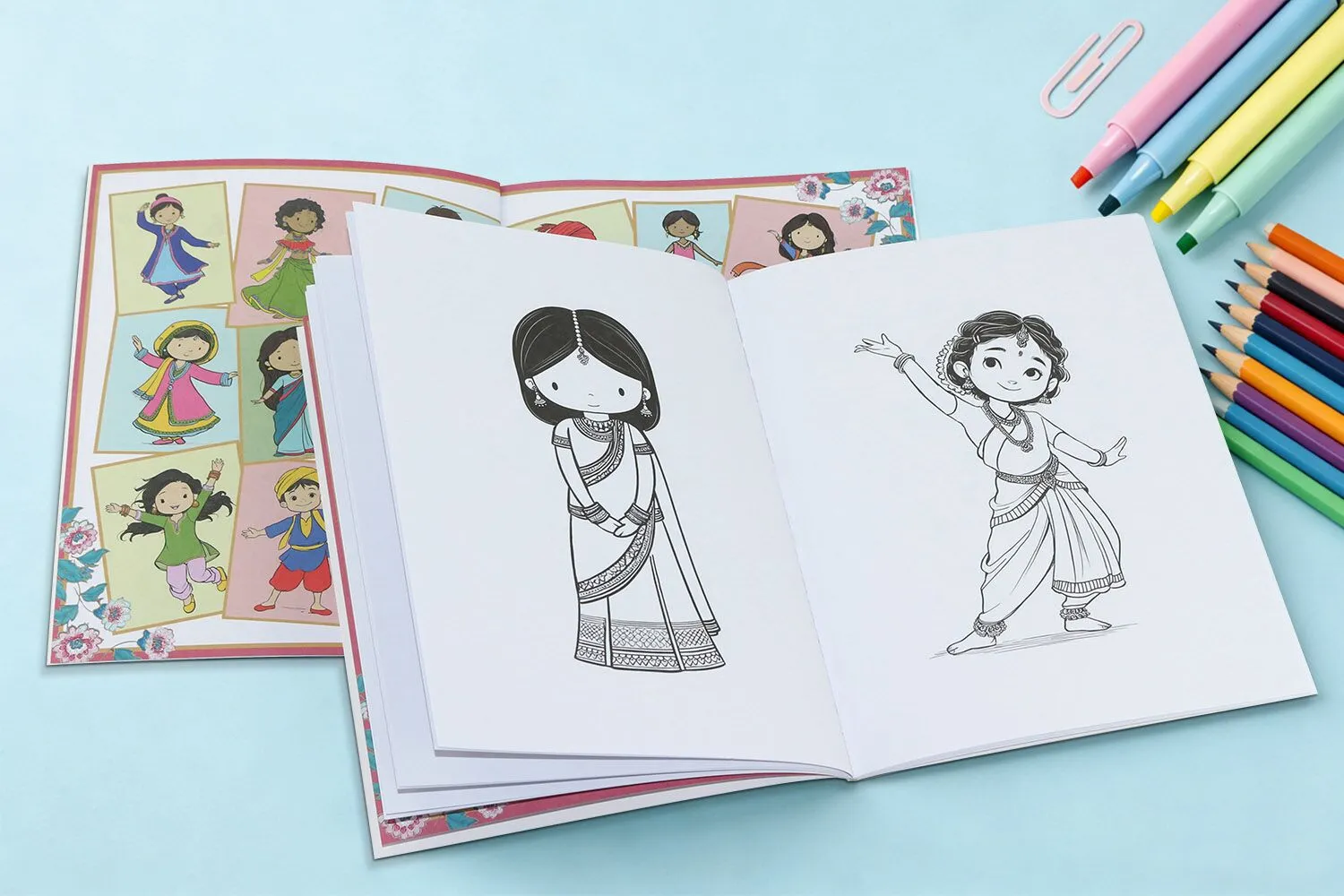
Uncoated paper, often referred to as offset paper, is the most widely used and highly recommended paper for both children’s and adult coloring books. It is the industry standard for one simple reason: it provides the ideal surface for almost any traditional coloring tool.
Unlike coated paper, which has a glossy or matte finish applied to the surface, uncoated paper has an open, absorbent structure. This allows pigments from crayons, colored pencils, pens, and water-based markers to adhere naturally and blend smoothly, creating an enjoyable and satisfying coloring experience.
Why Uncoated Paper Works So Well
Excellent ink absorption: Uncoated paper absorbs ink quickly and evenly, ensuring that line art prints sharply without spreading or feathering. This is especially important for detailed illustrations, mandalas, adult coloring books, and patterns that require crisp edges.
Slight texture for better grip: The surface of uncoated paper is smooth but still has a subtle tooth (texture). This fine texture gives crayons and colored pencils something to “grab,” allowing for deeper color saturation, smoother shading, and better layering.
Produces rich, clean black linework: Offset printing on uncoated paper yields crisp, high-contrast black outlines. This helps colorists follow lines easily and adds a professional touch to even simple illustrations.
Resists smudging better than coated paper: Coated or glossy paper can cause pencil wax, crayon residue, and marker ink to smear or sit on top of the page. Uncoated paper absorbs these materials, reducing smudges and keeping artwork cleaner.
Cotton Paper
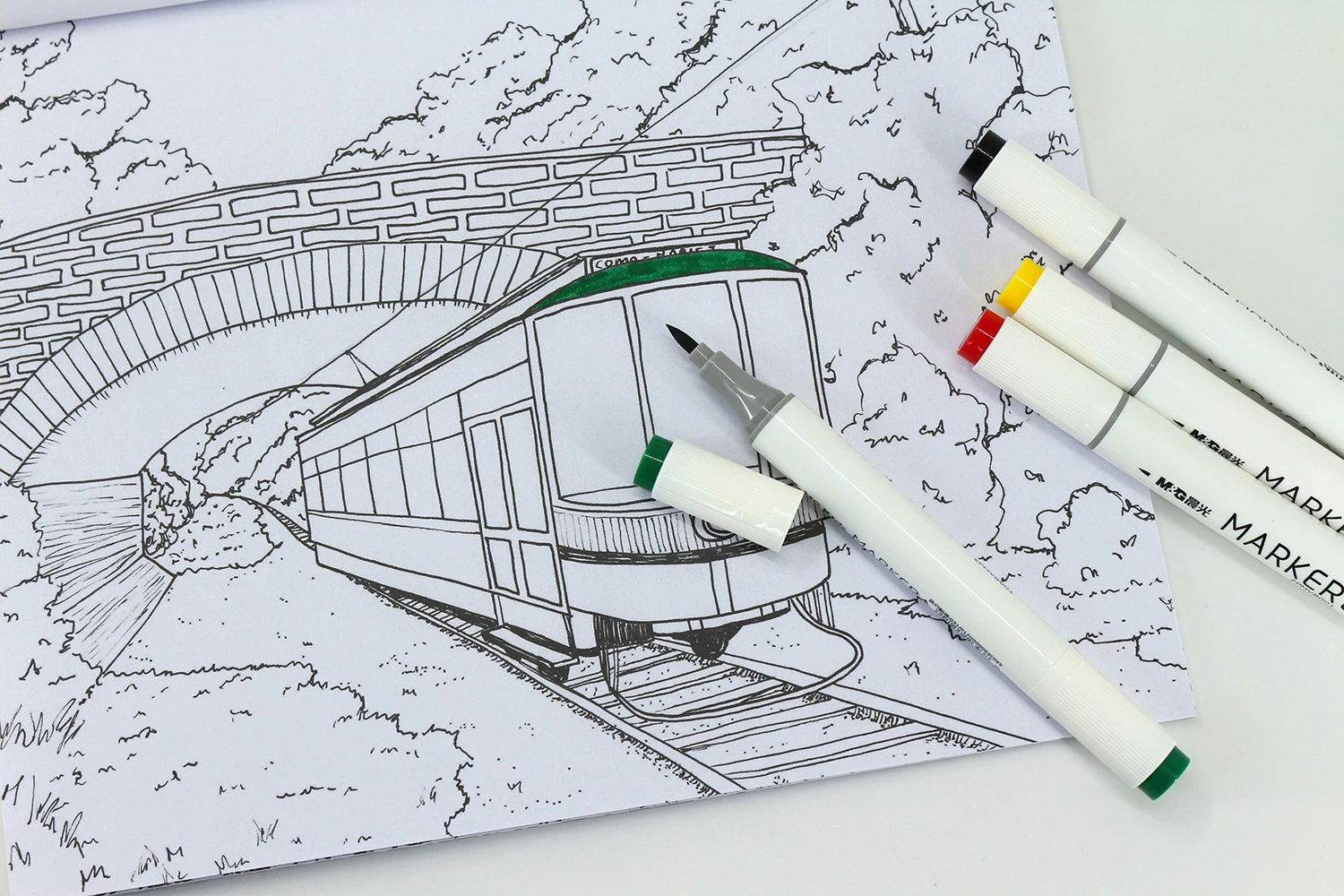
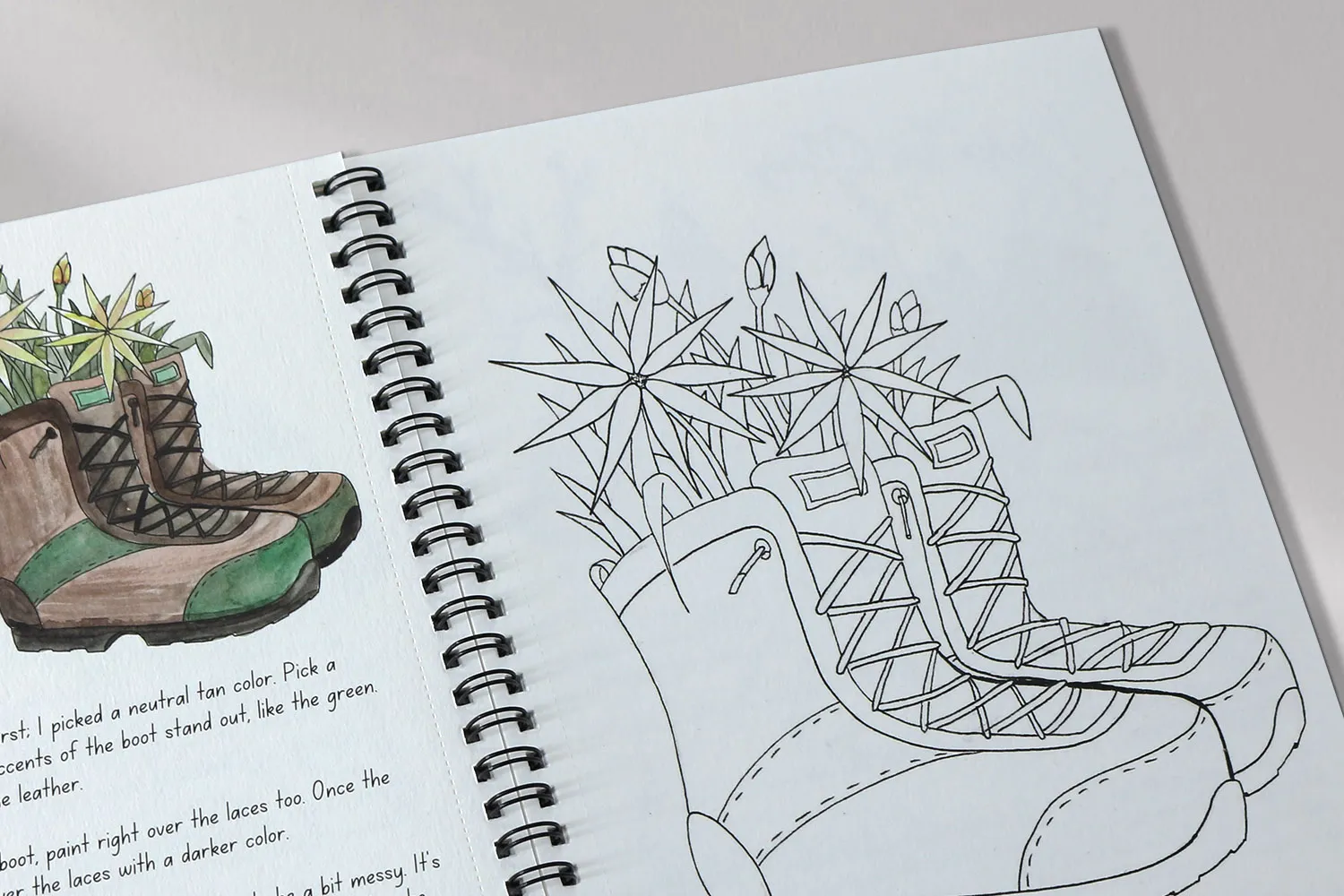
Cotton paper is considered one of the highest-quality materials available for art and specialty coloring books. Made from cotton linters or rag fibers rather than wood pulp. This premium, archival-grade paper is designed to withstand moisture, heavy layering, and long-term use. Its exceptional durability and elegant surface texture make it a top choice for creators who want their coloring books to feel like fine-art products.
Because cotton fibers are naturally strong and flexible, this paper maintains its structure even when wet, making it ideal for mixed-media coloring books or illustrations intended for framing and display.
Best For
Cotton paper is the recommended option for coloring books designed for:
Watercolors: The paper absorbs water evenly without warping, buckling, or tearing.
Gouache: Thick, opaque paints adhere beautifully to the paper’s textured surface.
Ink washes: Excellent for smooth gradients, blending, and shading.
Professional or hobbyist artists: Ideal for users who expect artist-grade performance and longevity.
If your coloring book is intended for serious creatives or is positioned as a premium product, cotton paper ensures the artwork reaches its full potential.
Benefits of Cotton Paper
Exceptional wet strength: Cotton paper retains its shape and integrity even when saturated with water. Unlike standard offset paper, which warps or pills when wet, cotton paper allows water-based media to flow and blend effortlessly.
Beautiful, tactile surface texture: The natural fibers create a soft, luxurious texture often described as “toothy.” This surface enhances color absorption, supports layering, and gives artwork a handcrafted, professional appearance.
Long-lasting, archival quality: Most cotton papers are acid-free and lignin-free, ensuring that artwork will not yellow or deteriorate over time. This is essential for artists who want their finished pieces to last for decades.
Fine-art look and feel: Cotton paper is the same type of material used in high-end watercolor pads and museum-grade prints. Incorporating it into a coloring book instantly elevates its value and positions it as a specialty art product rather than a standard mass-market book.
Cotton paper is more expensive than traditional uncoated offset paper because of its superior materials and production process. However, for specialized projects, such as watercolor coloring books, professional artist editions, and collectible series, the upgrade significantly enhances both the user experience and the perceived value of the final product.
Coated Paper with Wipeable UV
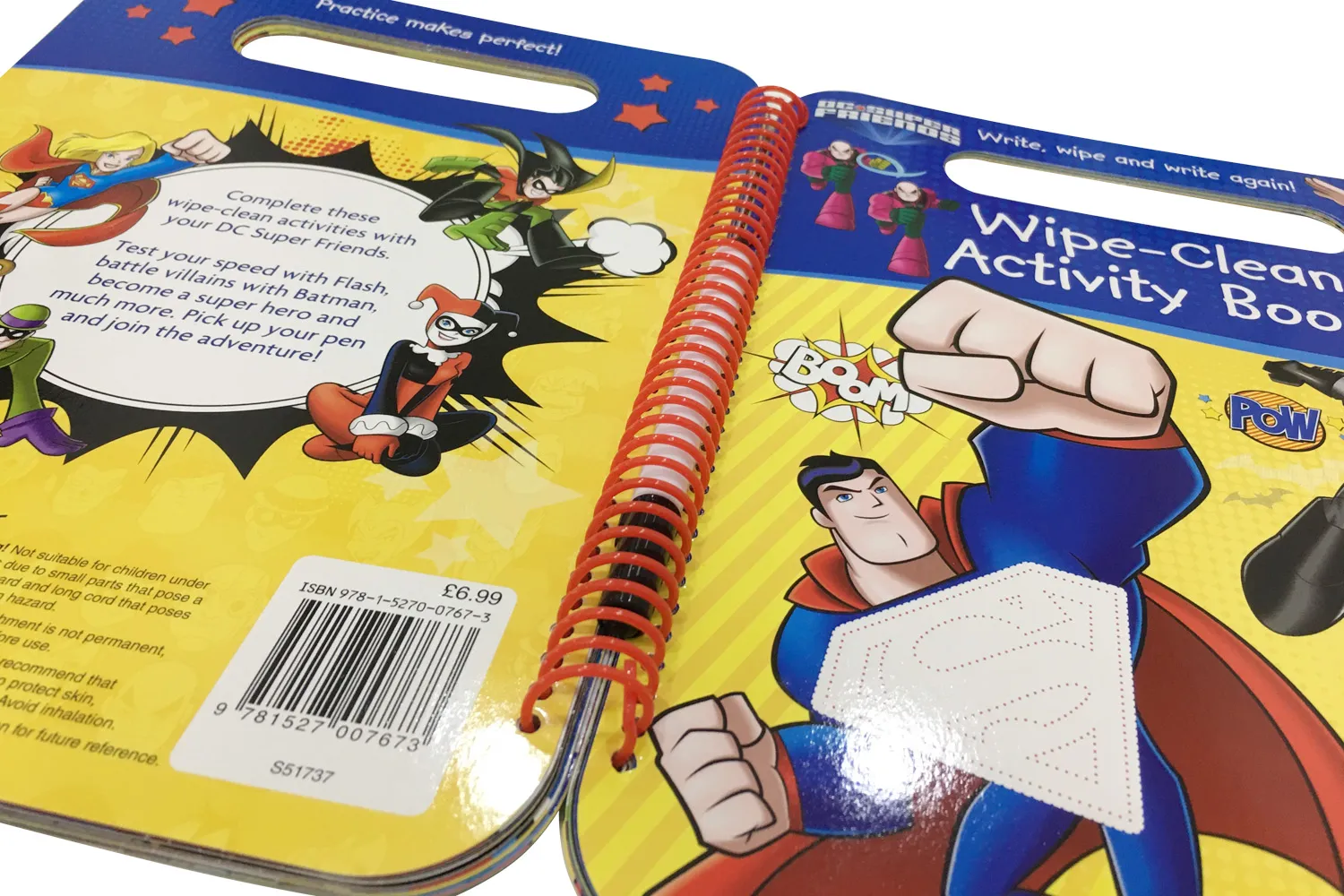
Coated paper with a wipeable UV finish is an excellent choice for coloring books or activity materials designed to be reused multiple times. Unlike traditional uncoated or offset paper, this option features a smooth, sealed surface that resists moisture and allows users to clean the page easily. When paired with dry-erase or washable markers, each page can be colored, wiped clean, and used again, making it ideal for interactive and educational products.
This type of paper is especially popular for children’s learning tools, classroom materials, and activity centers because of its durability and long-lasting performance. It transforms a standard coloring book into a practical, reusable resource.
Key Features
Smooth, coated surface: The surface is sealed with a special coating that creates a sleek, uniform texture. This smoothness allows dry-erase markers to glide effortlessly, making it easy for children to color and erase without damaging the page.
Glossy or matte finish: Depending on your design and preference, coated paper can be finished with a shiny gloss or a softer matte effect. Both options enhance the appearance of printed colors while making the surface easier to wipe clean.
Wipeable UV coating for reusability: The added UV coating creates a protective barrier that prevents ink from soaking into the paper. Users can write, draw, and color on the surface, even repeatedly, and simply erase with a dry cloth or tissue.
Durable and water-resistant: This material is significantly more resistant to spills, smudges, and handling than standard paper. It withstands constant use, making it ideal for environments where pages may be handled frequently by children.
Best Uses
Coated paper with wipeable UV is perfect for any product that needs to be reused or withstand heavy daily interaction, such as:
Reusable wipe-clean children’s books: Popular for preschool learning, early writing practice, and coloring activities.
Activity centers and playbooks: Ideal for educational or entertainment materials in daycare centers, therapy settings, or playrooms.
Learning materials: Great for alphabet practice sheets, number tracing, puzzles, and reusable educational exercises.
Classroom worksheets: Teachers can save time and resources by reusing the same pages with different groups of students.
Restaurant entertainment placemats: Keep children engaged while families dine, and they can be cleaned and reused for the next guest.
These applications take full advantage of the durability and easy-clean finish.
If your goal is to create a product that can be used repeatedly, whether for educational purposes, entertainment, or convenience, coated paper with wipeable UV is the ideal solution. It combines longevity, ease of use, and professional print quality, making your book or material more functional and cost-effective over time.
Factors to Consider When Selecting Paper for Coloring Pages
Choosing paper isn’t just a matter of picking a thickness. A great coloring experience depends on several important factors.
Paper Weight (GSM)
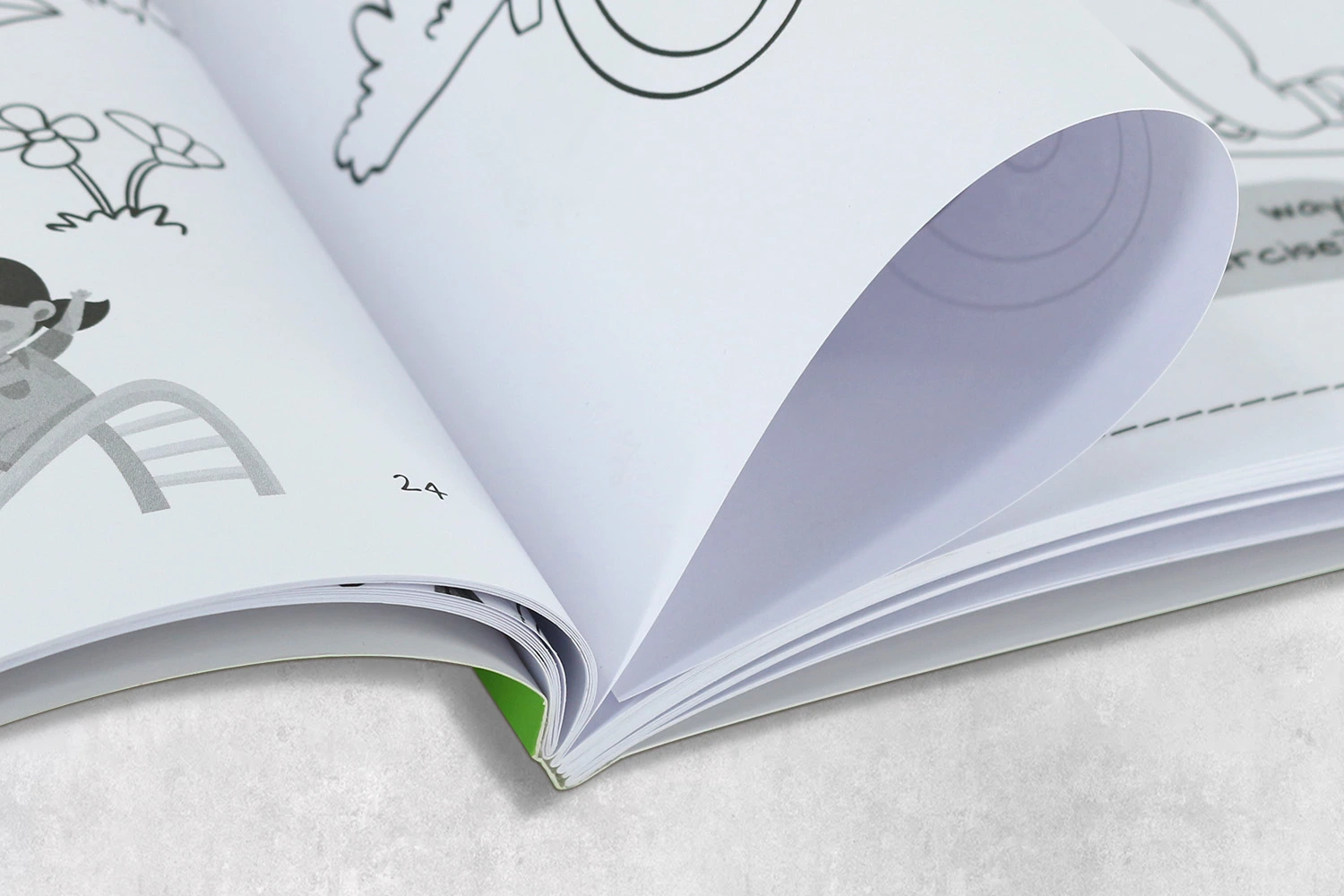
Paper weight is measured in grams per square meter (gsm). Higher GSM = thicker, stronger, more durable paper.
General Recommendations:
100–120gsm: Standard adult coloring books and simple children’s books
140–160gsm: Higher quality, suitable for markers
180–200gsm: Heavy paper, great for premium books or alcohol marker use
Above 200gsm: Fine art coloring pages, watercolor books
If your illustrations are detailed or your audience uses markers, thicker paper helps prevent bleed-through.
Paper Texture
Paper texture plays a major role in how coloring tools behave on the page and can significantly influence the overall coloring experience.
A smooth texture is best suited for markers, gel pens, and fine-tip pens because it allows the ink to glide effortlessly across the surface. This type of paper is also ideal for intricate linework, since the clean, even finish helps preserve sharp outlines and makes detailed coloring easier. Artists who work with colored pencils also appreciate smooth paper for its ability to support soft gradients and controlled blending with minimal friction.
A medium texture strikes a comfortable balance and is the most commonly used surface for children’s coloring books. Its slight tooth offers enough grip for crayons and colored pencils while still being smooth enough for markers. This versatility makes medium-textured paper an excellent choice when your audience is likely to use a variety of coloring tools or when you want a single paper type that adapts to different drawing styles.
Rough or heavily textured paper is preferred for watercolor and mixed-media coloring books. Its deeper grain helps hold pigment, creating vibrant colors and artistic depth that flat surfaces cannot achieve. When water or heavy pigment is applied, textured paper maintains its integrity and supports expressive techniques such as washes, layering, and soft shading.
Budget
Paper quality directly affects cost. To balance budget and performance:
Stick to white uncoated offset paper for most projects
Increase GSM only as needed
Print in bulk to reduce per-book cost
Ask the printer for paper alternatives that offer similar performance at a lower price
Working with an experienced printing company ensures that you get the best value without sacrificing quality.
Purpose and Target Audience
Who will be using your book?
For children
Thicker pages prevent tearing
Smooth surfaces work well with crayons
Perforated pages allow easy removal
Wipeable UV pages are great for reuse
For adults
Smooth offset for intricate details
Higher GSM prevents bleed-through
Single-sided printing is recommended for alcohol markers
For artists
Cotton or high-GSM textured paper
Designed for water-based media
Understanding your audience ensures you make the right paper choice.
Personal Preferences
Some creators prefer:
Heavier paper for a premium feel
Softer texture for pencil shading
Ultra-white paper for high contrast
Natural white paper for a gentle, artistic finish
If your brand has a specific aesthetic, your paper choice can support it.
Best Paper for Printing Coloring Pages by Tool
Different coloring tools interact with paper in unique ways, so selecting the best material begins with understanding how ink, wax, and pigment behave on the page.
Crayons and Colored Pencils
Crayons and colored pencils, for example, perform exceptionally well on uncoated paper in the 120–140gsm range. The natural tooth of the surface provides just enough texture for the pigment to grip, allowing colors to build and blend smoothly. This weight also prevents the dents or impressions that can occur when colorists press firmly, making it ideal for both children and adults who enjoy layering vibrant tones.
Water-based Markers and Gel Pens
Water-based markers and gel pens require a slightly heavier and more absorbent paper because they deposit more moisture during use. A 140–160gsm uncoated or offset paper offers the best balance of absorption and stability, helping avoid common issues such as feathering, smudging, or page curling. Offset paper, in particular, absorbs ink evenly, ensuring clean, crisp linework and smooth color application, an important factor for detailed illustrations.
Alcohol Markers
Alcohol markers, such as those from Copic or Ohuhu, present a different challenge. Their highly saturated, fast-flowing ink tends to bleed through most papers regardless of weight. For this reason, many creators choose to print single-sided pages or use uncoated paper between 160–200gsm to minimize bleed-through and protect the artwork. Some publishers also include perforated edges so artists can easily remove pages to color on a separate surface, preserving the rest of the book.
Classroom or Group Environments Projects
In classroom or group environments, the needs shift toward durability and reusability. Teachers often prefer laminated or wipeable interior pages that allow students to color with dry-erase or washable markers and then clean the pages for repeated use. Thicker paper, typically above 200gsm, provides added strength. This approach creates long-lasting, cost-effective materials that can withstand heavy, everyday handling.
Best Paper for Printing Coloring Pages by Ages
Different age groups have unique coloring habits, so choosing the right paper is key to delivering a great user experience. Adults tend to prefer precision and detail, while children need durability and resistance to heavy coloring. Below are industry-proven paper recommendations used by publishers and creators worldwide.
Adult Coloring Books
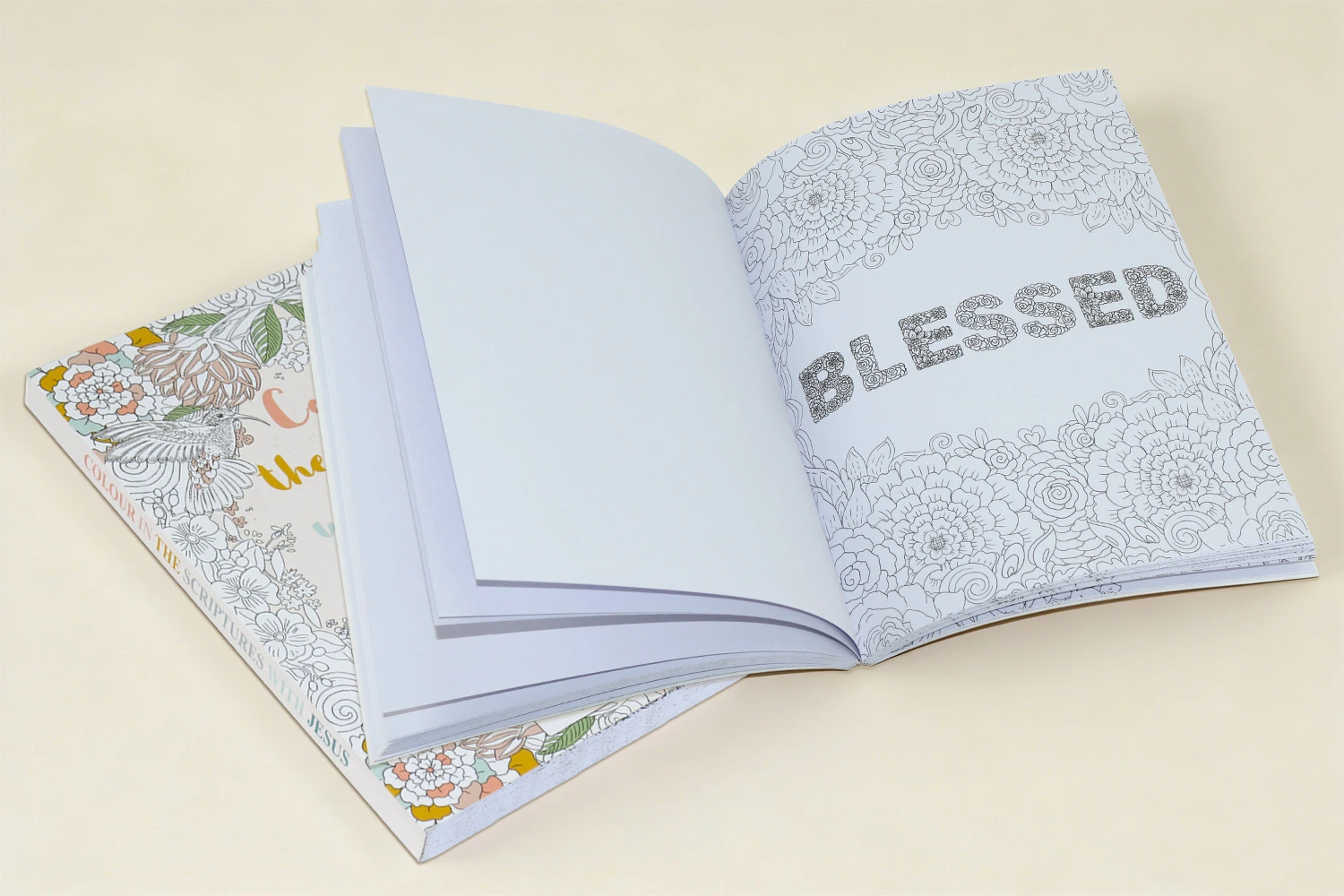
Adult coloring books usually feature intricate linework, fine patterns, and designs that require smooth paper capable of handling gel pens, alcohol markers, colored pencils, and water-based markers. The goal is crisp detail with minimal bleed-through while still keeping production cost-effective.
Recommended Options
100gsm white offset paper: Lightweight, affordable, ideal for large page-count books.
120gsm white offset paper: Smooth surface with better opacity, suitable for both pencils and fine-tip pens.
140gsm white offset paper: Premium thickness that minimizes show-through and offers a more substantial feel.
160gsm white offset paper: Excellent for marker-friendly books where extra stability and reduced bleed are needed.
Kids Coloring Books
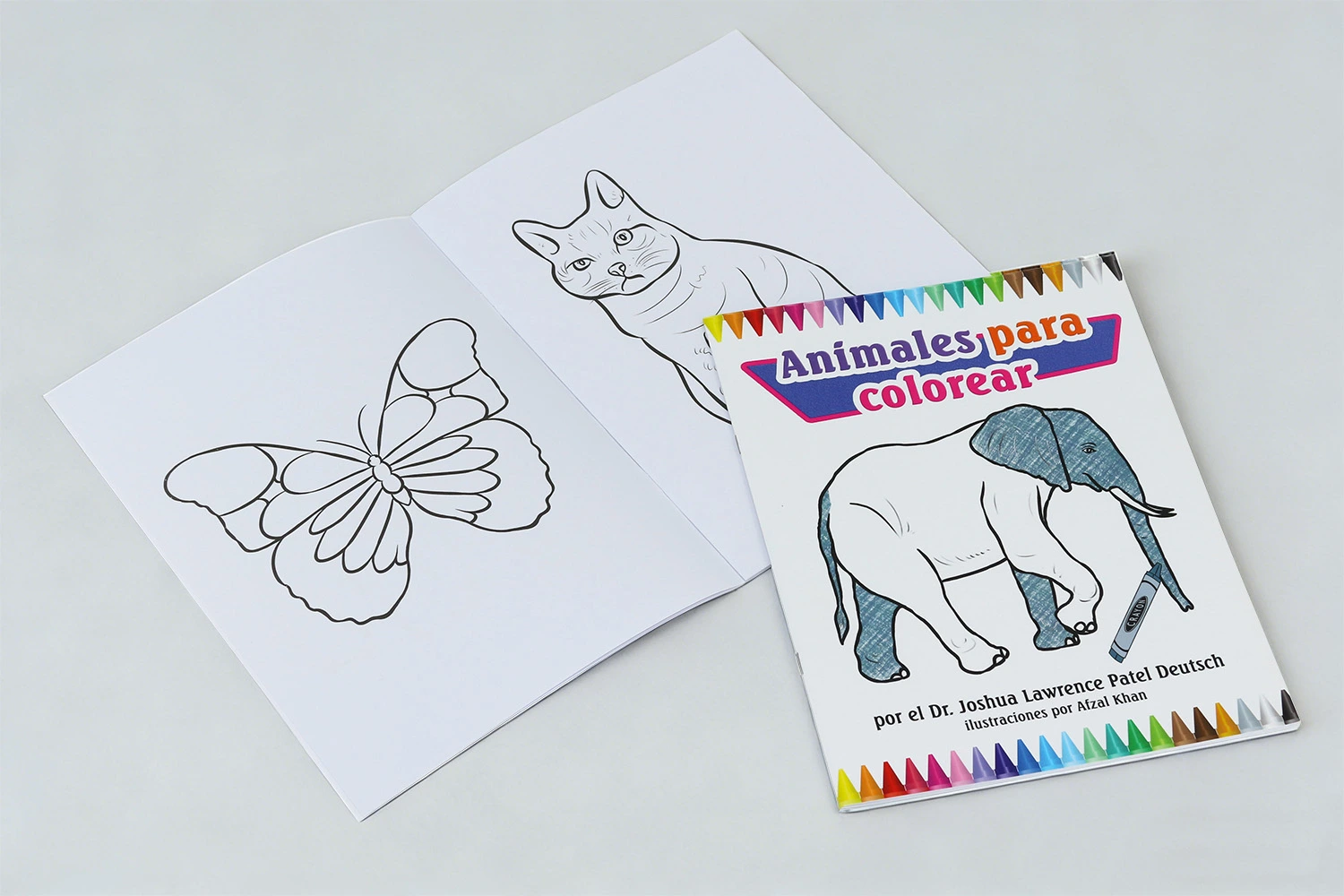
Children typically color with more pressure and use wax crayons, broad-tip markers, and sometimes even paint. Their books require sturdier paper that can withstand erasing, heavy strokes, smudging, and frequent page-turning. Thicker offset papers offer better durability, prevent easy tearing, and maintain shape even after repeated handling.
Recommended Options
120gsm white offset paper: Good starter option for basic kids’ coloring books.
140gsm white offset paper: More robust for everyday classroom or home use.
160gsm white offset paper: Handles markers and heavy crayon pressure well.
180gsm white offset paper: Stronger, ideal for activity books with bolder coloring styles.
200gsm white offset paper: Extra-thick for premium children’s books, craft activities, and mixed-media pages.
How to Choose Paper That Protects Your Artwork
Creating a high-quality coloring book goes far beyond beautiful illustrations. The paper you choose plays a major role in how well the artwork holds up during use. Issues like bleed-through, feathering, smudging, and dull color absorption can take away from the final experience. By understanding how paper interacts with different coloring tools, you can make choices that protect your designs and elevate your book’s overall quality.
Paper Thickness
The first consideration is paper thickness. Heavier paper absorbs pigment more effectively and creates a strong barrier between pages. When the gsm is too low, markers and even heavy crayon pressure can transfer to the opposite side, damaging the artwork. Matching the weight to the tools your audience will use is essential for preventing bleed-through and ensuring pages remain clean.
Acid-free Paper
It’s also important to choose acid-free paper. Acid-free stock resists yellowing over time and helps preserve the brightness of printed lines and colored areas. This is especially valuable for premium editions, adult coloring books, and any project designed to be kept, displayed, or gifted.
Single-side Printing
For audiences who prefer alcohol markers, single-sided printing is one of the most reliable solutions. Printing only one illustration per page or leaving the reverse side blank, ensures that bleed-through never affects another design. Many professional artists’ books also include dedicated “test pages” so users can try colors before committing to the artwork.
Adding Backing Pages
Another technique for enhancing both usability and appearance is adding backing pages. A solid black backing page behind each illustration can significantly reduce visible ghosting and give the book a more polished, high-end look.
Line Quality
Line quality is equally important. Deep-black, high-resolution offset printing creates crisp outlines that resist smudging and maintain clarity. Sharp lines provide better guidance for coloring and help users stay within detailed shapes without losing definition.
Request Paper Samples
Finally, before committing to a full print run, request paper samples from your printer. Swatch books, sample prints, or physical mock-ups allow you to test your favorite coloring tools directly on the chosen paper. This hands-on approach ensures your final book performs exactly as intended and meets your creative standards.
Advanced Paper Selection Tips
When refining your coloring book, the subtleties of paper choice can make a noticeable difference in how the artwork appears and how users interact with each page.
Paper Colors
One of the first elements to consider is paper color. A bright white sheet delivers strong contrast, making intricate patterns, mandalas, and fine linework appear sharper and more vivid. This crisp background helps colors pop and supports detailed designs that depend on clarity.
In contrast, natural white paper offers a softer, warmer tone that is ideal for botanical illustrations, vintage-inspired artwork, or coloring books meant to evoke a gentle, calming aesthetic. The tone of the paper can subtly guide the mood of the entire book.
Opacity Matters
Another key factor is opacity. Opacity determines how much artwork on one side of the page can be seen from the other. Higher opacity helps prevent show-through, a common issue when using markers or heavily applied coloring tools.
Selecting paper with stronger opacity ensures that users can color confidently without distracting shadows from underlying pages. This becomes especially important for books aimed at marker users or artists who enjoy bold, saturated colors. By choosing paper that balances tone, thickness, and opacity, you create a more professional and enjoyable coloring experience.
Print Your Coloring Book With Us
At BookPrintingChina, we proudly bring over 25 years of manufacturing experience to every project we produce. We have printed millions of coloring books for creators, publishers, educators, artists, and global brands. Whether you need an economical children’s coloring book or a premium artist-grade edition, our team ensures exceptional quality at affordable prices.
Why Choose Us?
State-of-the-art printing equipment
Wide range of paper options (offset, cotton, coated, premium artist papers)
Flexible binding options (saddle stitch, perfect binding, spiral binding, wire-o binding, hardcover)
Bulk printing discounts (We provide big discounts for bulk orders)
Fast turnaround and worldwide shipping
Free paper & physical samples
Professional support from artwork to final delivery
We understand how important your coloring book project is. Our team works closely with every client to help choose the perfect paper, finishes, and binding to match your vision.
If you’re ready to print your coloring book, or want expert guidance. Contact us today for a free quote, paper samples, or professional recommendations.