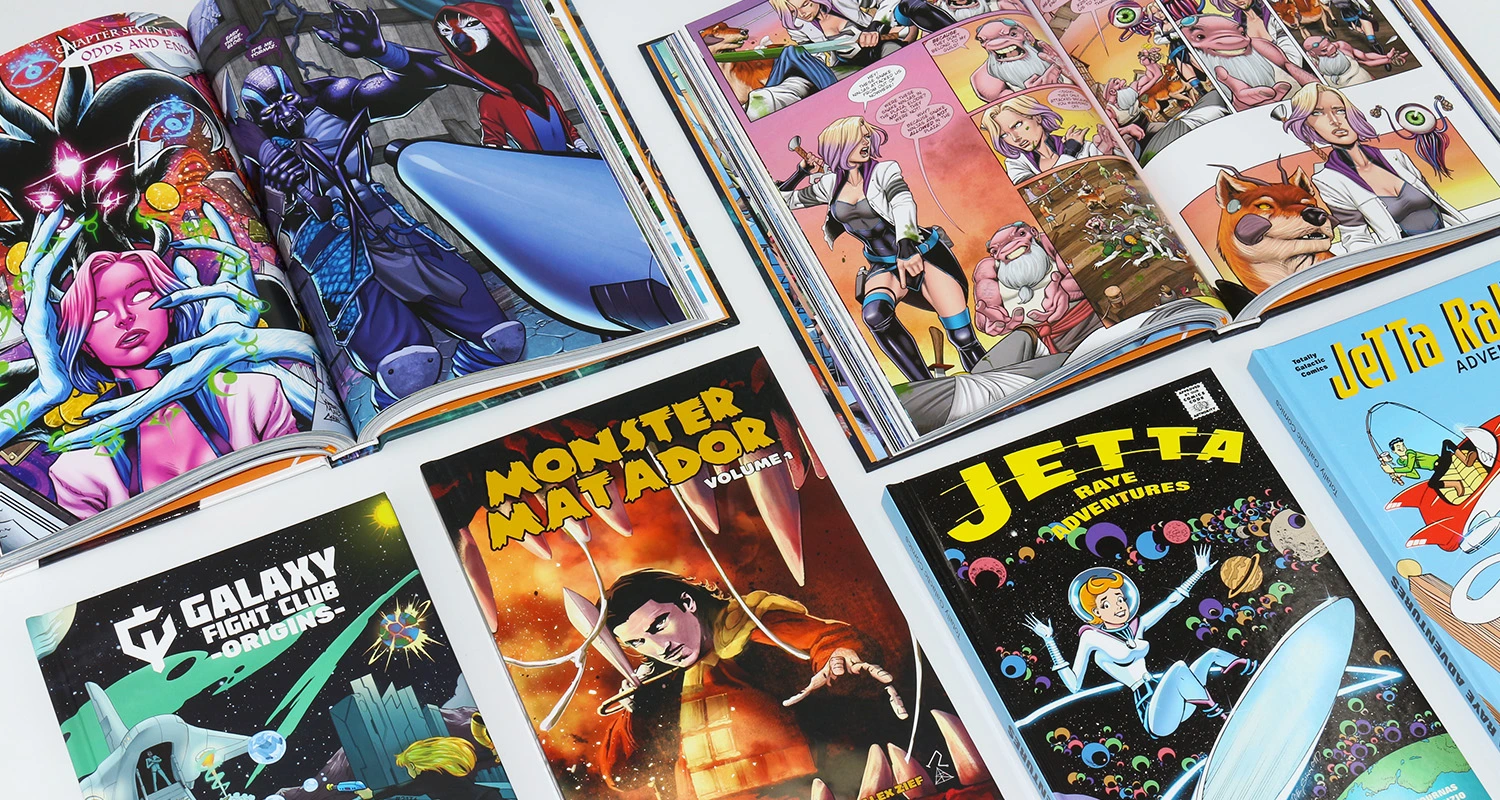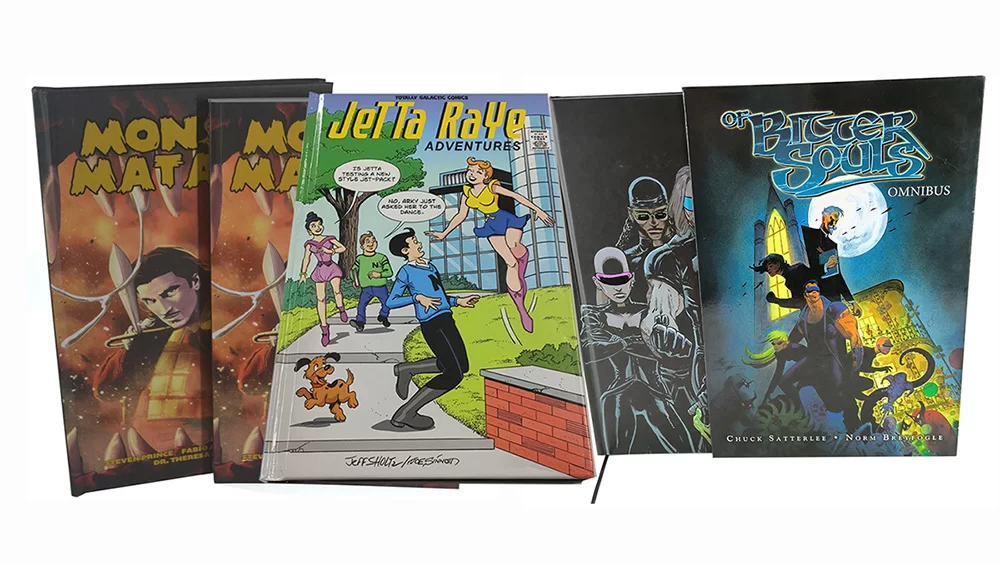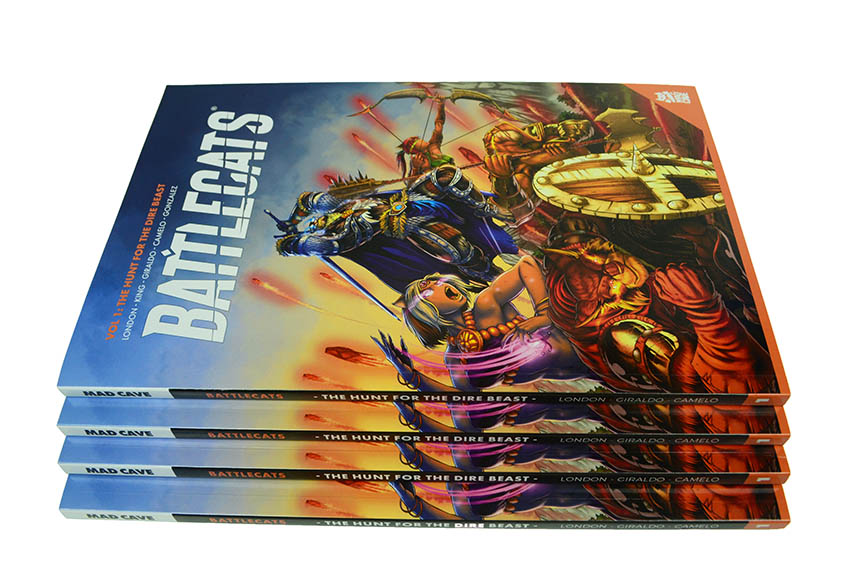




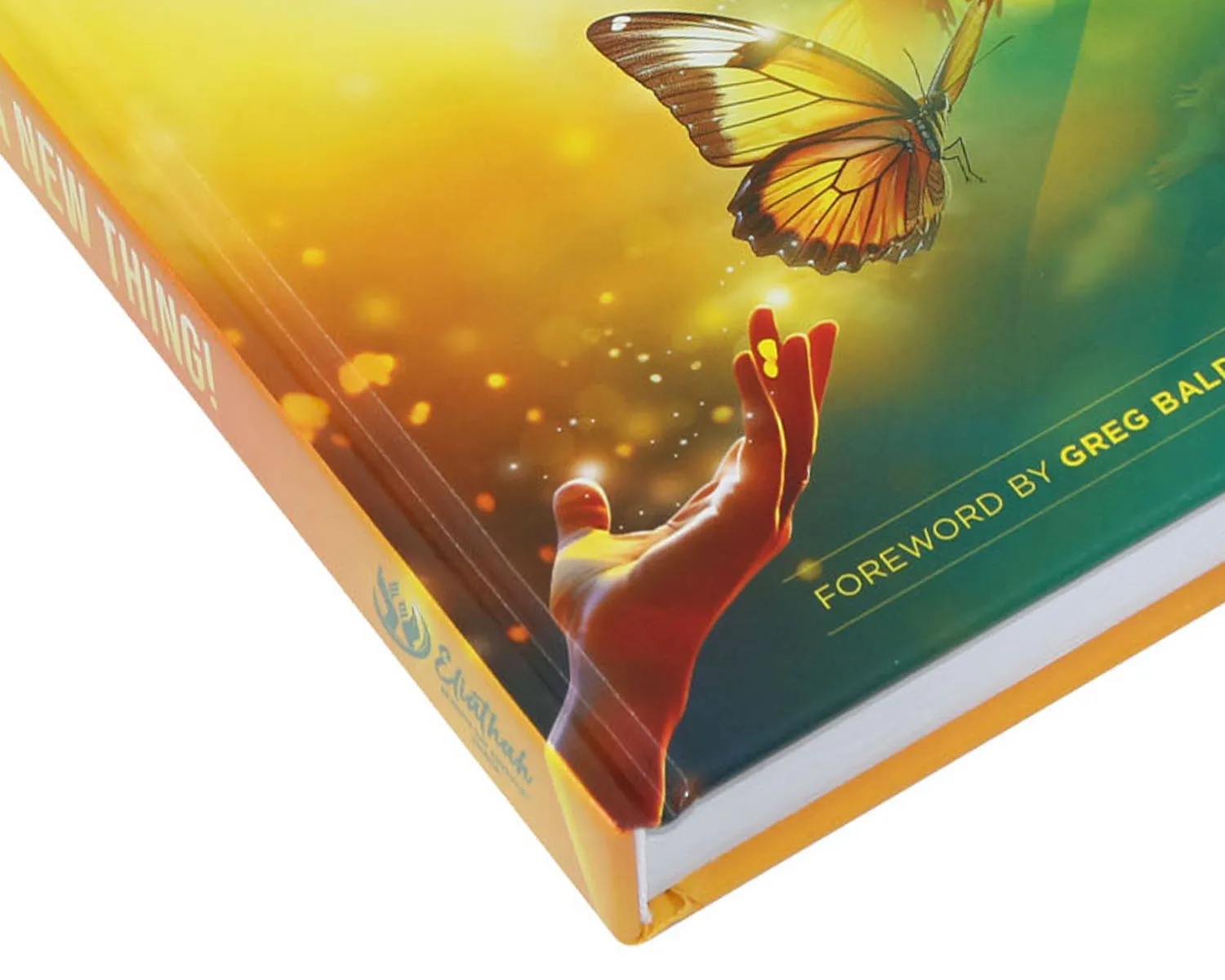
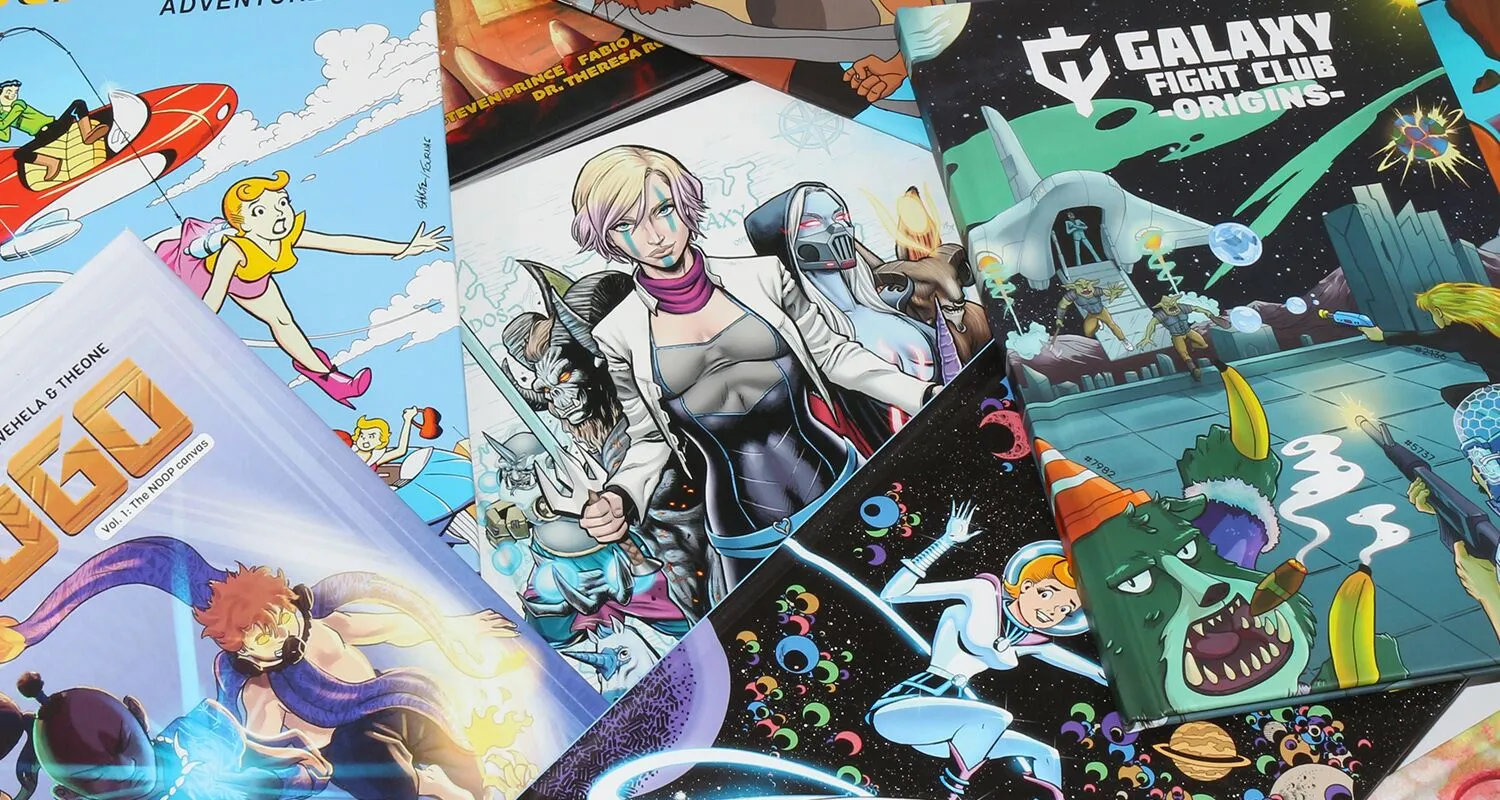
Comic book creators can save over 40% on printing costs while getting exceptional quality through offset printing compared to other commercial printers. As a professional offset printing manufacturer with over 25 years of experience, we at BookPrintingChina pride ourselves on providing high-quality OEM comic book printing services to publishers, artists, cartoonists, independent creators, and more worldwide. In this blog, we delve into the popular offset comic book printing services we offer, exploring the myriad of customization possibilities that can bring your creative vision to life.
Understanding Offset Comic Book Printing
For generations, comic book production has been based on offset printing, as this method creates the vibrant colors and sharp images that bring comic books to life.
What is offset printing?
Offset printing moves ink from metal plates to rubber blankets before it reaches the paper. This indirect transfer creates clean, crisp images. Comic books use four basic colors (Cyan, Magenta, Yellow, and Black – CMYK) that print one after another. Each color needs its own printing plate. This method stands as the industry standard because once plates are ready, you can print thousands of similar copies with amazing consistency.
Why offset printing is ideal for comics
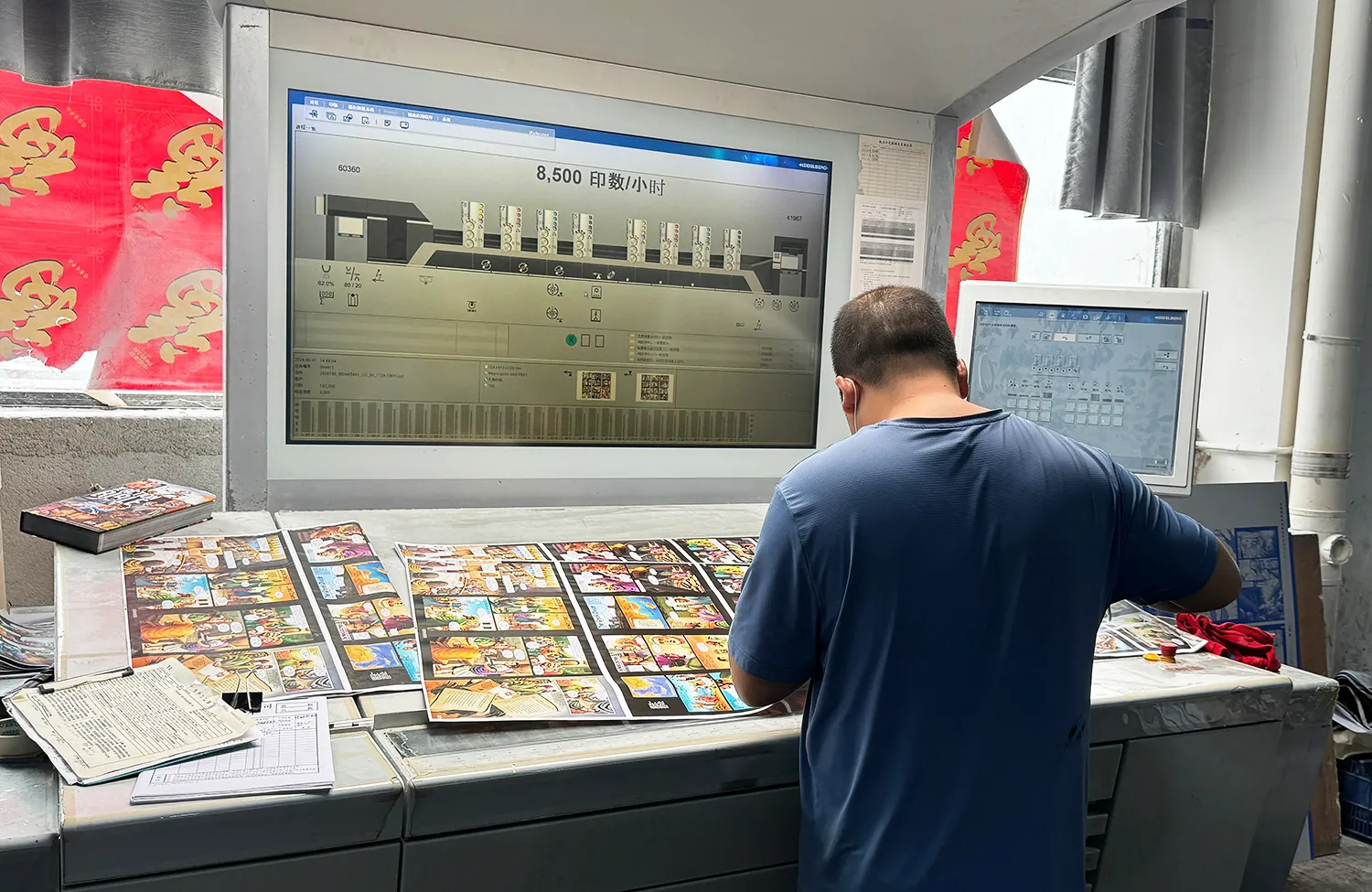
Comics need bright colors and exact details – that’s where offset printing really shines. This technique creates top-quality, consistent color in big print runs. The inks also sink into the paper and create lasting prints that hold up well when readers handle them often.
Comic creators love knowing how to use offset printing because it captures photo-quality images with clear text and smooth color changes. The process shows every tiny detail in shading and line work that digital methods sometimes can’t match.
Offset vs Digital Printing: Key Difference
These two methods differ mainly in volume and setup:
-
Volume considerations: Offset becomes affordable at around 1,000+ similar copies. Digital printing works best for small runs, even just one copy.
-
Setup process: Offset needs metal plates and lots of press prep time, which makes the original setup costly. But once it starts running, you get thousands of prints every hour.
-
Quality factors: Offset gives you sharper images and more precise colors, which really matters for comics with detailed artwork. Digital printing makes bright colors pop but lacks offset’s subtle touch.
-
Material options: Offset presses work with more paper types and finishes. This lets creators pick special papers that make reading comics even better.
Comic creators who plan to print thousands of copies still see offset printing as their best choice for quality and cost. In spite of that, digital options work great for small print runs or test editions before moving to bigger offset production.
Saddle Stitch Comic Book Printing
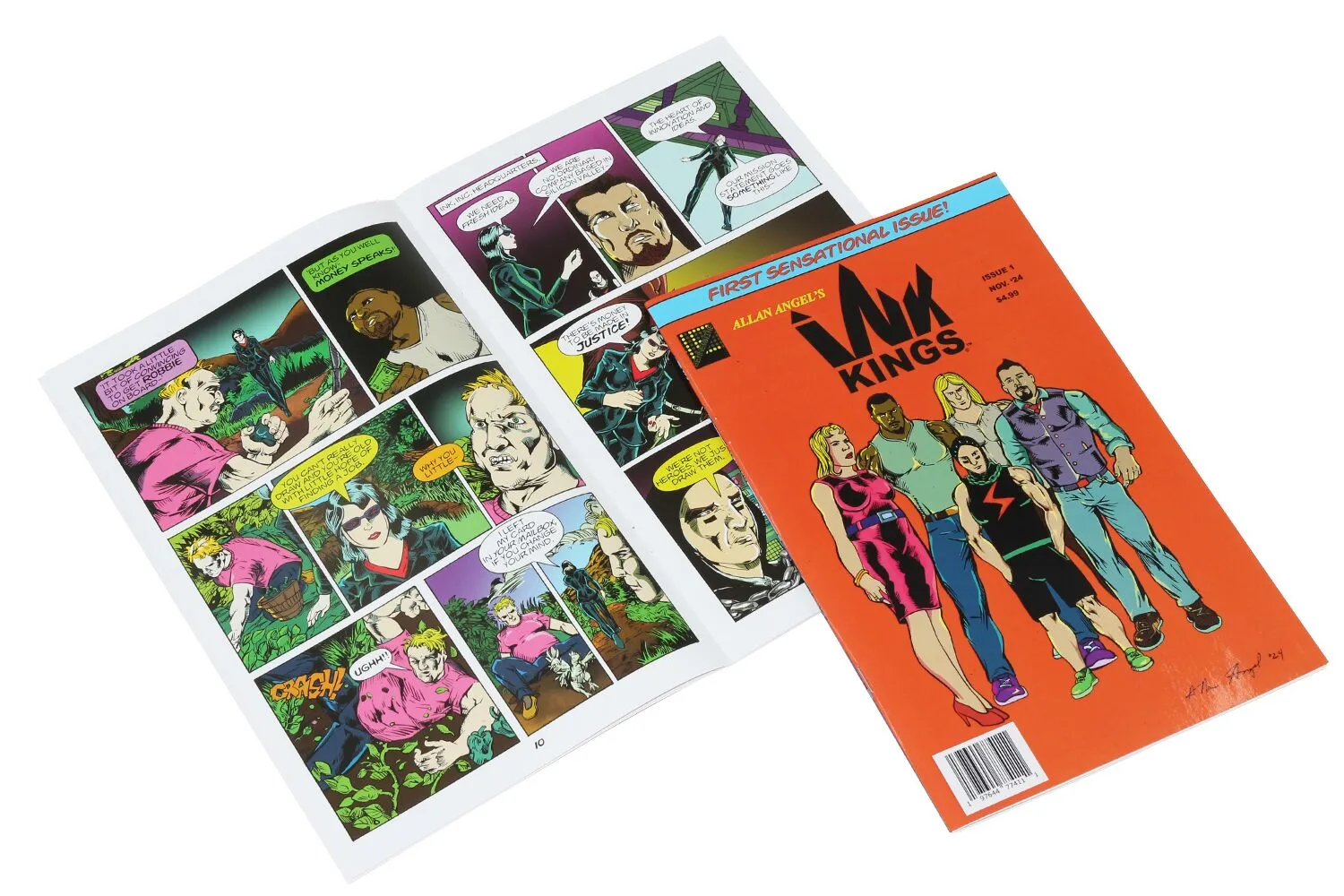
Saddle stitching is the life-blood of traditional comic book production that fans and collectors recognize worldwide. This binding method creates what many think about as the pure comic book experience – thin, flexible issues that open flat and allow uninterrupted reading.
The process remains simple yet effective. Printed sheets fold and nest together over a saddle-like apparatus. Each folded sheet creates four pages of your comic book. A folded cover goes over the arranged sheets, and wire staples (typically two) drive through the fold line. The staples pierce from the cover through all interior pages and cinch closed on the innermost sheet. Your comic book’s spine forms with staple crowns visible on the exterior and bent legs showing in the center spread.
This binding method offers several advantages to comic creators. Saddle stitching stands out as the most affordable binding option, making it ideal for independent publishers and small presses with limited budgets. On top of that, it offers quicker production times than other binding methods, helping creators meet tight deadlines or convention schedules.
The design flexibility of saddle stitching shines brightly. Pages open completely flat, so artists can create dramatic double-page spreads without losing artwork in the gutter. This allows uninterrupted visual storytelling across pages – a vital consideration to action sequences or panoramic scenes.
Comic creators should understand some limitations. Saddle stitching works best with lower page counts because staples can only secure a limited number of pages. We suggest a maximum of 64 pages to achieve optimal results(Depending on the paper thickness). Too many pages create excess bulk near the spine and prevent the comic from lying flat. Page counts must also be in multiples of four.
Saddle stitching dominates comic publishing despite these constraints. The professional appearance, durability, and affordability explain why the humble stapled comic – nicknamed “floppies” due to their flexible nature – continues to rule comic book shelves worldwide decade after decade.
Paperback Comic Book Printing
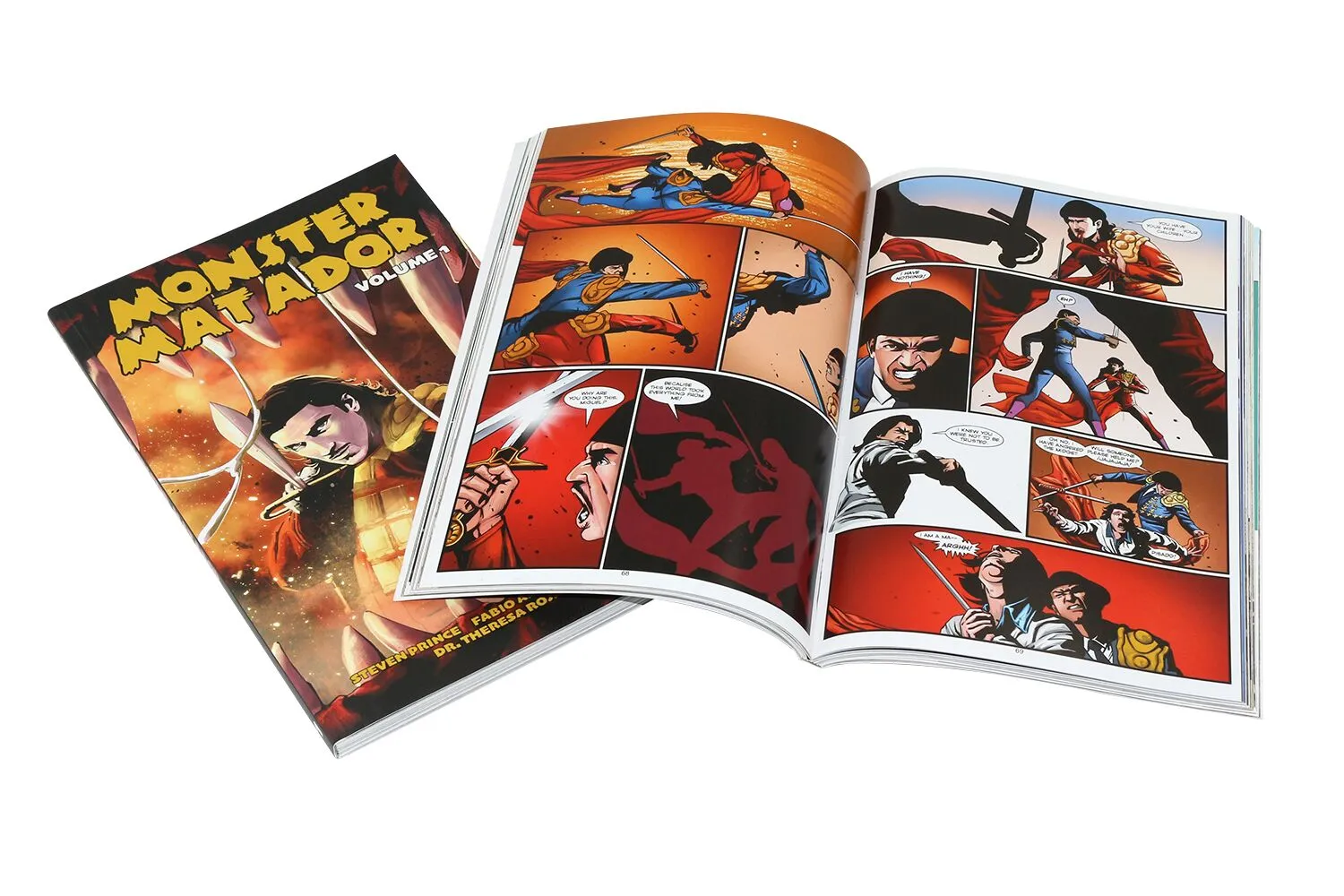
Paperback comic book printing gives graphic novelists and professional publishers the sweet spot between durability and sophistication. These books (known as trade paperbacks or TPBs) are a step up from stapled “floppies” of traditional comics. They use better binding methods that work great with more pages and look amazing on shelves.
Perfect binding or sewn perfect binding makes paperback comics stand out. The pages get glued or section sewn instead of stapled to the spine. The process starts with folding and sheet collection, then the pages are glued or section sewn. Next, the spine edge gets roughened so the glue sticks better. A strong yet flexible adhesive holds everything together, and then three sides are trimmed. The cover, usually printed on thick paper between 250-350 gsm, wraps around and bonds to the glued spine.
This binding method beats saddle stitching in several ways:
-
Extended page counts: Perfect binding works great for 32-500+ pages, making it ideal to collect story arcs or complete graphic novels.
-
Professional appearance: You can print titles on the flat spine, so readers spot your comic quickly on shelves.
-
Improved durability: The tough construction handles repeated readings better than stapled versions.
-
Retail compatibility: Mainstream bookstores love spine-out displays, making paperbacks easier to sell.
Production planning takes more time with paperbacks than saddle-stitched issues. The spine might not open completely flat – artists should think over this when designing spreads. You may want to consider section sewn perfect binding to get a more lay-flat opening, but this will also cost a little more than perfect binding.
Paperbacks work best for collected editions, original graphic novels, and anthology collections. The modern comics marketplace loves this format as readers want detailed storytelling experiences rather than single issues. Independent creators find that paperbacks give them credibility in traditional book markets. They can charge higher prices than single issues, which helps offset the extra production costs.
Hardcover Comic Book Printing
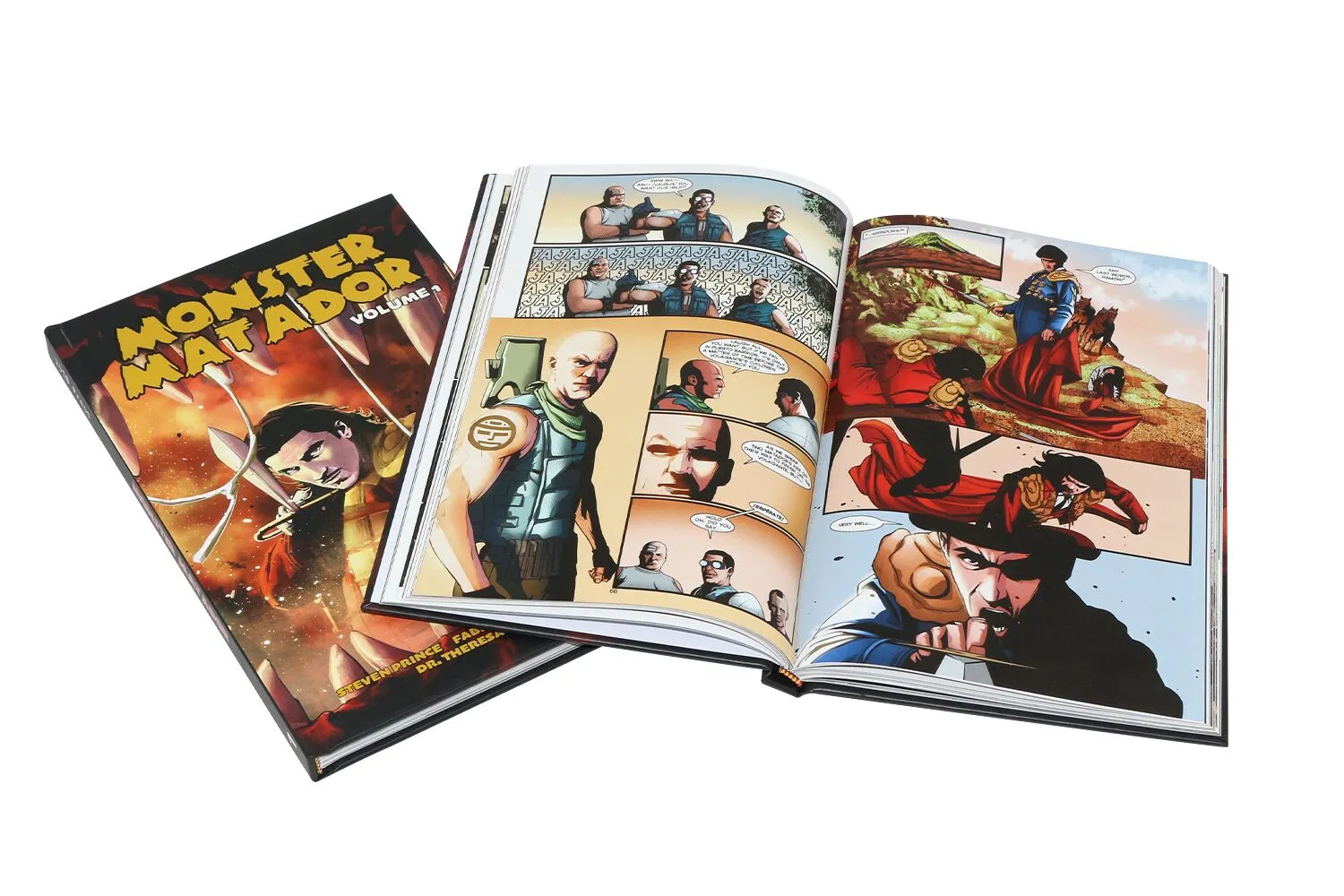
Hardcover comic book offset printing stands out as the ultimate choice to showcase your comics with durability, prestige, and collector appeal. This premium format changes standard comics into treasured keepsakes that last through years of handling.
The books use Smyth-sewn binding, where all inner pages are stitched together with thread to form a book block. A strong adhesive then covers the binding edge and attaches this block to the spine and protective covers. The final product opens flat without damaging the spine or binding, which is vital to display dramatic artwork across spreads. These premium hard cover shield your interior pages from wear-and-tear and turn ordinary comics into collectible pieces that stay pristine for decades.
Hardcover collections bring practical advantages too. They let you combine multiple releases into a single volume that creates a well-laid-out and attractive display. These books stack neatly on shelves or in display cabinets, making them perfect for comic book stores or personal collections.
Comic creators can choose from many finishing options to improve visual and tactile appeal:
-
Cover Treatments: Glossy for vibrant graphics, matte for elegant sophistication, or soft-touch for a velvet-like feel
-
Premium Embellishments: Spot UV for striking contrast, foil stamping for metallic accents, embossing for raised designs, or debossing for recessed textures
-
Edge Finishing: Custom edge spraying or metallic gold/silver edges for limited editions
Paper selection provides flexibility, with various weights and finishes available for both covers and interiors. Traditional comic books usually use 105-200gsm coated text paper or 80-140gsm uncoated text paper for printing interior text, while covers made of 157gsm coated cover paper mounted 2-3mm gray board.
Hardcover comic printing plays a unique role in publishing. Collectors’ editions, special releases, and projects that need a high-end, durable finish benefit greatly from this format. These books make ideal gifts for birthdays, anniversaries, or graduations.
Production times for hardcovers take longer than other binding methods. However, the final product delivers unmatched strength and longevity—a significant advantage for high page counts and heavier paper stocks.
Multi-covers Comic Book Printing
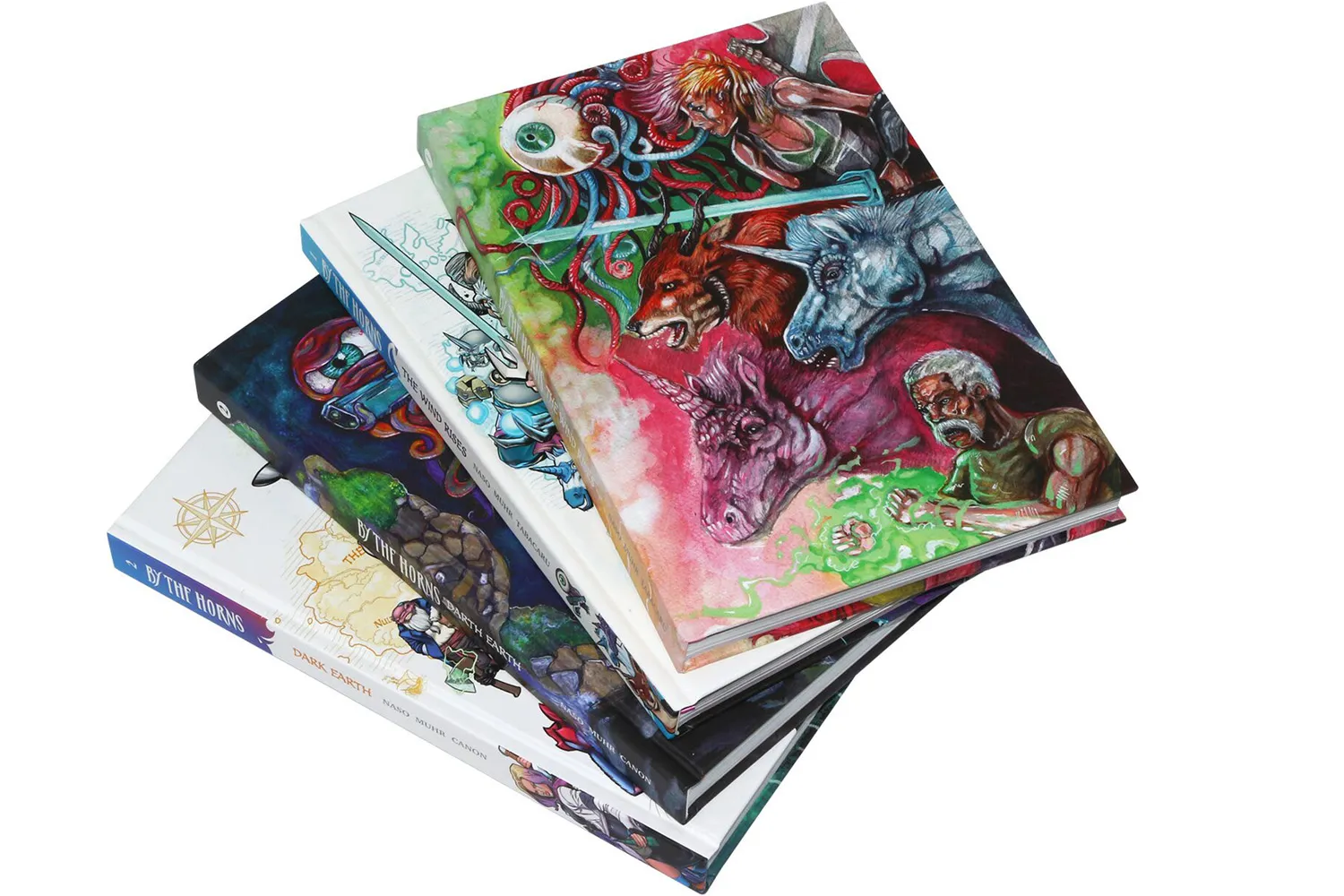
Variant covers have become the life-blood of comic book industry’s marketing and collector appeal. Publishers use this popular offset printing option to produce comics with multiple cover designs while keeping the inside pages similar. They do this to encourage fans to buy multiple copies of the same issue to complete their collections.
Comic book printing services that use offset printing give publishers several variant cover options to attract readers and boost sales. Full-cover artwork variants show a single, edge-to-edge illustration that often highlights a featured artist’s unique style. These covers help stunning artwork stand out on crowded shelves.
Split covers are another trend that’s catching on. They divide the cover image into two or more distinct panels. This style creates visual tension and shows multiple characters or plot threads without making the design too busy.
Artists who want their work to make the biggest impact often choose wraparound covers that extend to the back cover in one uninterrupted design. Gatefold covers are another option that uses oversized paper with folding flaps to reveal larger scenes, which gives readers a hands-on experience.
Offset printing does an excellent job with these variant covers because it reproduces images and colors so well. Note that variant covers usually come in limited quantities, which makes collectors want them even more. Comic book creators find that offering variants is a great way to create buzz, build loyal fans, attract new readers, and end up increasing sales.
New publishers should know that variant cover pricing depends on how many designs you want, plus extra costs for special finishes like foil stamping or spot UV treatments.
Printing Comic Book with Different Language Versions
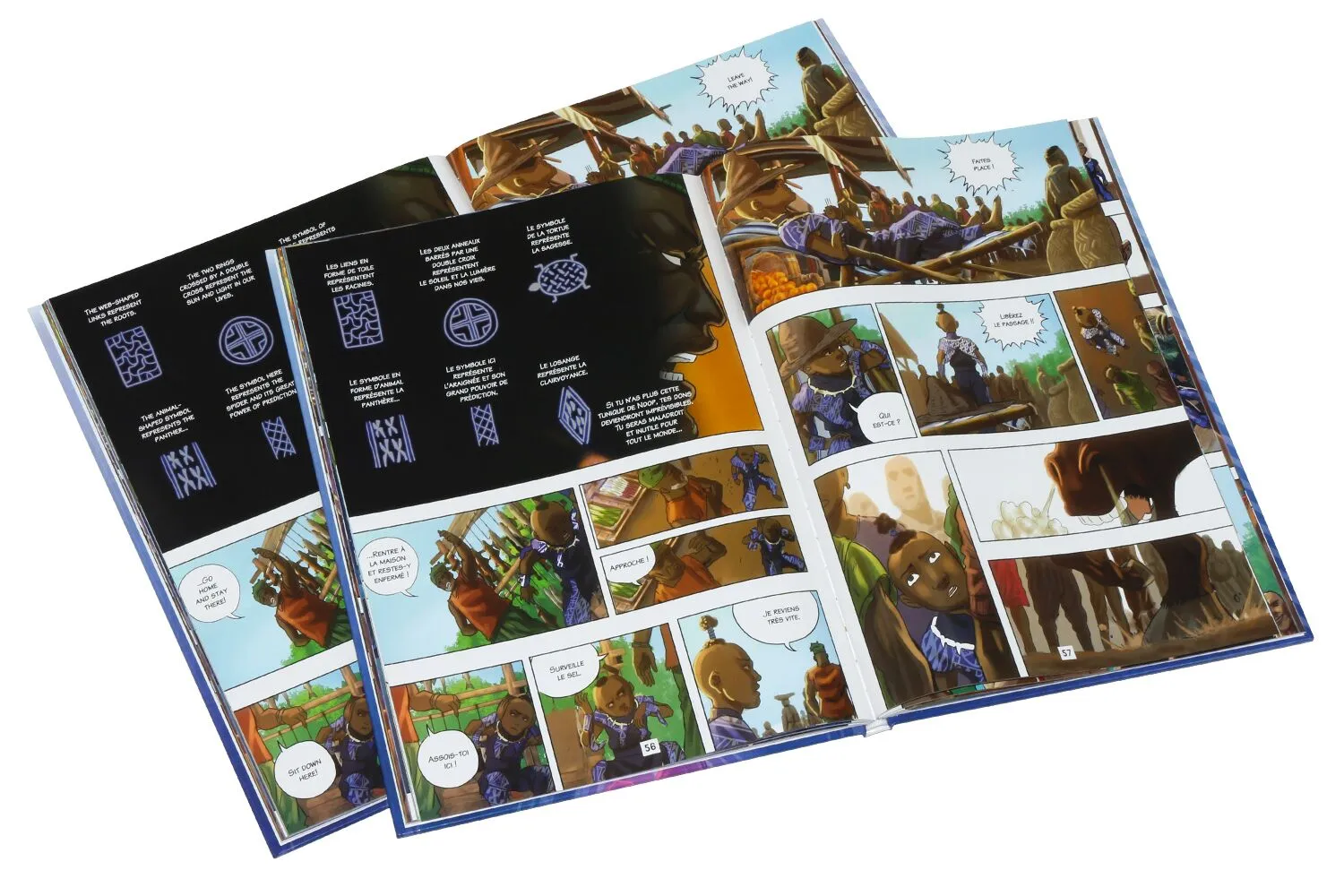
Comics speak to everyone through pictures, but reaching readers worldwide means text in their own languages. Getting comics to global markets needs smart planning for different language editions. Offset comic book printing gives unique benefits here.
The market for comics in multiple languages keeps growing as our world gets more connected. To cite an instance, manga publishers often create versions in more than 10 languages at once to optimize distribution. This way of printing everything together cuts down the total costs by a lot compared to separate runs.
Publishers learning about multilingual options have several ways to go:
-
Combined language editions – Text in multiple languages shows up on the same page, which works great for educational comics or bilingual markets.
-
Separate language editions – Same artwork with different language text needs careful planning before printing.
-
Localized adaptations – Changed artwork and text that fit cultural differences beyond just language.
Technical details become crucial when getting files ready for different languages. Quality offset comic book printing handles these challenges with various fixes:
-
Text expansion/contraction – Some languages take up more space than others (German needs about 30% more room than English). Page layouts must adapt to this.
-
Font compatibility – Special fonts for non-Latin alphabets (Japanese, Arabic, Cyrillic) need proper tech support.
-
Right-to-left reading – Comics for Arabic or Hebrew readers need complete page flipping, including artwork direction.
Offset printing shines with multilingual editions thanks to its plate system. You only change the text plates between languages once the artwork plates are set. This saves money especially when printing over 500 copies in each language.
Multilingual comic printing opens huge market opportunities on top of saving costs. Many indie creators make over 40% of their money from international versions. High-end publishers also create fancy multilingual collector’s editions with premium binding and finishing.
Comics truly go global when they’re carefully made in multiple languages. They connect stories with readers everywhere, whatever language they speak.
Adult Comic Book Printing
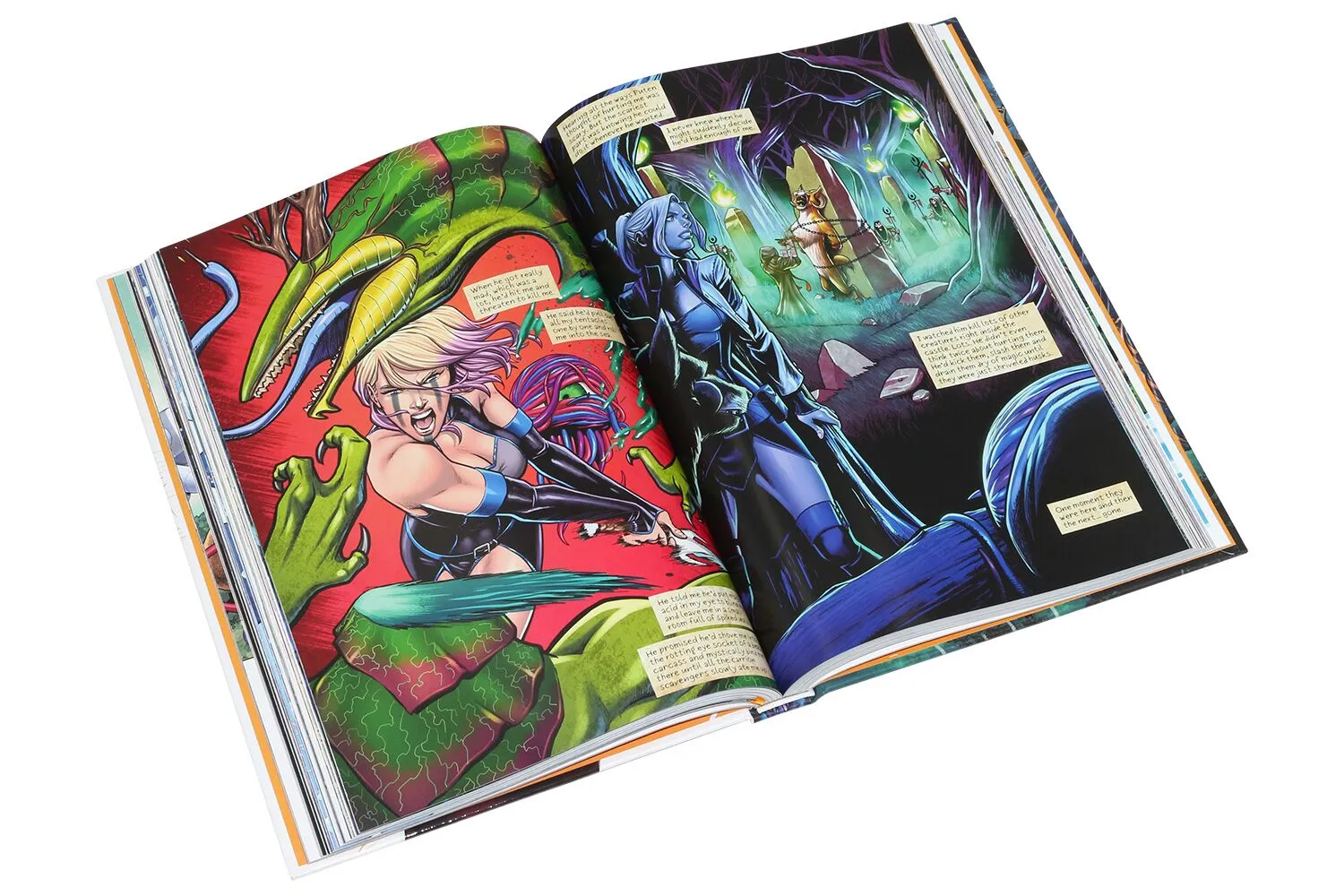
The development of adult comic book printing tells a compelling story in publishing history. This segment grew from censorship restrictions to become a thriving market. “Adult comics” refers to publications that target readers aged 16 and older. These comics often contain content unsuitable for children—such as explicit material, disturbing imagery, or morally ambiguous themes.
Quality paper makes a big difference. Many creators choose heavier paper stock to give their work a more professional look. Adult graphic novels usually run over 100 pages. This length means perfect binding or case binding works better than traditional saddle stitching.
Adult comics come in different sizes than standard ones. North American comic books stick to around 7″ × 10″. Adult graphic novels offer more size options. Common dimensions include 8.5″ x 11″, 5.5″ × 8.25″, and 6.625″ × 10.25″.
The adult comic market covers many areas—from thoughtful graphic novels with complex themes to explicit content publications. Companies like Vertigo (DC Comics) and Max (Marvel) started specifically to publish mature content. This shows the market’s strong commercial appeal.
Professional offset comic book printing delivers top quality. Readers get vibrant colors, sharp details, and durable books that meet their high standards. At BookPrintingChina, we specialize in adult comic book printing, offering a range of services to bring your bold ideas to life with precision and quality.
Our adult comic book printing service includes a variety of paper stocks and finishes to suit your artistic vision. Whether you prefer glossy pages for vibrant colors or matte finishes for a more subdued look, we have the expertise to deliver. Our state-of-the-art printing technology ensures that intricate details and delicate line work are reproduced with clarity and accuracy.
We understand the importance of maintaining the integrity of your work, which is why we provide secure and confidential printing services for adult content. Our experienced team is dedicated to upholding the highest standards of professionalism and discretion, allowing you to publish with confidence.
Children’s Comic Book Printing
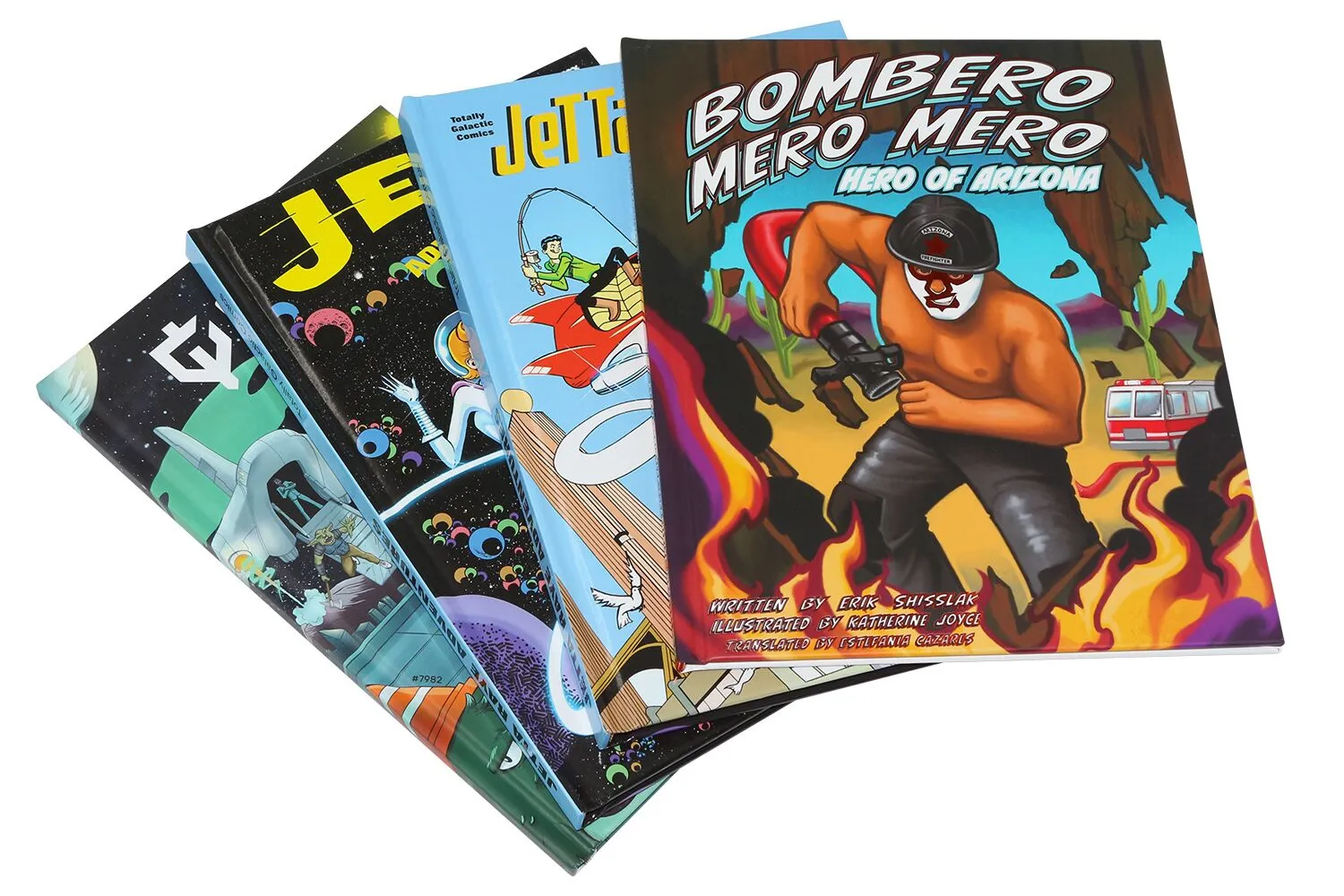
Comic books made for young readers need special attention beyond regular offset printing methods. These books do more than just entertain – they help build reading skills through stories told with pictures.
Kids’ comic books look quite different from what adults read. You’ll notice these key features:
-
Colors that pop and catch children’s eyes
-
Text that’s bigger and easier to read
-
Use child-safe ink and paper.
-
Paper that’s tough enough for little hands
-
Simple layouts that kids can follow easily
Paper quality is a vital part of making children’s comics. Publishers usually pick thicker, stronger paper that won’t tear and can handle lots of reading. Safety comes first with non-toxic soy inks, which protect kids who love to touch and feel their books.
Children’s comic printing splits into two main types. Educational comics need to last in classrooms, while retail comics balance toughness with cost.
Student publishing programs are becoming more popular these days. These programs put student comics together in magazines that print thousands of copies. Young artists get their own printed copies, which creates an amazing learning experience that mixes creativity with professional quality.
Offset printing works best for children’s comics when you need more than 1,000 copies. This method gives bright, consistent colors that kids love and keeps production running smoothly. Digital printing might work better for smaller amounts while keeping the same quality.
Coloring Comic Book Printing
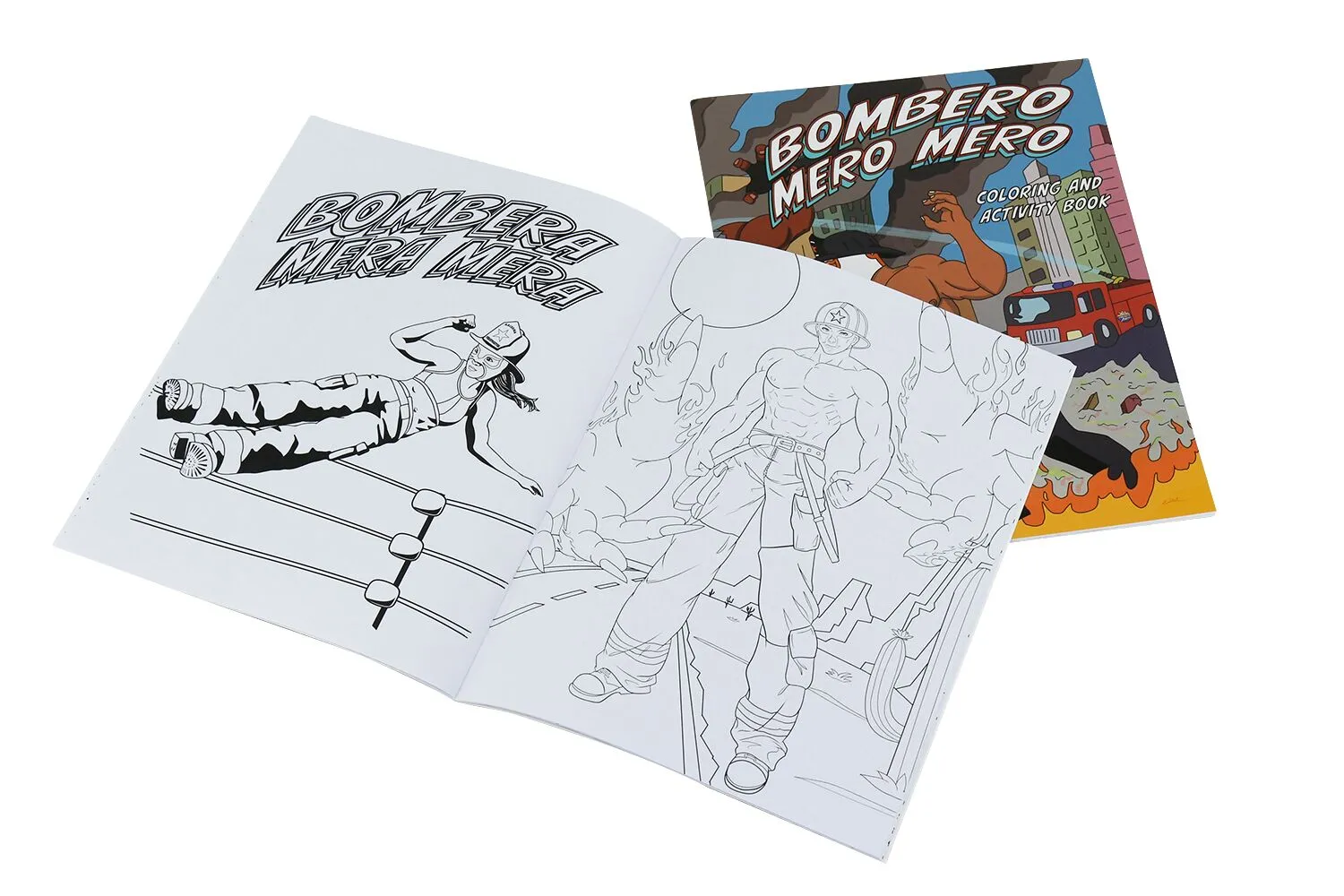
Color breathes life into comic book illustrations and powerfully sets the emotional tone of a story, just like the artwork itself. With professional offset comic book printing, your vision is delivered with remarkable clarity and color precision, ensuring readers experience your story exactly as intended.
Our comic coloring book offset printing service provides a wide range of paper options suited for crayons, markers, and colored pencils. For interiors, we typically recommend 120–140 gsm uncoated paper—thick enough to prevent bleed-through and enhance the coloring experience. Every page is printed with clean, crisp lines, offering a perfect foundation for creativity and imagination.
Whether you’re creating a standalone coloring comic or a companion to an existing series, this format engages readers on a deeper level. Our high-quality offset printing captures the richness of full-color designs or the charm of black-and-white illustrations, delivering durability, vibrancy, and visual impact in every book.
Comic Book Printing with Dust Jacket
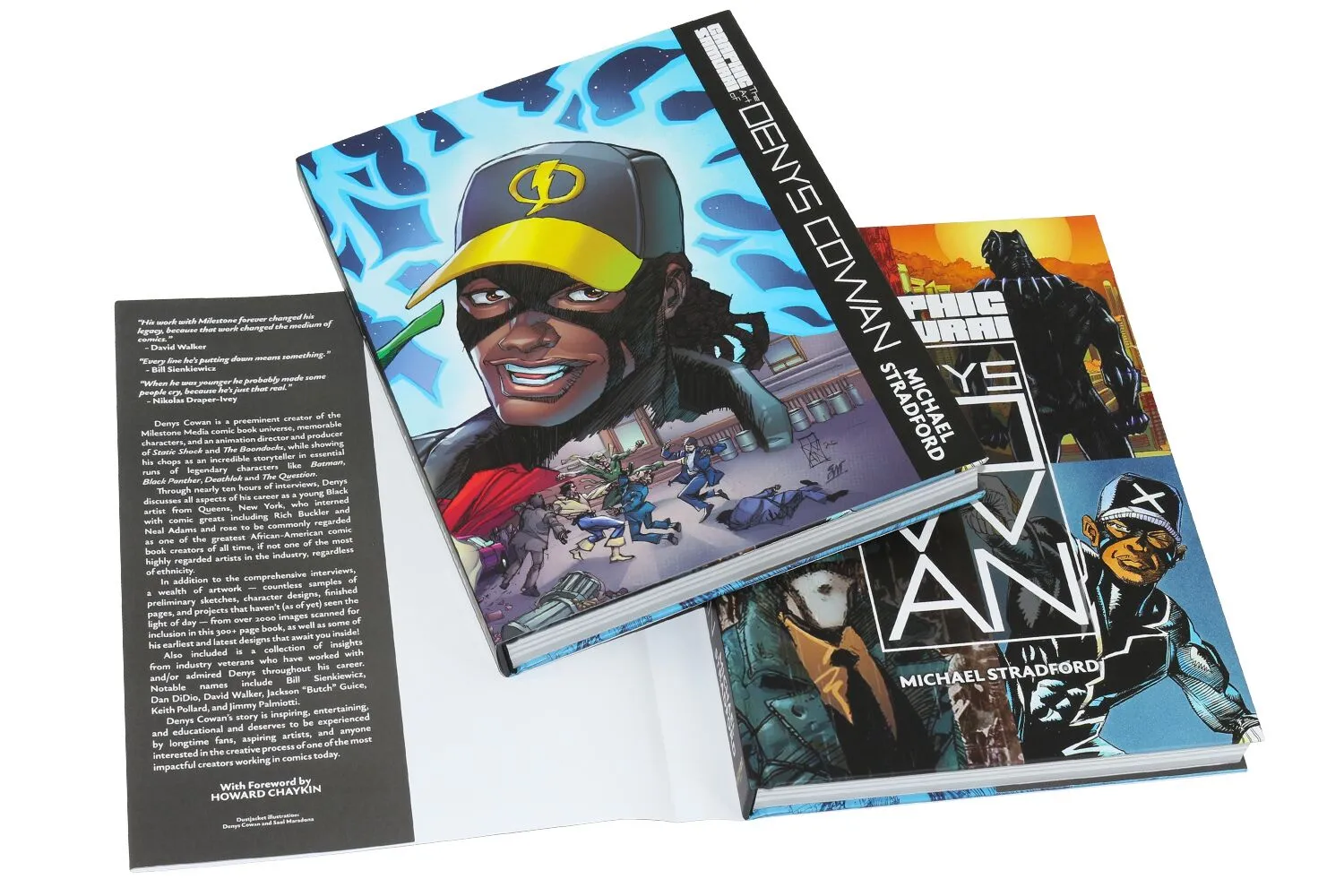
Dust jackets turn regular comic books into elegant collector’s items. They protect your publication and make it visually appealing. These removable paper wraps go beyond the cover with folded flaps inside. The result is a polished, professional look that belongs on bookstore shelves.
Dust jackets do more than just look good. They protect hardcovers from scratches, stains, and UV damage that could fade cover colors. The jackets’ inside flaps provide extra space that creators can use to add marketing copy, author bios, or praise quotes – content that wouldn’t fit on standard covers.
Production quality matters. Most dust jackets use 157gsm coated paper stock to balance durability and flexibility. The jacket’s width typically extends 3 inches beyond the book to account for both flaps, while matching the book’s height exactly.
Dust jackets open up amazing design possibilities. Publishers often use different artwork on the jacket than the hardcover beneath. This gives readers two distinct cover designs in one product. Some creators pair minimalist cloth or leatherette hardcovers with elaborate dust jackets. This creates an interesting visual contrast when readers remove the jacket.
These jackets can have the same finishing options as covers: spot UV coating to highlight specific elements, embossing to create texture, and foil stamping to add metallic accents. Premium finishes cost more but boost the product’s value among collectors.
Slipcase Comic Book Printing
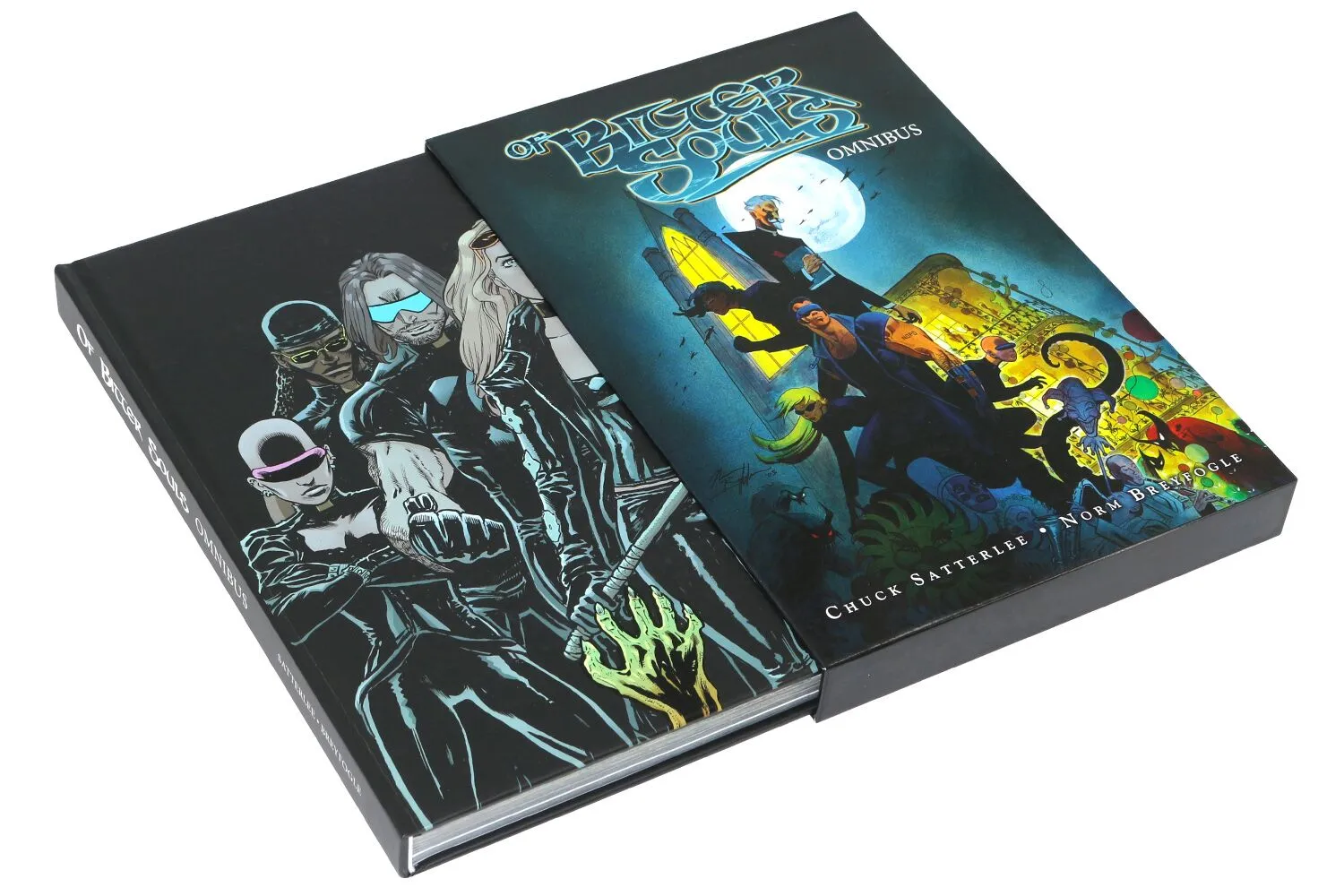
Slipcases raise comic book collections from simple publications to cherished display pieces. These three-sided protective boxes shield your prized comics and make them look great on display.
We usually design slipcases as accessories for hardcover comics, but they work just as well for paperback collections or multi-volume series. The build uses high-quality cardboard covered with printed paper, cloth, vinyl, or leatherette. This sturdy design creates attractive housing that catches eyes on any bookshelf while protecting your comics from dust, light, and damage.
A slipcase turns your collectible or limited-edition comics into something special. Publishers selling comics in stores or online use slipcases to make their products stand out and boost their value. They serve four main functions: protection, storage, decoration, and publicity display.
Custom comic book printing projects offer many ways to personalize slipcases. Publishers create unique sizes and styles that fit specific dimensions perfectly. Some creators repeat their cover artwork on slipcases, while others develop new designs to surprise collectors. Customization options such as foil stamping and embossing allow you to create a slipcase that is as unique as the content it holds.
Slipcases are perfect for luxury print editions meant to last generations. Comic collections in slipcases are great for special promotions. Many collections become family treasures passed down through time.
Oversized Comic Book Printing
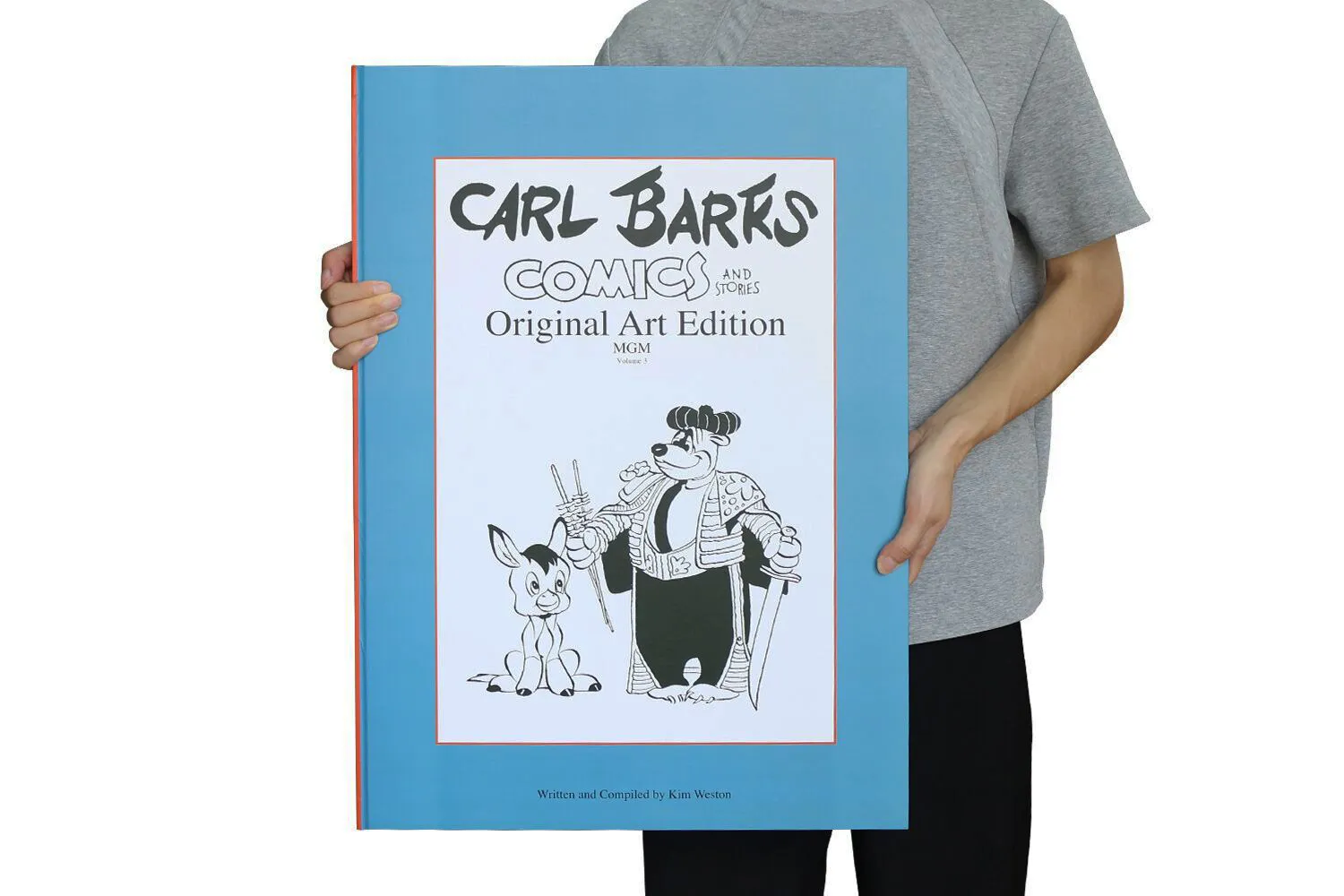
Oversized comic books catch everyone’s eye in a collection. They give artists a bigger canvas to show off detailed artwork and pull readers into the story. These premium books can go way beyond the usual 6.625″ x 10.25″ comic size, reaching up to 17.72″ x 20.47″(450mm x 520mm). The visual effect is dramatic in a way regular comics just can’t match.
Artists and storytellers love the extra space these bigger comics provide. Double-page artwork looks more impressive, tiny details stay sharp and clear, and readers can easily follow text even in complex layouts. This bigger format turns reading into something special, especially when artists have intricate drawing styles or publishers want to create high-end editions.
Publishing these larger comics comes with some practical challenges. The bigger size means higher printing costs, which affects both making and selling the books. Shipping and storage cost more too, since fewer oversized books fit in regular boxes.
Paper choice makes a big difference in these larger formats. Standard comics work fine with 80-157gsm paper weight, but bigger books need heavier paper options(It depends on the page count and book size). These thicker papers keep pages from drooping and feel more premium, though they do push up production costs.
Sewn binding works best for holding these oversized comics together. This method uses special section sewn binding instead of staples and creates a flat spine. It handles the weight of bigger pages better and makes the comic look more like a premium book.
Publishers can make these editions even fancier with special cover treatments. They might add foil details, laminated surfaces, or spot UV coatings. These extras protect the colors from fading and make the books feel great to touch.
Offset printing still gives the best results for oversized comics today. It delivers rich, consistent colors and keeps all the artwork’s details sharp at larger sizes without losing quality.
Limited Edition Luxury Comic Book Printing
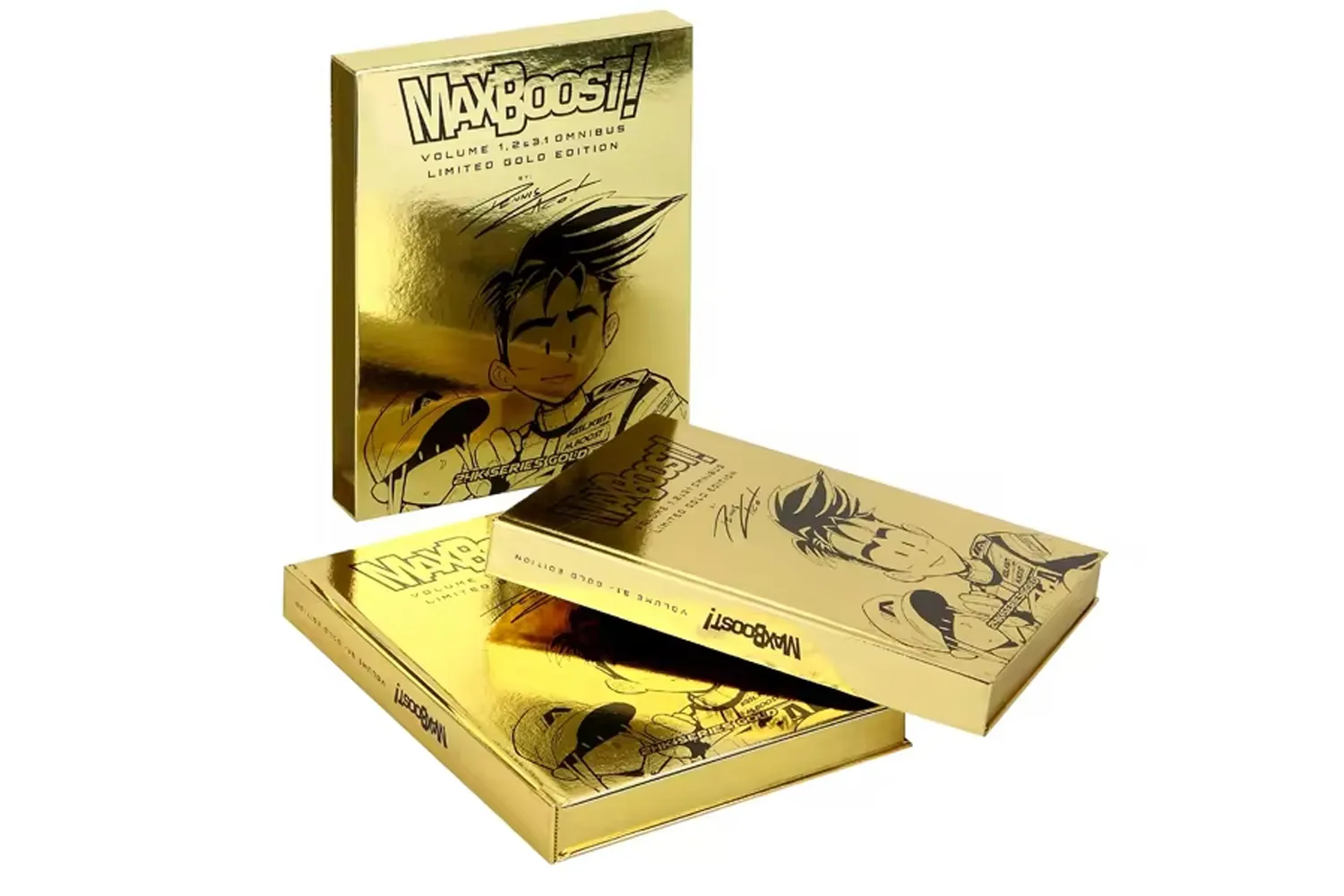
Limited edition luxury comic books showcase the finest print craftsmanship in the comic industry. These premium publications turn standard stories into collectible treasures through exceptional materials and distinctive finishing techniques.
Luxury editions stand out in offset comic book printing through their quality, uniqueness, and standout presentation. Publishers create multiple cover variants with specialized treatments for each edition. Their options include covers with different colored foil stamping, spot UV finishes, and luxury gilded edges. This variety excites collectors, marks important milestones, and draws a broader readership base naturally.
Luxury comic printing’s appeal shines through its extensive customization options:
-
Advanced Binding: Smyth-sewn binding stands as the premium choice for hardcover limited editions. This allows books to open flat without risking spine or binding damage.
-
Material Selection: From recycled card stocks to custom papers with distinctive textures
-
Premium Finishes: Foil stamping, embossing, sprayed edges, dust jackets and slipcases can enhance the visual impact and protect your comic book.
Luxury comics serve as investment pieces that keep their condition years after publication. Their longevity makes them perfect for collectors’ editions, special releases, and projects that need a high-end, durable finish. The combination of distinctive design elements and superior construction creates items that exceed mere reading material and become cherished collectibles.
Print Your Own Comic Book with Us
Are you ready to print your own comic book? At BookPrintingChina, we offer custom comic book printing services that bring your creative vision to life with precision and quality. Our powerful offset printing technology ensures vibrant colors, crisp details, and durable finishes, all at an affordable price.
Whether you’re looking to produce a single issue, an entire series of related products like graphic novel, comic calendar, comic poster and more, our team of experts is here to guide you through the process. From artwork to final production, we provide the support and expertise needed to create a world-class comic book that captivates readers.
In addition to offset printing, we offer a range of supplementary services, including free file checking, digital printing for proofs, small print runs, and print-on-demand solutions. With our door-to-door shipping service, you can rest assured that your comic books will reach your audience quickly and efficiently.
Ready to embark on your comic book printing journey? Contact us today to get a custom quote and let us help you create a publication that stands out in the world of comics. Whether you’re an independent creator or a seasoned publisher, our team is here to support you every step of the way. Unlock endless customization possibilities with BookPrintingChina and make your comic book dreams a reality.