




Foil Stamping
In this guide, we are explore everything about foil stamping, include its definition, benefits, applications, color options, artwork tips, etc. to help you create an eye-catching and luxury product.
At our printing company, we offer high-quality foil stamping services to elevate the appearance of a wide range of products. From books and catalogs to notebooks, cards, packaging, and labels, foil stamping can add a touch of elegance and sophistication that sets your printed materials apart.
What’s Foil Stamping
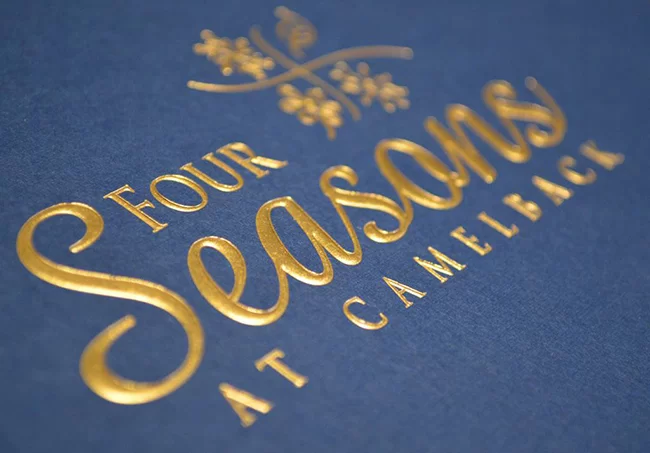
Foil stamping, also known as foil stamp or hot stamping. It is a printing process that combines heat, pressure, and metallic foil to create stunning, raised designs on various materials. This process creates a raised, glossy impression that adds a touch of elegance and sophistication to various products, including stationery, packaging, books, and more.
In the world of printing and embellishment, hot stamping stands out as a timeless and luxurious technique. It combines the art of metallic brilliance with intricate detail, allowing for the creation of stunning designs that captivate the eye and elevate the overall aesthetic appeal of a product.
Foil stamping offers a wide range of possibilities, from subtle accents to bold, all-over designs. It can be applied to a variety of materials, including paper, cardstock, leather, fabrics, making it a versatile technique for various industries.
The Benefits of Foil Stamped
Hot stamping offers numerous benefits that make it a popular choice for businesses and individuals seeking to elevate their products’ visual appeal. Here are some of the key advantages of this printing technique:
Luxurious appearance: The metallic sheen and raised texture of foil stamping exude a sense of luxury and sophistication, instantly elevating the perceived value of a product.
Durability: Foil printing is a long-lasting and durable printing method. Due to the foil is applied on the product after printing, ensuring that the design remains vibrant and intact even after extended use or exposure to environmental factors.
Versatility: Foil stamping can be applied to a wide range of materials, from paper and cardstock to leather and cloth. It allows for endless creative possibilities across various industries.
Eye-catching appeal: The reflective nature of foil stamped catches the eye, making it an effective way to draw attention to specific elements or designs on a product.
Customization: With a vast array of foil colors and finishes available, foil stamping offers endless possibilities for customization. It allows businesses to create unique and memorable designs that align with their brand identity.
Perceived value: The premium look and feel of foil stamped can enhance the perceived value of a product, making it an attractive option for high-end or luxury goods.
Above we just listed a few benefits of foil stamping applied on products. Through incorporating foil stamping into your product designs, businesses can create a lasting impression and elevate their offerings to new heights of sophistication and elegance.
Pop Foil Stamping Products
Hot stamping can be applied to a wide variety of products, adding a touch of sophistication and elegance to each one. Here are some popular items that benefit from this luxurious printing technique:
 |
 |
 |
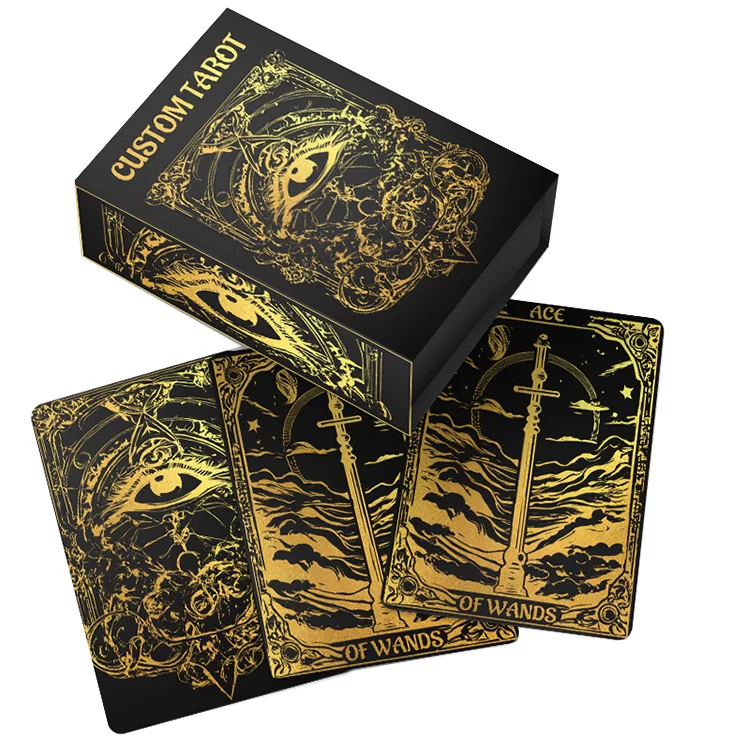 |
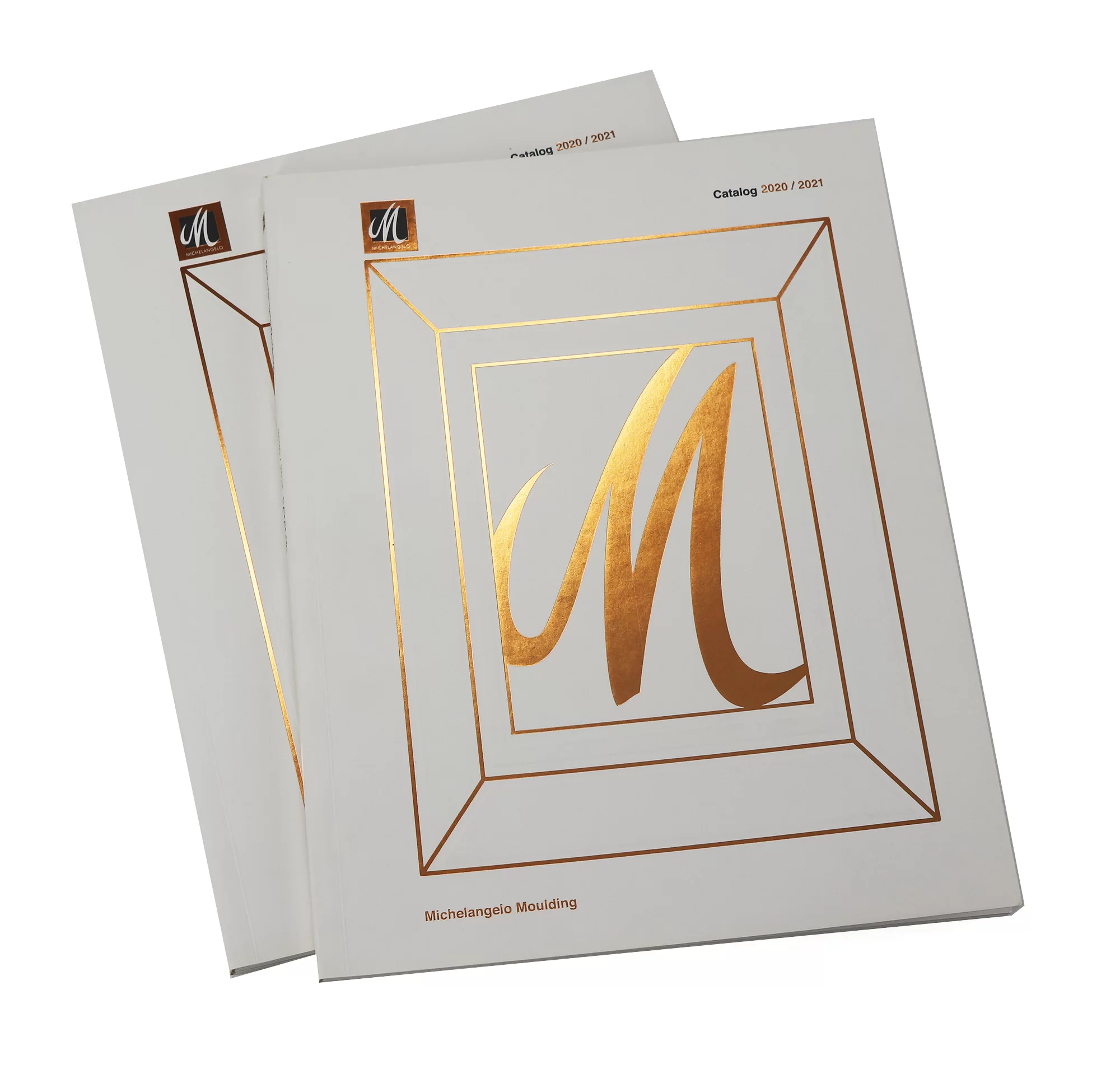
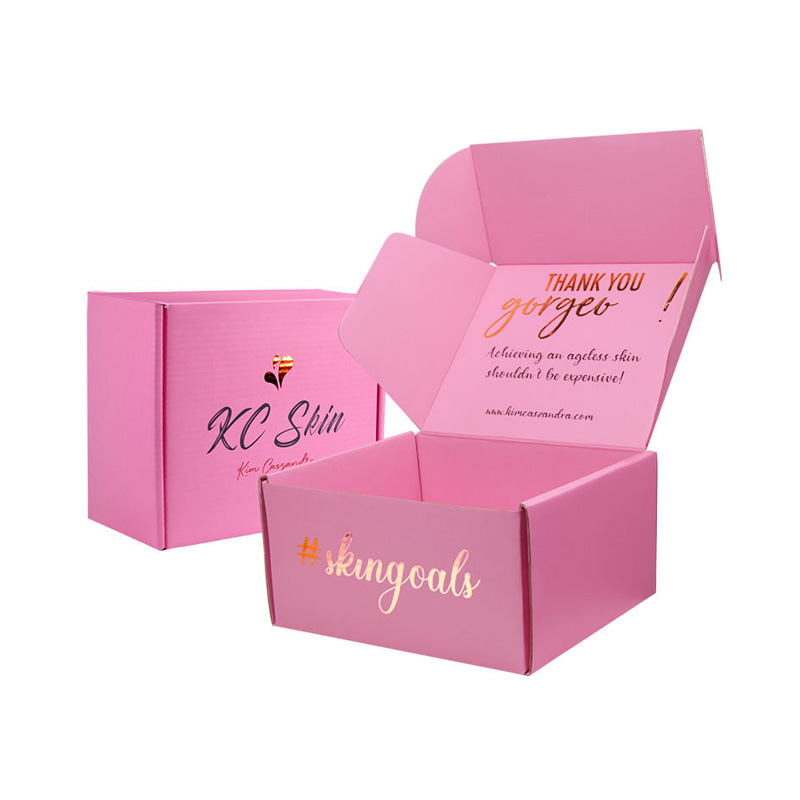
| Catalogs & Books | Notebooks & Journals | Packages | Cards |
Books. Foil stamping is a popular choice for book covers, spines, dust jackets, and even slipcase. It can be used to create stunning titles, intricate designs, or embellishments that make a book truly stand out on the shelf.
High-end catalogs. For luxury brands and high-end products, foil-stamped catalogs can elevate the presentation and convey a sense of quality and exclusivity.
Notebooks/journals. Foil printing on notebooks and journals adds a touch of elegance and can make them feel like cherished keepsakes or special gifts.
Cards. From tarot cards and playing cards to business cards, foil-stamping can add a luxurious and memorable touch to these small but impactful printed materials.
Package boxes & bags. Foil-stamped packaging, such as gift boxes, shopping bags, or product packaging. It can create a sense of premium quality and elevate the overall unboxing experience.
Labels & stickers. Foil-stamped labels and stickers can add a touch of luxury to products, making them stand out on store shelves or as branding elements.
The Process of Hot Stamping
The process of foil stamping involves several intricate steps, each contributing to the final, eye-catching result. Here’s a breakdown of the foil-stamping process:
Die creation: The first step in the foil stamping process is the creation of a die. Our die is typically made of brass or copper and is engraved with the desired design or text. The engraving process can be done manually or through computer-aided techniques, ensuring precision and accuracy.
Pre-press preparation: Before the stamping process begins, the material to be stamped must be prepared. This may involve cutting, scoring, or folding the material to ensure proper alignment and positioning.
Die heating: The engraved die is heated to a specific temperature, typically between 200°F and 400°F (93°C and 204°C), depending on the material and foil being used.
Stamping: With the die heated and the foil in place, the stamping machine applies immense pressure, pressing the heated die onto the foil. The heat and pressure cause the foil to adhere to the material, transferring the design or text onto the surface.
Removal of excess foil: After the stamping process, any excess foil that did not adhere to the material is carefully removed, leaving only the desired design or text in its metallic glory.
Finishing touches: Depending on the product, additional finishing touches may be applied, such as embossing, debossing.
The combination of heat, pressure, and metallic foil results in a tactile and visually striking effect that cannot be replicated by traditional printing methods. Custom foil stamping adds depth, dimension, and a luxurious touch to printed materials, making them stand out and leave a lasting impression.
Foil Stamping Color Options
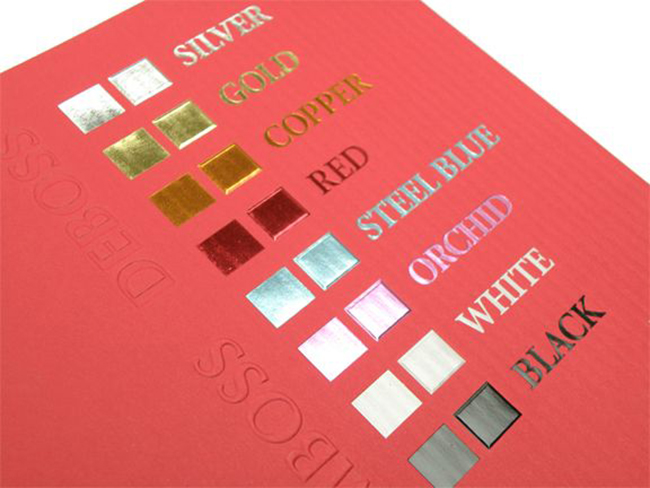
While gold and silver are the most common foil-stamping colors, our printing services offer a wide range of metallic foil options to suit your specific design needs. Some popular choices include:
Gold: A classic and timeless choice that exudes warmth and sophistication.
Silver: A sleek and modern option that can add a touch of elegance to any design.
Red: A bold and vibrant choice that can create a striking contrast or complement certain color schemes.
Green: A rich and earthy tone that can evoke a sense of nature or eco-friendliness.
Holographic foil: A dynamic and eye-catching option that shimmers and changes hues depending on the viewing angle, adding a touch of magic to your designs.
In addition to these standard colors, we can also provide custom foil colors to match your brand’s specific requirements or design concepts.
Factors to Consider When Adding Foil Stamped on Your Product
When considering adding hot stamping to your product, there are several factors to keep in mind to ensure a successful and visually appealing result. Here are some key considerations:
Material selection: The material you choose for your product will play a significant role in the overall appearance and quality of the foil stamping. Different materials have varying textures and surfaces, which can affect how the foil adheres and the final look of the design. Common materials suitable for foil stamping include paper, cardstock, leather, and cloth.
Foil color and finish: Foil comes in a wide range of colors and finishes, from classic metallic shades like gold, silver, and copper to vibrant hues and even holographic or patterned options. Consider the overall aesthetic you want to achieve and how the foil color and finish will complement your product’s design.
Design complexity: The complexity of your design will impact the cost and feasibility of foil-stamping. Intricate designs with fine details or multiple colors may require additional dies or stamping passes, increasing the overall cost and production time.
Quantity: The quantity of products you need to foil stamp can also influence the cost and production process. Larger quantities may benefit from economies of scale, while smaller runs may have higher setup costs.
Positioning and placement: The placement of the foil stamp on your product can significantly impact the overall visual appeal. Consider the design layout, typography, and negative space. To ensure the foil stamping enhances the overall aesthetic rather than overwhelming it.
Embellishments and finishing: Hot stamping can be combined with other embellishment techniques, such as embossing, debossing, or spot UV coating, to create multi-dimensional and visually striking designs. Consider how these additional techniques may complement or enhance the foil stamping effect.
Only carefully considering above factors, you can ensure that the foil-stamping process delivers the desired results, elevating the perceived value and visual appeal of your product.
Foil Stamping and Embossing & Debossing
Hot foil stamping is often combined with embossing and debossing techniques to create multi-dimensional and visually striking designs. These techniques work in harmony to add depth, texture, and a tactile experience to printed materials.
 |
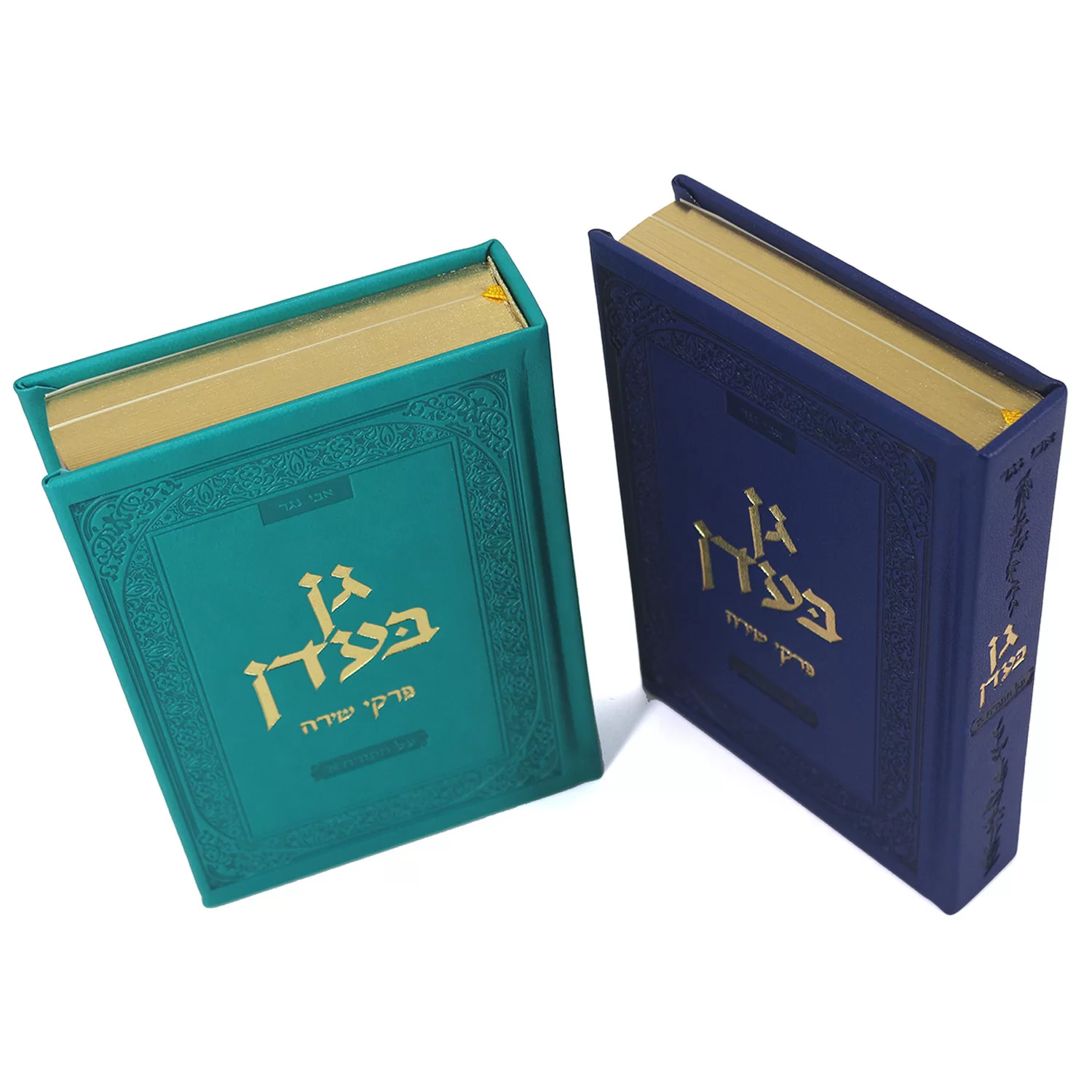 |
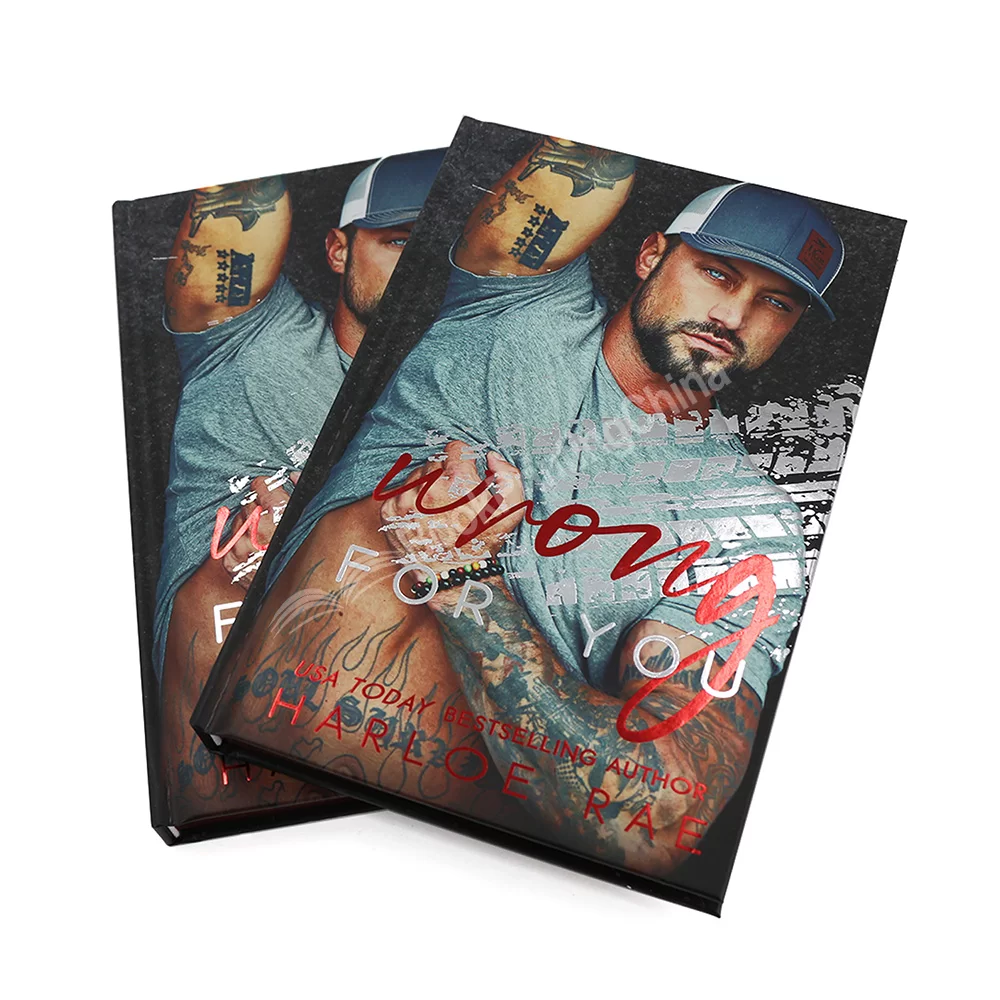
| Emboss and foil stamping | Deboss and foil stamping |
Embossing
Embossing is a process that creates raised, three-dimensional designs on a surface. It involves using a specialized die to apply pressure to the material, causing the design to be raised above the surface. Embossing can be used in conjunction with foil-stamping to add depth and dimension to the design.
When combined with gold stamping, embossing creates a striking visual effect where the metallic foil design appears raised and textured, catching the light and creating a dynamic, eye-catching appearance.
Debossing
Debossing is the opposite of embossing, where the design is pressed into the material, creating a recessed or indented effect. This technique adds depth and dimension to the design, creating a tactile experience for the viewer or user.
When combined with hot foil printing, debossing creates a unique visual contrast. The recessed areas of the design remain unfoiled, allowing the metallic foil to highlight the raised portions, creating a visually striking and textured effect.
The combination of gold stamping, embossing, and debossing opens up a world of creative possibilities. They allows for the creation of intricate, multi-dimensional designs that engage multiple senses. These techniques are often used in high-end packaging, luxury stationery, book covers, and other applications where a premium, tactile experience is desired.
Combining these techniques, you can create visually stunning and tactile designs that elevate the perceived value and appeal of their products.
Foil Stamping vs. Metallic Ink
Both foil-stamping and metallic ink can create a shimmering metallic effect. But there are distinct differences between the two techniques:
Texture: Hot foil stamp produces a raised and tactile surface, while metallic ink lies flat on the paper or substrate.
Shine and brilliance: Foil stamping has a more vibrant and reflective shine, while metallic ink can appear dull or muted in comparison.
Durability: Foil-stamping is more resistant to wear and tear, making it a better choice for high-use items or packaging.
Cost: Foil stamp printing generally costs more than metallic ink printing due to the specialized equipment and materials required.
While metallic ink can provide a subtle metallic effect, foil stamp printing truly elevates the design with its dimensional, eye-catching, and long-lasting qualities.
Foil Stamped Artwork Tips
To achieve the best results with foil stamping, it’s essential to prepare your artwork correctly. Here are some tips to ensure your foil stamped artwork is print-ready and optimized for a successful outcome:
Vector artwork: Foil stamp printing requires vector artwork for the best results. Vector graphics are based on mathematical equations, ensuring crisp, clean lines and sharp edges, even when scaled or resized. Raster images, such as JPEGs or PNGs, may appear pixelated or blurred when foil stamped.
Line weight and thickness: Pay attention to the line weight and thickness of your design elements. Thin lines or intricate details may not translate well during the foil printing process, leading to broken or incomplete designs. Aim for line weights of at least 0.5 points or thicker for best results.
Positive and negative space: Carefully consider the balance between positive and negative space in your design. Too much negative space may result in a sparse or incomplete look, while too much positive space can make the design appear busy or overwhelming.
Font selection: When incorporating text into your foil stamping design, choose fonts carefully. Avoid thin or overly ornate fonts, as they may not reproduce well during the stamping process. Opt for bold, sans-serif fonts or classic serif fonts for optimal legibility and clarity.
Bleed and safe zones: Ensure your artwork includes appropriate bleed and safe zones. Bleed refers to the area beyond the trim line where the design extends, while safe zones are the areas within the trim line. Both important design elements should be placed to avoid potential trimming issues.
Separate artwork: Separate the foil stamped design from other artwork to create a separate layer. Make sure the files are consistent in size so they “apply” accurately onto each other.
CMYK PDF file: Follow your printer’s or foil stamp printing specialist’s guidelines for acceptable file formats. Most printers are prefer CMYK pdf file to make sure best printing result.
Proofing and approvals: Before sending your artwork to the printer, thoroughly review and proof your design. Consider requesting a physical proof or mockup to ensure the foil stamping will appear as intended.
Following above tips and working closely with your printer, you can ensure that your artwork is print-ready and optimized for a successful foil stamp printing outcome, resulting in a visually stunning and high-quality product.
If you’re looking to add a touch of luxury and sophistication to your product, consider our foil printing services. Whether you need foil-stamp printing books, catalogs, packaging, or any other product, our team of experts is here to bring your vision to life.
At our printing company, we take pride in delivering exceptional hot foil stamp results that exceed our clients’ expectations. Our state-of-the-art equipment and skilled craftspeople ensure that every foil-stamped piece is a true work of art.
Whether you’re a designer, marketer, or business owner, foil stamp printing can be a powerful tool to elevate your brand and create a lasting impression. So, why settle for ordinary when you can indulge in the luxury of foil stamping? Explore our services today and let us help you create truly remarkable printed materials that will captivate and inspire your audience.
Contact us today to learn more about our custom foil stamping options and receive a free quote tailored to your specific project needs.