


In today’s publishing world, choosing the right binding for your book is crucial for both its aesthetic appeal and functional utility. Whether you’re a seasoned author or a budding writer, understanding the differences between flexibound, paperback, and hardcover options can significantly impact your book’s success. Let’s delve into each option to help you make the most informed decision. In this article, we’ll explore the intricate details of each format, offering insights into their characteristics and advantages.
What’s Flexibound and Its Anatomy
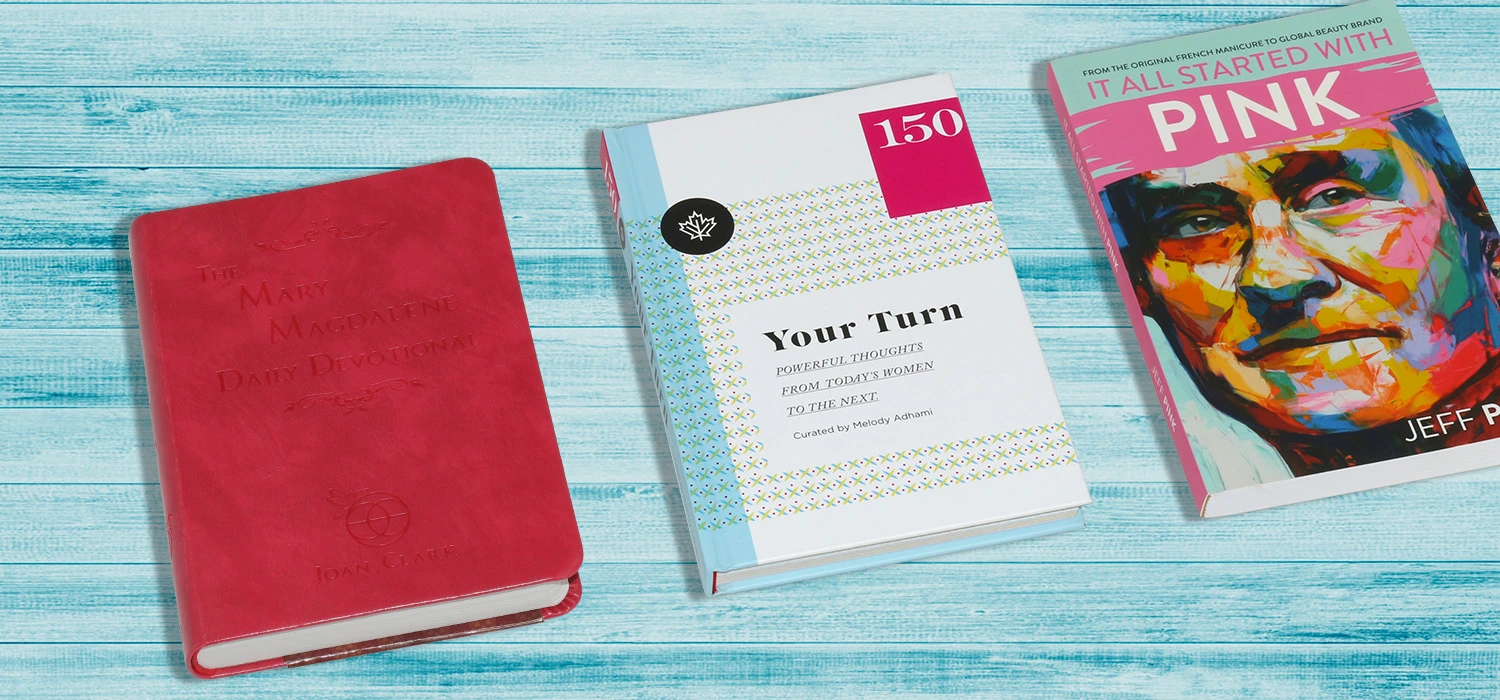
Flexibound, also known as “semi-hardcover”, is a type of bookbinding that strikes a balance between the flexibility of a paperback and the durability of a hardcover. Unlike traditional hardcover books, which have a rigid board cover, flexibound books feature a flexible yet sturdy cover that provides protection and a premium feel without the bulkiness of a full hardcover.
Flexibound typically features a cover made from cardstock or polyurethane (PU) leather, which provides strength and a touch of elegance. Unlike traditional paperbacks, flexibound books often include additional elements such as endsheets and head and tail bands that supports sewn signatures, enhancing their longevity. They are often used for bibles, journals, or higher page count where durability and portable are desired.
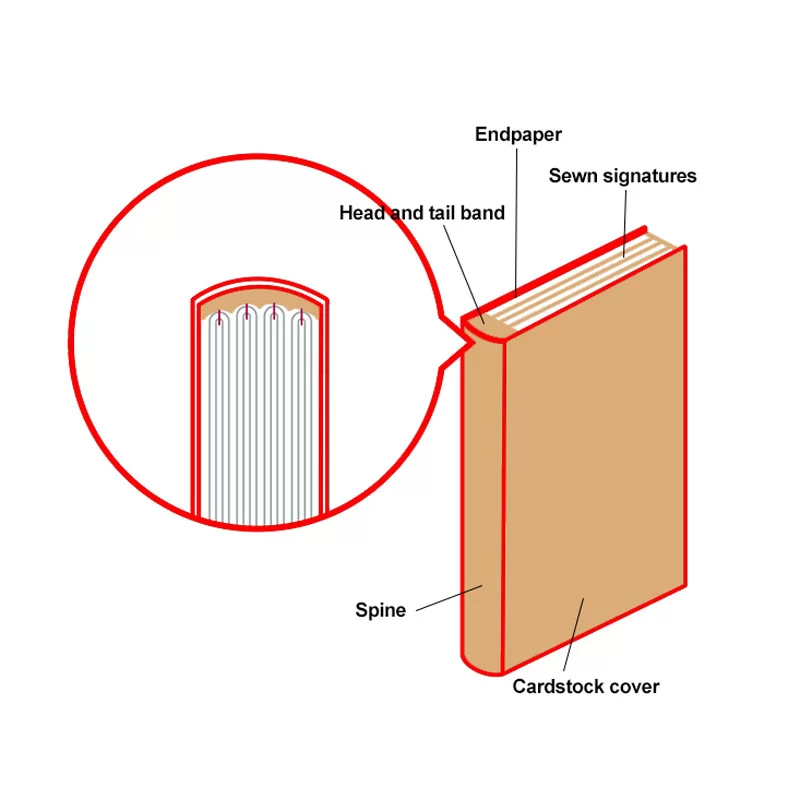
The Anatomy of Flexibound
The anatomy of a flexibound book is quite distinct. Key components include:
-
Cover Material: The outermost layer, or cover, is typically made from thick, durable cardstock or PU (polyurethane) leather. Cardstock-a sturdy paperboard that offers rigidity and printability, often coated for a smooth finish, While PU leather- a synthetic leather material that provides a luxurious look and feel similar to genuine leather but at a lower cost.
-
Endsheets: The decorative and functional pages that attach the cover to the text block. While not always present in flexibound books, they can add a touch of elegance and reinforce the binding. They are typically glued to both the inside of the cover and the first and last pages of the text block, creating a strong and seamless connection.
-
Spine: The spine is the backbone of the book, connecting the front and back covers and displaying the title, author, and publisher. In flexibound books, the spine is often slightly rounded to accommodate the natural curvature of the flexible cover and the sewn signatures. It’s crucial for the spine to be strong and durable to withstand repeated opening and closing.
-
Sewn Signatures: This is arguably the most critical structural difference between a flexibound and a paperback. The text block is composed of “signatures,” which are groups of pages that are folded and then sewn together. This sewing reinforces the binding and allows the book to lie flatter than a glued paperback. Sewn bindings are significantly more durable than glued bindings, meaning a flexibound book can withstand much more use and still hold together well.
-
Head and Tail Band: Small decorative or structural ribbons sewn into the top (head) and bottom (tail) of the spine. They serve both aesthetic and functional purposes, helping to reinforce the binding and providing a traditional bookbinding appearance.
-
Backing Material: Some flexibound books incorporate a backing material, such as a piece of fabric or paper, glued to the spine beneath the cover. This backing material adds strength and helps to reinforce the spine, particularly when the book is subjected to heavy use or strain.
The Benefits of Flexibound
Flexibound books offer a range of benefits that make them an attractive option for many authors and publishers:
Lay-flat
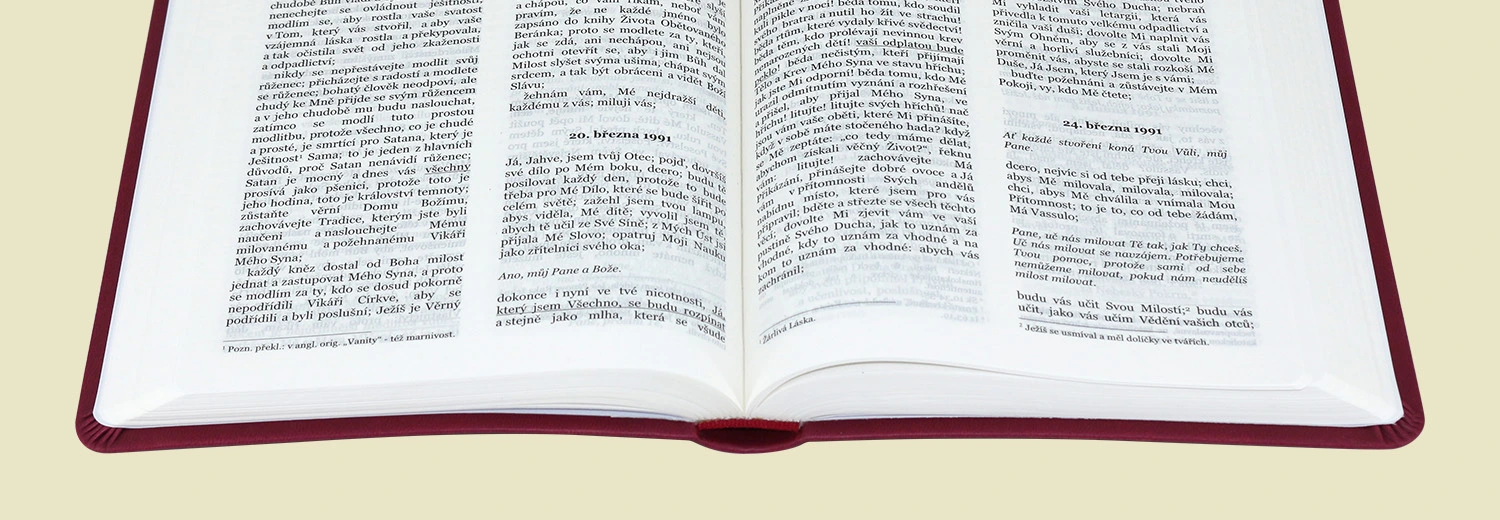
Thanks to their sewn signatures and flexible spine, these books can rest evenly on a surface without the pages flipping shut or requiring constant holding. This makes them ideal for reading, writing, reference, or presentation purposes—especially in contexts like bibles, notebooks & journals, prayer books—where easy page turning and a stable reading surface enhance usability and comfort.
Durability
Flexibound books are crafted to withstand frequent handling better than typical glue binding paperbacks. The combination of a sturdy cover—whether cardstock or PU leather—and sewn signatures ensures that pages stay securely attached, reducing the risk of tearing or loosening over time.
Lightweight
Despite their sturdy construction, flexibound books are surprisingly lightweight. Their design eliminates the bulk associated with traditional hardcover books, making them easier to carry, handle, and store. This lightweight feature is particularly advantageous for high page count books, journals, etc., where portability and ease of use are priorities.
Flexibility
The potential for customization is vast, from choosing the cover material (paper, cloth or leather) to adding features such as ribbon bookmarks or hot stamping, or adding interior functional endpapers, pockets or inserts to further customize the practicality and appearance of the book. This adaptability allows for a truly unique product.
What’s Paperback and Its Anatomy
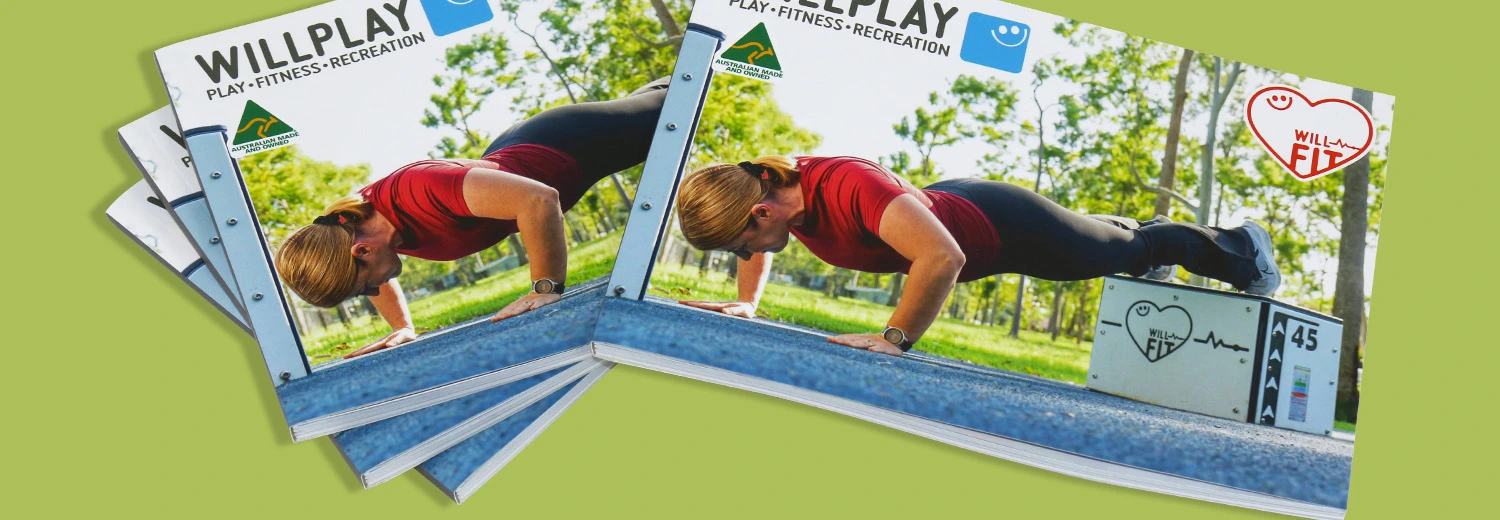
The humble paperback. It’s the ubiquitous book format gracing bookshelves, backpack pockets, and bedside tables around the world. Known for its affordability and portability, it’s the go-to choice for many readers.
At its core, a paperback is a book bound with a soft, flexible cover, typically made of paper or cardstock. This distinguishes it from its sturdier counterpart, the hardcover, which boasts a rigid, protective cover. The paperback’s soft cover contributes to its lighter weight and lower production cost, making it popular for mass-market publications.
The Anatomy of Paperback
The anatomy of a paperback is straightforward yet effective:
-
Cover: The cover is the first thing we see and interact with. It is typically crafted from cardstock, a thicker and more durable type of paper than the interior pages. This provides a reasonable level of protection for the contents while remaining flexible and cost-effective. The cover usually features the book’s title, author, a captivating illustration or design, and often a brief synopsis to entice readers.
-
Spine: The spine is the narrow edge of the book that holds the pages together. It’s this area that displays the title and author’s name prominently, allowing for easy identification when the book is shelved. The spine’s width varies depending on the book’s page count.
-
Glue or Sewn Signatures: The interior pages, known as the text block, are organized into sections called signatures. These signatures are large sheets of paper folded multiple times to create a group of pages. In paperback binding, these signatures are typically held together in one of two ways:
-
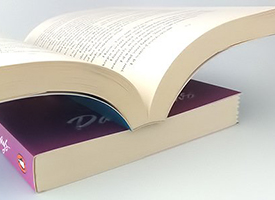
Glue Binding (Perfect Binding): This is the most common and cost-effective method. The edges of the signatures are glued together along the spine, creating a smooth, flat finish. While efficient, glue binding can sometimes be less durable than other methods, especially with thicker books that undergo repeated opening and closing.
-
Sewn Signatures (Smyth Sewn or Section Sewn): A more durable method involves sewing each signature together with thread. These sewn signatures are then glued to the spine. This creates a stronger and more flexible binding, allowing the book to lay flatter and withstand more wear and tear. While slightly more expensive, sewn signatures enhance the book’s longevity and reading experience.
-
 |
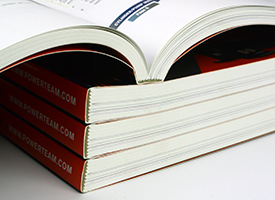 |
| Perfect Binding | Sewn Perfect Binding |
The Benefits of Paperback
Paperbacks come with a host of benefits, making them a favored choice for both authors and readers:
Cost-effective
The production costs are generally lower than hardcover or flexibound options because they require simpler materials and manufacturing processes. This makes paperbacks an economical choice for publishers, authors, and readers alike, enabling wide distribution without significantly increasing the retail price. As a result, paperbacks are often the preferred format for mass-market books, mass-production projects, and budgets-conscious publishing.
Professional Appearance
Despite their budget-friendly nature, paperbacks can still present a polished and professional look. High-quality printing, well-designed covers, and careful binding techniques ensure that paperback books look attractive and credible. They are suitable for a range of genres—from novels and academic texts to reference guides—making them versatile for various publishing needs while maintaining an approachable, professional aesthetic.
Lightweight and Portable
Paperbacks are known for their lightweight design, making them easy to carry, hold, and store. This portability is especially beneficial for readers who like to take books on the go—whether commuting, traveling, or simply moving between locations. Their compact size and light weight also make them ideal for gift-giving, promotional giveaways, or educational materials distributed in bulk.
Customizability
Despite being cost-effective, paperbacks offer a wide range of customization options:
-
Page Count: Easily adjusted to fit the content, whether a short story or a lengthy novel.
-
Finish Options: Choose from matte, gloss, or soft-touch finishes, foil stamping or other finishes for covers to enhance tactile appeal and visual impact.
-
Size and Format: Customize dimensions, binding styles, and format to suit your audience or branding needs.
-
Interior Features: Choose coated or uncoated paper to suit your content design requirements.
This flexibility allows publishers to tailor paperbacks to specific genres, audiences, or branding requirements.
Fast Turnaround Time
Compared to other binding options like hardcover or flexibound, producing paperbacks generally involves fewer steps and simpler materials, which translates into quicker turnaround times. This efficiency is particularly advantageous for projects with tight deadlines, rapid releases, or large-volume print runs. It allows publishers and authors to bring their works to market swiftly without sacrificing quality.
What’s Hardcover and Its Anatomy
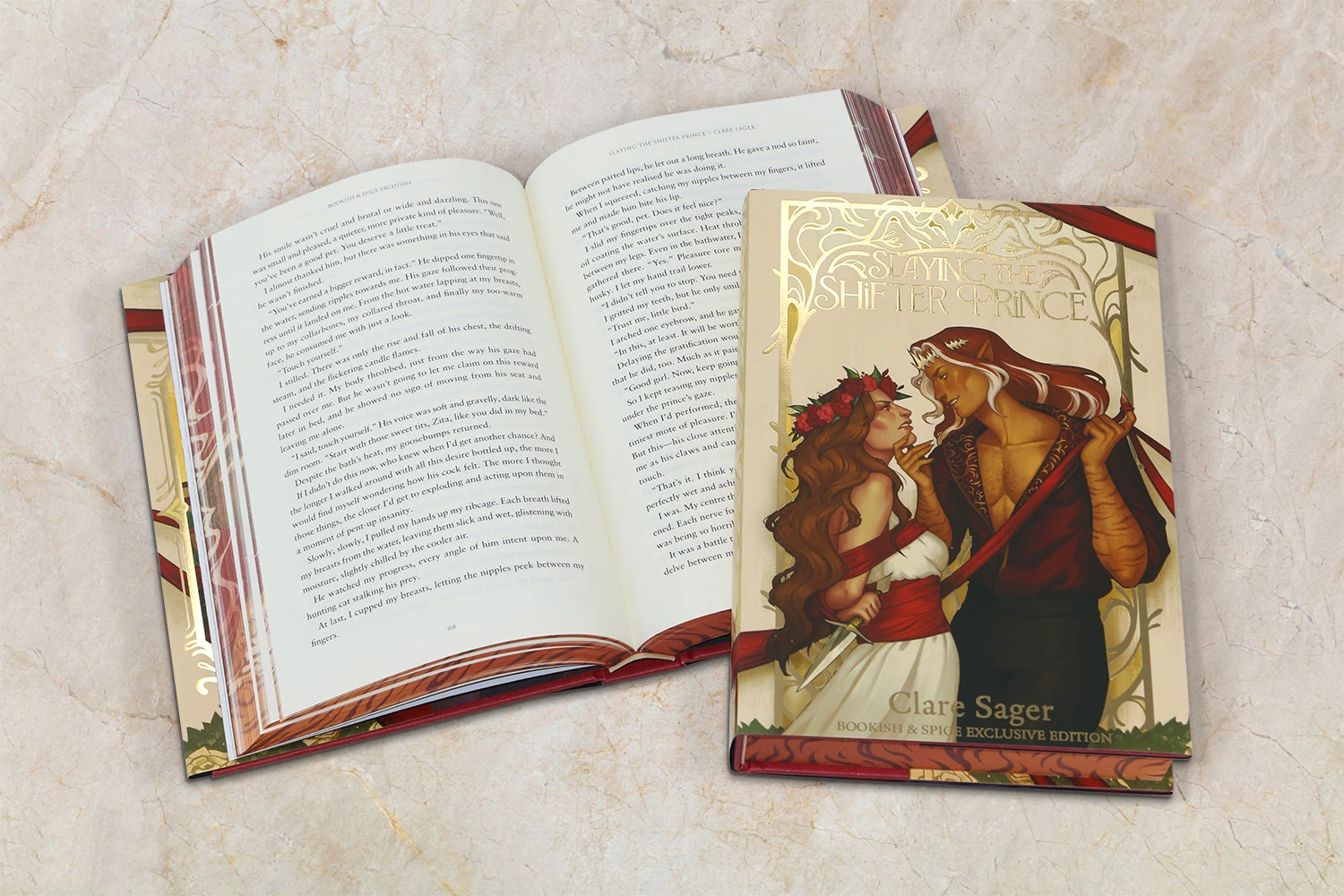
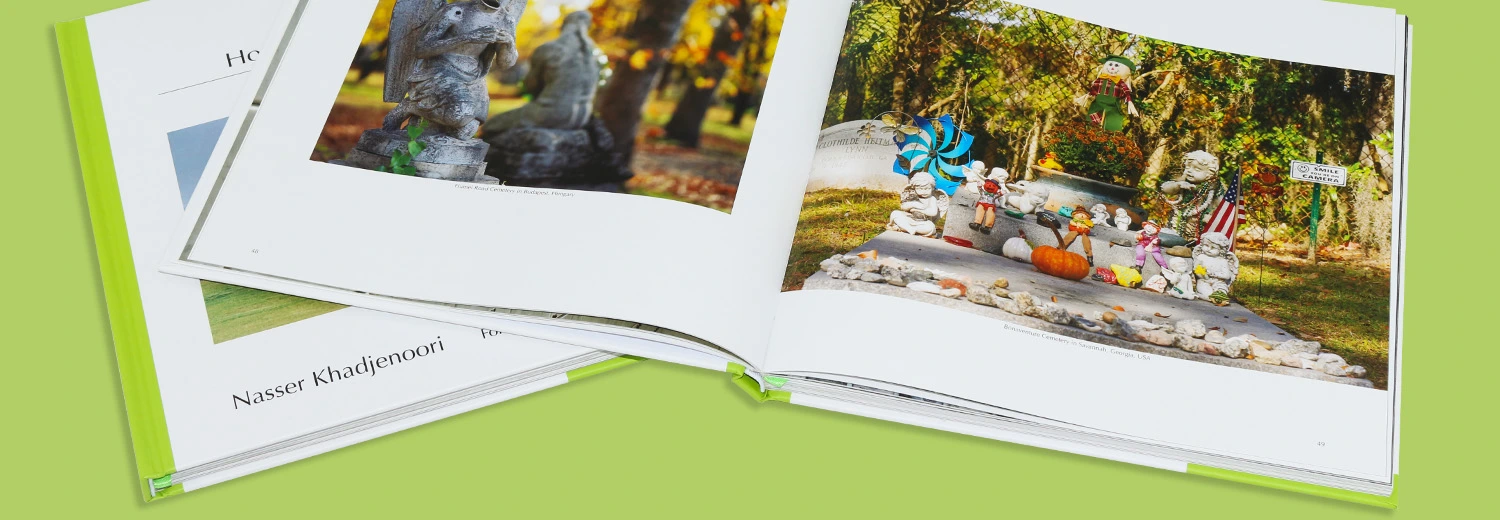
A hardcover book, also known as a hardback, is a type of bookbinding where the pages are attached to a rigid protective cover. The cover is usually made of paper, cloth, or leather, etc material wrapped around gray board. Hardcover books are generally more expensive than their paperback counterparts, but they offer better durability, longevity, and a more premium feel. Hardcovers are typically reserved for special editions or books that are intended to be cherished for years.
 The Anatomy of Hardcover
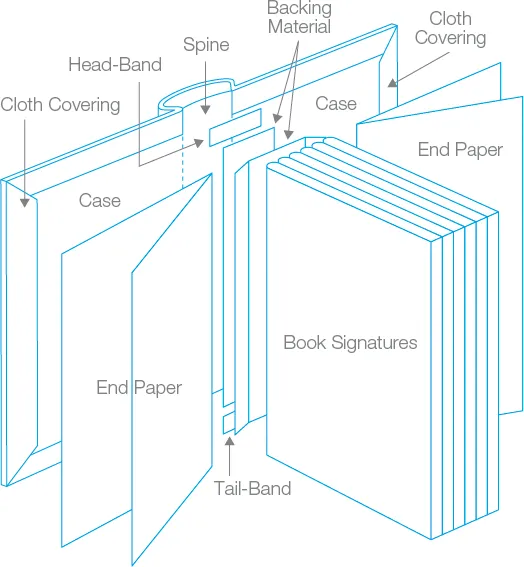
The anatomy of a hardcover book is more complex compared to other formats:
-
Wrapping Paper: The outermost layer of a hardcover book is the wrapping paper, which is often made of decorative cloth, paper, or leather. This layer not only provides an aesthetic appeal but also protects the inner layers of the book from damage.
-
Case (Grayboard): Beneath the wrapping paper, there is a layer of grayboard, which is a thick, stiff material made from recycled paper pulp. Grayboard provides the structure and rigidity for the book’s cover.
-
Spine: The spine is the vertical edge of the book that connects the front and back covers. It is usually made of multiple sections called signatures, which are sewn together to create a strong bond. The spine often features the title, author, and publisher’s name.
-
Endsheets: Endsheets are the pages at the very beginning and end of the book that connect the signatures to the cover. They are made of a single sheet of paper folded in half, with one half pasted to the inside of the cover and the other half left loose to attach the signatures.
-
Sewn Signatures: Signatures are sections of printed paper that are folded and sewn together to form the inner pages of the book. This method of binding ensures that the book can lay flat when opened, making it easier to read.
-
Head and Tail Band: These are decorative strips of fabric that reinforce the head (top) and tail (bottom) of the spine, providing both visual interest and additional strength.
-
Backing Material: The backing material is a flexible piece of paper or cloth that is adhered to the inside of the spine. It helps to maintain the shape of the book and prevents the covers from sagging.
The Benefits of Hardcover
Hardcovers offer unmatched advantages, appealing to collectors and readers alike:
Durability
Hardcover books are renowned for their robustness and longevity. Their rigid covers, often reinforced with cardboard or other sturdy materials, provide excellent protection for the pages inside. This durability makes hardcover editions ideal for frequent handling, archival storage, and long-term use. They are less prone to wear and tear, ensuring that the book maintains its appearance and structural integrity over years or even decades.
Lay-flat
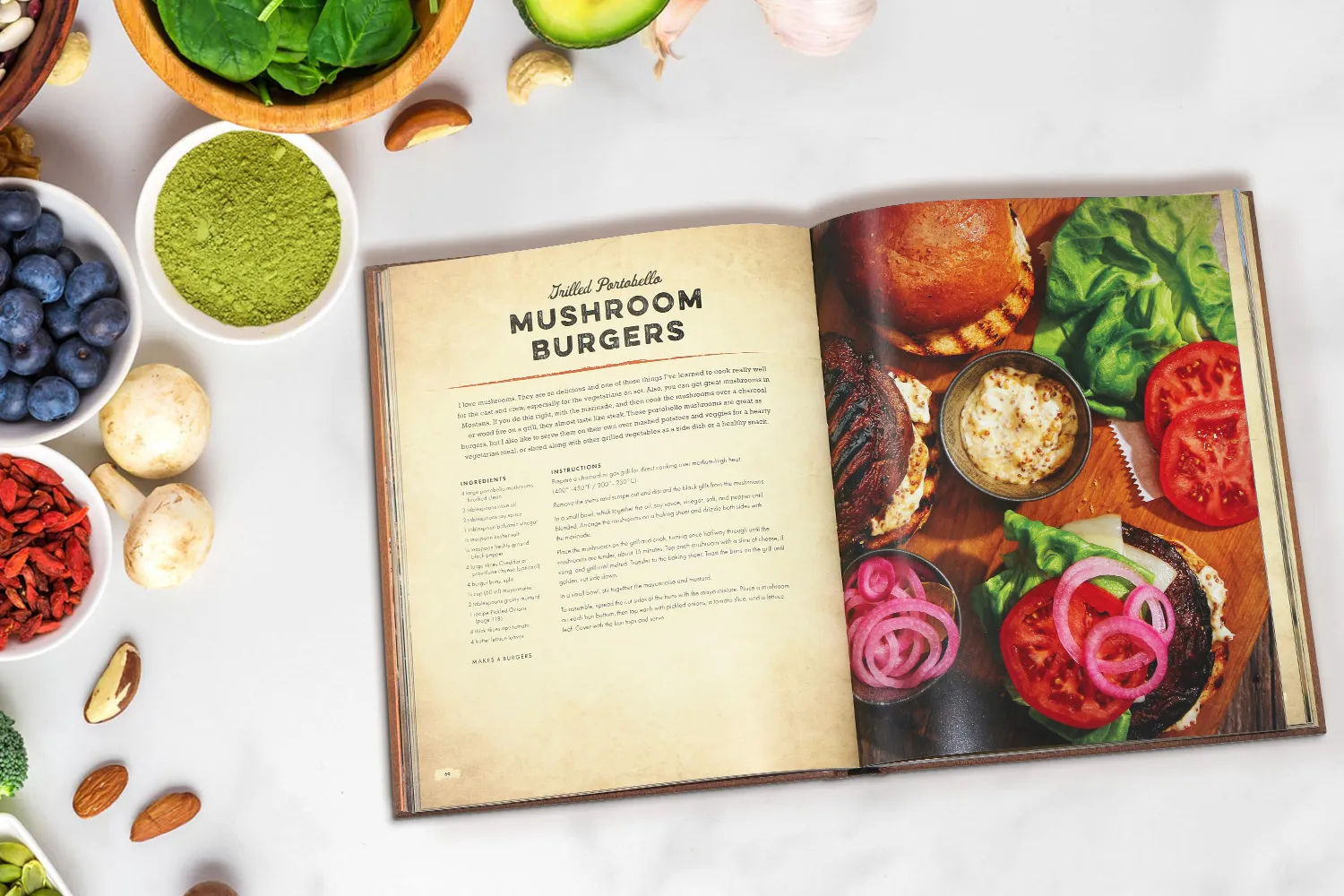
Many hardcover books are designed to open and lay flat more easily than paperbacks, especially when sewn or high-quality binding methods are used. This feature enhances readability, making them perfect for reference books, children’s books, art books, cookbooks, or any publication where keeping the pages open without damaging the spine is beneficial. The ability to lay flat also facilitates easier viewing of illustrations, diagrams, or photographs.
Appeal
Hardcover books exude a sense of prestige and quality. Their elegant appearance—featuring a sturdy cover, often with embossed, foil-stamped, or textured finishes—creates a premium aesthetic that appeals to collectors, gift buyers, and readers seeking a luxurious experience. The tactile sensation of a hardcover adds to its perceived value, making it suitable for special editions, gift books, or limited editions.
Collection Value
Because of their durability and aesthetic appeal, hardcover books often hold greater value as collectible items. They are more likely to be preserved and passed down through generations, especially when featuring special designs, signed editions, or limited print runs. For collectors, hardcover editions are preferred for their permanence and ability to retain condition over time, enhancing the overall value of a collection.
Customizability
Hardcover books offer extensive customization possibilities to suit various needs and branding goals:
-
Page Count: Adaptable to short or lengthy content, with options for thick or slim volumes.
-
Materials: Choose from a range of cover materials such as cloth, leather, faux leather, or specialty textured papers, as well as various interior paper such as coated or uncoated paper.
-
Finish Options: Enhance visual appeal with embossing, foil stamping, matte or gloss coatings, and custom gilded edges.
-
Additional Features: Incorporate dust jackets, endpapers, ribbon markers, or slipcase.
This high level of flexibility allows publishers and authors to create unique, aesthetically pleasing, and memorable editions tailored to their audience or purpose.
Flexibound vs Paperback vs Hardcover
Flexible binding, softcover, and hardcover, each type has its own unique features, pros and cons, making it difficult to decide which one is best for you. Below, we will compare them on six key factors to help you make the right choice.
Appearance
-
Flexibound: Features a PU or cardstock cover that combines the durability of a hardcover with the flexibility of a paperback. Typically has a sleek, modern look with options for custom finishes.
-
Paperback: Features a soft, flexible cover made of paper or cardstock. Usually lightweight and simple in appearance, but can be customized with different finishes.
-
Hardcover: Presents a rigid, often embossed or foil stamped cover, giving a premium and elegant appearance. Usually includes dust jackets or decorative endpapers, emphasizing luxury.
Binding Process
The binding process significantly impacts the book’s durability and usability. Flexibound involves a combination of sewing and optional enhancements like endsheets and headbands. In contrast, paperbacks may use glue or sewing, with glued bindings being less durable. Hardcovers, with their sewn signatures and rigid structure, offer the highest level of durability.
Lay-flat Ability
One of the critical distinctions between these formats is their lay-flat ability. Flexibound with excellent lay-flat capability due to sewn signatures and flexible binding, while paperback generally does not lay flat well; pages tend to close when opened, especially with frequent use. Hardcover can lay flat if sewn or high-quality binding methods are used, but not always as flexible as flexibound.
Aesthetic Appeal
Aesthetic appeal varies significantly between the formats. Hardcovers typically offer the most visually striking appearance, often featuring intricate designs and superior materials. Flexibound books provide a middle ground, allowing for a stylish yet practical presentation. Paperbacks, while less visually impressive, still offer a polished and professional look suitable for a wide audience.
Durability
Durability is a major consideration for many authors and publishers. Hardcover is the most durable of the three; designed for long-term use and archival storage, and is not easily damaged. Flexibound books also offer commendable durability, particularly when featuring sewn bindings. Paperbacks, although less robust, are still a practical choice for books with shorter life spans or less demanding use.
Budget
Budget constraints often influence the choice of book format. Paperbacks are the most budget-friendly option, ideal for mass-market distribution. Due to manufacturing complexity, flexibound is slightly more expensive than paperback books, but cheaper than hardcover books, striking a good balance between quality and price. Hardcovers, while the most expensive option, provide superior quality and appeal, making them a worthwhile investment for special projects.
Production Time
Production time is another critical factor. Paperbacks boast the shortest production time due to their straightforward manufacturing process. Flexibound books require more time, given their complex binding. Hardcovers take the longest to produce, reflecting the detailed craftsmanship involved.
The choice between flexibound, paperback, and hardcover books ultimately depends on your personal preferences and needs. If you prioritize durability and aesthetic appeal, hardcover books are the best option. If you are looking for an affordable and portable option, paperback books are the way to go. If you want a durable and high-quality book that can lay flat, flexibound books are the perfect choice.
Print Your Book with Us
Deciding on the right book format is just the beginning of your publishing journey. Whether you choose flexibound, paperback, or hardcover, the quality of printing is crucial. At BookPrintingChina, we are committed to bringing your vision to life with precision and care. Our expert team is ready to guide you through the printing process, ensuring your book is crafted to the highest standards.
Why Choose Us?
-
Quality Assurance: We use only the finest materials to ensure your book stands the test of time.
-
Customization Options: From cover and interior materials to binding options and finishes, we offer a plethora of choices to personalize your book.
-
Competitive Pricing: Our cost-effective solutions make premium printing accessible.
-
Fast Turnaround: We understand the importance of deadlines and strive to deliver your books promptly.
If you are ready to publish your book and are considering the best format for your needs, we invite you to explore the options with us. Contact us today to discuss your project and discover how we can help turn your manuscript into a beautifully printed book. Let’s create something extraordinary together!